
NCAA Adopts Split-Season Model for Men's Soccer, Impacting Oregon State
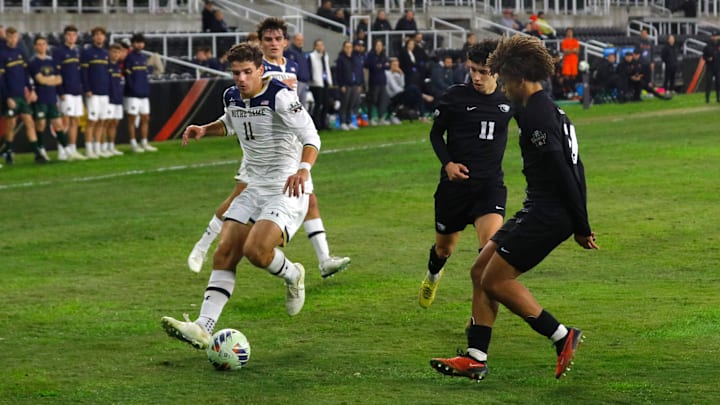
If you ask a diehard U.S. men's national team fan this question - "What changes would you like to see in American soccer?"- you'll likely hear one of three answers: cheaper academies for youth players, promotion/relegation for professional teams, and a split-season model in college soccer.
This week, that split-season model became a reality. On Wednesday, the NCAA announced that starting in 2027, the Division I men's soccer championship would be contested over two semesters instead of one.
First, teams would play up to 18 games between August and November. Then, action would resume in February. NCAA Divison I teams would be allowed to play up to 10 additional regular season contests that winter and spring, followed by the postseason Men's Soccer Championship bracket and traditional College Cup, akin to a Final Four for men's soccer.
In their official release, the NCAA Men's Soccer Oversight Committee made clear that the proposal was introduced in January 2026, but this change has been on fans' minds for decades. Currently, college soccer programs - like the perennial contender at Oregon State - cram a small number of games into the Fall term, limiting game reps. As a result, college soccer teams struggle to develop players for the rigor of professional soccer. Last year's Major League Soccer MLS Cup champion, the David Beckham-owned and Leo Messi-led Inter Miami CF, featured just six Americans on their roster. their runner-up Vancouver Whitecaps featured only eight Americans.
Previously, the split-season model was suggested by several prominent college coaches back in 2016, and endorsed by former United States mens' national team coach Jürgen Klinsmann. The German-born, American-wed manager praised the concept at that year's USMNT January camp:
“As a developmental piece, [college soccer is] hugely important because it's part of the American infrastructure since always. It has a tremendous value to all sports, development through college into the professional game. The specific problems in the soccer field is that a soccer schedule is 11 months, loaded with games throughout 11 months, and X amount of training sessions. It's all basically driven by the pro game in Europe and South America. So these are the highest standards, so based on these standards, we're trying to catch up."
Among reasons cited by the oversight committee, the new format will create more predictable schedules, extend recovery time between matches in an effort to reduce injuries, and boost integration and engagement between soccer programs and campus life.
From a fan's perspective, more competitive soccer - and a higher quality of play - could provide a boom for successful program's like coach Jarred Brookins' team in Corvallis. Last year, the Beavers made the postseason for the sixth straight year, their seventh appearance across the past eight seasons.
 Add us as a preferred source on Google
Matt fell in love with radio during his college days at Oregon Tech, and pursued a nine year career in sports broadcasting with Klamath Falls' and Medford's highest-rated sports radio stations. He currently lives in McMinnville wine country and is excited to talk about the Beavers again.