
Exclusive: Rusty Whitt Instills Grit in Tulane Football Through Service in Army
In this story:
As the Tulane Green Wave prepare to fight for their first American Conference Championship title on the road against the Army Black Knights, they do so with a competitive edge in understanding the intricacies of their opponent.
Tulane football director of strength and conditioning, Rusty Whitt, worked at West Point under head coach Jeff Monken.
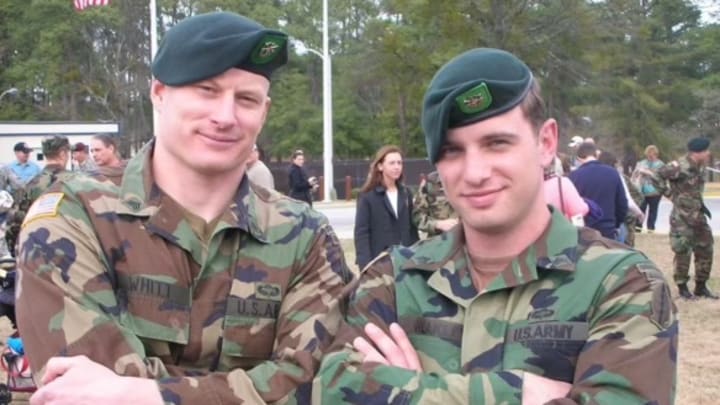
Whitt served in the United States Army as a Senior Special Forces Communication Sergeant in the 10th Special Forces Group. From 2003 to 2009, he was deployed to Iraq as part of Operation Iraqi Freedom (OIF) V and VI.
When he trained the unique athletes that attend Army West Point, he knew what he was preparing them for. As a veteran, Whitt recognizes the pride and escapism that comes from watching service academy football teams overseas.
He transfers that wealth of knowledge to instill the necessary type of toughness in his Green Wave players as they head to Michie Stadium.
Rusty Whitt sat down with Tulane on Sports Illustrated to discuss his time in the Army as a Green Beret, the distinctive nature of football within the service academies, and how important leadership and accountability are for Tulane's goal to win the conference championship.

Many people around America watch their college football teams of choice with reverence. For members of the military overseas, it’s a source of pride. For Whitt, his goal is spoiling their week.
He understands the significance of this game, along with the upcoming Army-Navy game, for the morale of those serving. Football serves concurrently as a connection and escapism.
“A lot of the guys I served with played at least high school football or some sport,” Whitt explained. “They understand the competitive nature of everything. The ability to set aside three hours or so to watch a game is a big escape for them. Many of them aren’t allowed a lot of time to do anything, except when that game is on. It might be a little bit of a break from work for them, too. It's a place to reconnect with being an American again, just sitting on a couch and watching a football game.”
Tulane has a comparable academic rigor. For Whitt, he’s focused on finding more similarities than his athletes might think. All Army players are there for the right reasons. They dedicate themselves to serving once they graduate. From his time at West Point, Whitt knows the level of pride the players and coaching staff have in performance—and the Green Wave intend to give them what they’re expecting.
Tulane’s opponent in the conference championship exists in an entirely different landscape within college football. The Black Knights, along with the other service academies, are not eligible to accept NIL compensation. They don't have the same freedom to operate the transfer portal.
Army athletes have strict daily schedules that don’t leave much time at all for football, as Whitt detailed. From about 7:00 AM to 2:30 PM, they’re locked in on academy activities. He would get two workout groups in the weight room around 3:00 and 3:50 PM. They have until 6:30 PM for football, after which is study hall – and not much sleep.
Lack of sleep is inescapable in college athletics, but the window of compression at Army is rigid. There’s no luxury of returning later in the day for a football meeting.
No one grasps that perspective more keenly than Whitt, from his time on their staff, and his time in service.
Whitt joined the Army following the events of 9/11, and eventually the U.S. Special Forces, as a Green Beret.
“Green Berets are known as the quiet professionals. Our job, most of the time, was foreign internal defense. You go to a country, as we did Iraq, and you find soldiers, military in that host nation, that are willing to work for you for a common cause against a different government. Their personal motto is free the oppressed, De Oppresso Liber. We did what was called force multiplying. We would train 15 soldiers, they would train 15 soldiers, they would train 15, and you’d take 15 and turn it into a thousand.”
Unique to Green Berets is the need to establish cultural connections and cultivate real trust with their people. In Whitt’s case, that was in Iraq – others may be in Columbia, Afghanistan, or Syria. They did so while living in the middle of nowhere surrounded by Al-Qaeda members.
“We were kind of surrounded, which is a great source of pride. We’ve got ‘em right where we want ‘em. It was exciting and you could really rely on your small unit. I had 11 to 12 guys with me depending on what was going on. We'd trained together for years. In the dark during a mission, I could look at the silhouette of a guy against a faint light and go, Hey, that's Mike, or that's Ben, Chris, Billy. It is such a close-knit environment, and everybody misses that. As a coach, I get to resurrect that feeling by putting guys through hard things and growing together. It’s a natural fit. My entire life, I've either been a competitive athlete, a soldier, or a coach. I like being in the heat of competition or the heat of surviving.”

No other lived experience can come close to forming the camaraderie of those who served together. Football, and other sports, might be the closest replica. Those who attend West Point integrate these concepts into their training and mindset.
At West Point, the motto is, “duty, honor, country.” Whitt instilled the historic nature of playing at the academy during a team lifting session. He explained that while there are older schools, their mission is immensely important.
“They’re a leadership academy. When you’re going up against that, you have to focus on accountability. Coach Sumrall always has a saying: Do your job."
Despite facing temperatures that many of Tulane’s athletes have no experience playing in, Whitt hasn’t altered their training schedule with respect to the cold. Quarterback Bryson Daily is from Texas.
“Cold is cold. Everybody’s in the same situation. As someone said on the field today: Be cold, but don’t act cold.”
Whitt refocused on the similarities between the teams rather than the differences. It highlighted his experience finding connections within different cultures from his time in service.
He implemented a program known as the Gauntlet, which the team ran in January, with the aim of establishing accountability among the Tulane players on the field. Whitt distinguished the Black Knights' version, known as Fourth Quarter Warrior, as more numbers-based and chaotic.
Army has an edge on continuity, with some players going on four or five years together. As he aptly pointed out, half the players on the Green Wave roster weren't here in the spring to even run the Gauntlet.
"You have to love the game, to love to compete. You have to want to be a fierce competitor. We've told our guys we have the athletic ability to be as good as we want to be. You can't have anybody be more gritty than you are. Grit is a big word for me. I think most of our guys get it. This is not going to be a glamor game. If you want to beat Army, you have to be gritty."
He believes that how you compete in a game like this establishes team culture. Whitt provides the Green Wave with an unparalleled perspective on the field to defeat the Army Black Knights.
 Add us as a preferred source on Google
Maddy Hudak is the deputy editor for Tulane on Sports Illustrated and the radio sideline reporter for their football team. Maddy is an alumnus of Tulane University, and graduated in 2016 with a degree in psychology. She went on to obtain a Master of Legal Studies while working as a research coordinator at the VA Hospital, and in jury consulting. During this time, Maddy began covering the New Orleans Saints with SB Nation, and USA Today. She moved to New Orleans in 2021 to pursue a career in sports and became Tulane's sideline reporter that season. She enters her fourth year with the team now covering the program on Sports Illustrated, and will use insights from features and interviews in the live radio broadcast. You can follow her on X at @MaddyHudak_94, or if you have any questions or comments, she can be reached via email at maddy.hudak1@gmail.com