
What Should Predators Fans Believe After 14 Games?
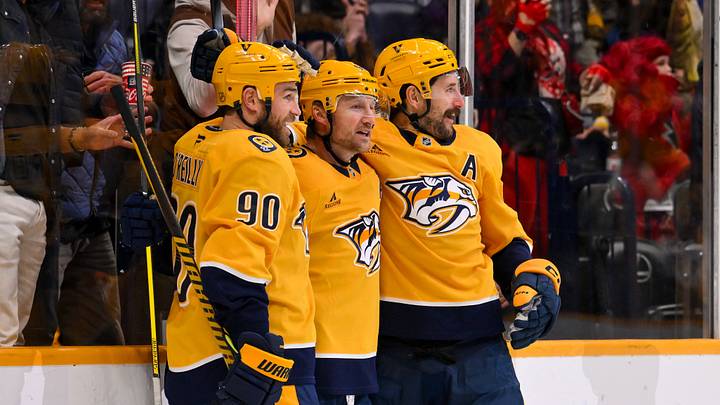
NASHVILLE —Fourteen games into the season, the Nashville Predators have certainly kept us on our toes.
Their 5–4–5 record invites an argument. An optimist can point to points earned in 10 of 14 games. A skeptic can point to five wins. Both have the correct spreadsheet.
That is the trouble with October; there is enough evidence to develop opinions and enough season remaining to regret announcing them too confidently.
Still, “it’s early” only gets a team so far. Nashville has played 14 games. Fans are allowed to expect something more useful than a request for patience.
So, what should they believe?
Believe in the Special Teams
If there is a place to put some early confidence, start here.
Nashville finished October converting 31.9% of its power plays and killing 88.9% of opposing opportunities. Both units ranked fourth in the league after the first month.
Those numbers matter because they give the Predators two practical ways to change a game. An opposing penalty becomes a meaningful opportunity. A Nashville penalty becomes a situation the team has repeatedly shown it can survive.
Saturday’s win over Tampa Bay offered a useful example. Steven Stamkos scored the tying goal on the power play before delivering the shootout winner in a 5–4 victory. Nashville’s strength with the extra skater helped turn another potential loss into two points.
Maintaining those percentages over a full season is a separate question. Fourteen games cannot settle that.
They can establish that special teams have been a legitimate strength. For a team still trying to make winning feel routine, that is a valuable place to start.
Believe the Extra Points Matter
The last number in 5–4–5 deserves more attention than it usually receives.
Five losses beyond regulation have supplied five points. Those points count, and Nashville has collected 15 of a possible 28, a 53.6% points percentage. They also explain why a team with five victories can remain within reach while leaving its fans feeling vaguely unsatisfied.
There is a difference between staying in games and finishing them.
Beating Tampa Bay marked Nashville’s first win beyond regulation in six attempts. That makes the relief understandable. The Predators had spent much of October doing enough to extend the evening without collecting their full reward.
One successful shootout does not establish a trend. Nor should the previous five outcomes predict every close game ahead.
The useful takeaway is simpler: Nashville has repeatedly put itself within one play of another point. Converting more of those opportunities would change how this start feels and how it looks in the standings.
Fans can appreciate the points already earned while expecting more wins. That is a perfectly reasonable demand.
Believe in the Talent. Keep Asking About the Consistency.
Filip Forsberg closed October with four consecutive multi-point games. That is a substantial contribution from a player Nashville needs to drive its offense.
It is also a reminder to separate individual production from the broader team assessment.
A productive stretch from a leading scorer gives the Predators something to build around. It does not answer every question about how reliably the rest of the games will come together.
Nashville’s October included a 6–0 loss in Boston and a 6–2 win over Colorado three days later. The encouraging performance belongs in the evaluation. So does the uncomfortable one. Choosing whichever result best fits the morning's mood makes for an excellent group chat and a fairly unreliable assessment.
November’s most useful test will be whether the Predators can narrow that distance.
Can they produce more games in which the good stretches last? Can they make fewer mistakes that require a response? Can they turn an encouraging performance into another encouraging performance, with less suspense about which version arrives next?
Those questions will tell fans more than declaring the season saved after a win or lost after a bad night.
What Has Nashville Earned?
After 14 games, the Predators have earned continued attention.
Their special teams have supplied a clear strength. Their leading offensive talent has delivered. They have accumulated points often enough to keep this start from slipping away.
They have also won five games.
That final detail should remain part of the conversation, even when a comeback is entertaining and an overtime point feels merciful.
The reasonable position entering November is measured optimism with a few conditions attached. Believe the strengths Nashville has demonstrated. Watch whether they become the foundation for more complete performances.
And expect the next month to bring more victories.
Smashville can provide the enthusiasm. The Predators still have to provide the evidence.
Follow us on Twitter/X, Facebook, YouTube, Threads, Bluesky, and Instagram for the latest news.
 Add us as a preferred source on Google

Ava Gannon covers the Nashville Predators for Nashville Predators On SI. Originally from Iowa, she's studying Human and Organizational Development, with additional studies in Cinema and Media Arts and Sports, Culture, and Society at Vanderbilt University. She brings experience in digital content creation and events, along with an editorial background as the founder of a student-run publication. A former competitive runner and wrestler, she is especially interested in the people, personalities, and fan communities that make sports compelling.