
5 Things Beginner Fly Anglers Aren’t Taught That Catch More Trout
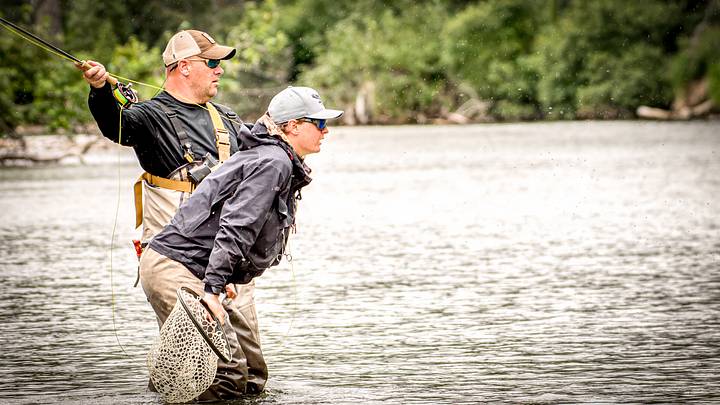
I used to see this a lot while guiding. An angler isn't catching fish. He reasons that he's using the wrong fly, the fish aren’t feeding, he's not a good enough caster, or there aren’t any fish there. But the fish are there; they were feeding before he showed up, it has nothing to do with his fly, and his casting is fine.
Don't Alert the Fish
In fishing, there’s a phrase: “putting the fish down.” It means you’ve disturbed or frightened the fish enough that they’ve stopped feeding, become cautious, or gone into hiding. The fish are still there, but something you did put them down.
The Fishing Part of Fly Fishing
Most fly-fishing instruction focuses on casting, mending, and different fishing techniques, but not nearly enough attention is given to the approach. How you should practice stealth and how your actions affect the fish.

Here are five simple things you can do to avoid putting fish down and improve your chances of catching more trout.
1. Let the Area Settle
Most anglers walk right up to the water's edge and start casting. Before you even make your first cast, you may have already reduced your chances of catching fish. The first rule is simple: be like nature, move quietly and calmly, and try to fit in.
Always Think STEALTH
Before you showed up at the spot you’ve chosen to fish, nature was going about its business. Birds were fluttering around looking for insects, seeds, singing songs, trying to get laid, and doing bird things. Squirrels were doing squirrel things. Everything was relaxed. The animals were alert, but not in fear mode. This goes for the fish, too. They were feeding or conserving energy, hanging out in spots where food comes to them. The place was alive, and everyone was going about their business.
Then You Showed Up
A squirrel lets out a loud, chirping alarm. Birds take flight, some squawking as they go. Larger animals run off. A deer might go splashing through the water, while smaller critters disappear into their burrows. Suddenly, the place is quiet and still, like a ghost town.
All the animals in the place know you've arrived, and they spread the word. The area has changed because you, not-so-subtly, walked up to the water’s edge and started waving a long stick in the air.
Don’t Do This
When you approach the area you’re going to fish, move slowly, calmly, and quietly. Find a place to sit somewhere back from the water.
You are being watched. You might not see it, but you have eyes on you from all the critters that inhabit that space. They’re watching your movements and trying to figure out whether you’re a threat.
The Watering Hole in Africa
Animals are remarkably good at picking up on behavior that signals danger. If you don’t believe me, watch wild animals at a watering hole in Africa. Antelope and lions can share a watering hole without incident, but that can change quickly when the antelope detect signs of danger. They pick up on small cues, changes in posture, and the way a lion moves. Suddenly, the animals are on alert, and if they sense a real threat, they get the heck out of there.
Sit Down On a Rock and Observe
Find a spot to pause and study the water and your surroundings. Let everything settle back into its natural rhythm. I like to give it 15 to 20 minutes. There’s no magic number, but you’d be surprised how much the place comes back to life when you sit quietly and watch.

Give Nature Time to Reveal itself
I usually don't rig up until I've studied the water for a bit. I look for insects hatching, the type of water I'll be fishing, ambush spots, and the size and type of baitfish swimming around. If you are patient and observant, nature will give you hints about what to tie on, and how and where to fish.
As the space returns to "normal" and the place comes alive again, move slowly and calmly. Avoid sudden movements or making loud noises. When you decide to start fishing, don’t be the animal that puts everything else on alert.
Key takeaway: Sometimes the best thing you can do when you arrive at a river is nothing.
2. Fish the Water Closest to You
After studying the water you are about to fish, and letting the area settle back to normal, don't walk right up to the river's edge and start casting, or jump in and wade out to fish. Instead, stay back from the water's edge a few feet, and fish the water close to the bank. If you walk right up to the edge and begin casting, you may miss fish sitting right there; worse, you'll spook them, and they will swim away to deeper water and put down the pool.
Key takeaway: Stay a few feet back and fish the water closest to shore. Make sure you do a thorough coverage.
3. Stop Making So Many False Casts
Fish are very aware of what's going on outside the water. Their awareness doesn't stop where the water stops. From the beginning of life, they learn that danger often comes from outside and above.
Danger Comes From Above
A fish can see your line in the air. It flashes back and forth in sudden movements. Dangerous-looking movement that puts fish on alert.

Watch what a fish will do when a bird flies over. I've seen a hundred yards of striped bass cruising the flats explode when a pelican flew over. It was like depth charges going off in a domino effect. The bird flew over, and the water erupted as fish rushed to deeper safety. (It was an awesome sight, but also heartbreaking; all the big fish I was targeting were gone.)
Fly Line Will Scare a Fish
One sure way to put trout down is to make too many false casts before your final cast. All that fly line flying over the water can spook fish and send them to safety.

Learn to make a good cast with as few false casts as possible. Most scenarios really only need one good back cast to set you up. If you practice, you can become consistent at this. Again, think stealth.
Key takeaway: A fly line in the air will spook fish. Practice reducing how many times you need to false cast to get your fly out there.
4. Lift Your Fly Line Off the Water Quietly
This is a continuation of the practice of not spooking fish with your fly line.
A frustrated angler ripping the line off the water before gently placing the fly back down defeats the purpose. The fish see, hear, and feel the line and its sudden movement as it rips through the water. If you don't get a take on your fly or streamer, let your line clear the immediate area you are fishing, and then quietly and smoothly lift the line out of the water to set up your next cast.
Key takeaway: A gentle presentation means nothing if you've already spooked the fish by ripping the line off the water and putting the fish down.
5. Fight Hooked Fish Away From the Water You're Fishing
This fifth tip is for after you've hooked a fish and are now fighting it.
A hooked fish struggling at the end of your line creates a commotion that other fish in the area can detect. That disturbance signals danger and can put the other fish on alert. You might catch one fish, but if you play it right there in the hole where the other fish are, you risk turning off the bite.
Fight or Flight
It’s normal, especially for beginners, for your adrenaline to spike and a sense of urgency to kick in when you hook a fish, especially a big one. You don’t want to lose the fish; you are trying to get it in as quickly as possible. There might even be a little panic.
If you can learn to do the opposite—to override your fight-or-flight instincts, stay calm and relaxed, and slow down to be in the moment—you'll land fish much more often. Think – Slow is smooth, smooth is fast.

Enjoy the Moment
You can be excited and enjoy the fight, but keep the body and mind calm and present. It's like sports and being in the heat of competition. When I played football, the coaches would call it "controlled chaos." Yes, rise to the intensity, but be aware and loose.
Don't Disturb the Productive Water
Once you have control of the fish, try to steer it away from where you hooked it. Find a calm spot to land and release it, preferably downstream. A fish that has been hooked and fought gives off stress signals that the other fish will detect.

You don’t want the one trout you’ve hooked to put down the four others you might catch.
Key takeaway: Learn to fight a fish calmly, and steer it away from the immediate area you are fishing.

Always Think Stealth and Slow Down
Stealth is the common theme running through all five tips. Be aware of it, and always pay attention to what you do while fishing that might spook fish. It takes awareness, sensitivity, and an understanding of nature. If nothing else, remember SLOW DOWN and STEALTH. The more you learn to blend into your surroundings instead of disturbing them, the better your chances of catching fish.
If you don't practice these tips, you will still catch some fish. But this isn't about catching some fish; it's about catching more fish. ~ KB
Follow me on Instagram @KenBaldwin7. I share the stories behind my articles, photos from my fly-fishing adventures, lots of Alaskan Brown Bear photography, gear I’m testing, and the outdoor places that inspire them.
"Slow down...listen to the hoppers...be patient with yer wife...eat sardines with hot sauce... catch “Gagger” trout!!!" – Flip Pallot
 Add us as a preferred source on Google

Ken Baldwin is a writer and editor for Fishing On SI, covering fly fishing gear, travel, and all other aspects of a life well fished. His writing and photography have appeared in Men’s Journal, Catch Magazine, Fish Alaska, and American Angler. Ken also created and hosts Season on the Edge, a television series exploring travel, adventure, and culture through fishing that aired on NBC Sports and in seven countries. For twenty years, Ken guided fly anglers in Alaska, keeping him in close proximity to brown bears and launching his path into wildlife photography. That field experience led to his work as a bear guard and consultant on the Netflix documentary Our Planet II, narrated by David Attenborough. His photography was also featured in the series promotion. His career has taken a few memorable turns – professionally dancing and teaching salsa, bartending at the House of Blues on the Sunset Strip, and played the terrorist “Mulkey” in the film Die Hard 2. Ken graduated from the University of Washington with a degree that had absolutely nothing to do with any of the above.
Follow KenBaldwinOnSI