%22%3E%0A%3Cpath%20fill-rule%3D%22evenodd%22%20clip-rule%3D%22evenodd%22%20d%3D%22M156.868%204.36764C162.691%20-1.45588%20172.132%20-1.45588%20177.956%204.36764C183.779%2010.1912%20183.779%2019.6324%20177.956%2025.4559L167.412%2036L156.868%2025.4559C151.044%2019.6324%20151.044%2010.1912%20156.868%204.36764ZM159.509%207.55761C159.448%207.86849%20159.416%208.39718%20159.416%209.14566V10.4189C159.416%2011.1832%20159.448%2011.7198%20159.513%2012.0267C159.578%2012.3317%20159.778%2012.6168%20160.117%2012.8762C160.456%2013.1376%20160.903%2013.3316%20161.458%2013.4623C162.012%2013.593%20162.6%2013.6584%20163.337%2013.6584C164.073%2013.6584%20164.717%2013.591%20165.269%2013.4524C165.822%2013.3158%20166.261%2013.1178%20166.586%2012.8604C166.911%2012.6029%20167.105%2012.3178%20167.166%2012.0069C167.228%2011.6961%20167.259%2011.1674%20167.259%2010.4189V9.14566C167.259%208.38134%20167.228%207.84473%20167.162%207.53781C167.097%207.23287%20166.897%206.94971%20166.558%206.68834C166.22%206.42696%20165.772%206.23291%20165.218%206.10223C164.663%205.97154%20164.036%205.90619%20163.339%205.90619C162.602%205.90619%20161.959%205.97352%20161.406%206.11213C160.852%206.24875%20160.414%206.44677%20160.089%206.70418C159.765%206.9616%20159.571%207.24673%20159.509%207.55761ZM164.776%2024.8638C168.376%2024.8638%20170.057%2024.2064%20170.057%2021.862V21.858V21.3155C170.057%2019.6581%20169.016%2018.971%20165.752%2018.3136C164.778%2018.1136%20164.408%2017.9136%20164.408%2017.3136V16.9414C164.408%2016.6543%20164.677%2016.5117%20164.913%2016.5117C165.249%2016.5117%20165.418%2016.7137%20165.418%2016.9414V18.1136H169.891V17.3988C169.891%2015.4563%20168.847%2014.4266%20164.677%2014.4266C161.65%2014.4266%20159.396%2015.3414%20159.396%2017.3711V17.7433C159.396%2019.5155%20160.305%2020.3155%20163.701%2021.0303C163.78%2021.0472%20163.855%2021.063%20163.927%2021.0781C164.829%2021.2674%20165.147%2021.3341%20165.147%2021.9174V22.2897C165.147%2022.6619%20165.046%2022.8045%20164.642%2022.8045C164.17%2022.8045%20164.137%2022.5471%20164.137%2022.262V21.2897H159.394V21.7471C159.394%2024.149%20160.976%2024.8638%20164.776%2024.8638ZM170.924%2024.5569H175.425V14.7355H170.924V24.5569ZM172.455%2013.5019H175.425V6.06064H172.592V9.411L170.693%206.06064H167.859V13.5019H170.693V10.1199L172.455%2013.5019ZM163.769%2012.152C163.704%2012.2688%20163.555%2012.3262%20163.325%2012.3262L163.327%2012.3282C163.104%2012.3282%20162.959%2012.2767%20162.898%2012.1758C162.836%2012.0748%20162.805%2011.8074%20162.805%2011.3758V7.90068C162.805%207.51852%20162.852%207.28684%20162.945%207.20962C163.038%207.13239%20163.175%207.09279%20163.351%207.09279C163.559%207.09279%20163.698%207.14031%20163.765%207.23734C163.832%207.33239%20163.866%207.55416%20163.866%207.90068V11.3203C163.866%2011.7579%20163.834%2012.0352%20163.769%2012.152Z%22%20fill%3D%22white%22%2F%3E%0A%3Cpath%20d%3D%22M134.707%2035.9991C129.823%2035.9991%20126.029%2035.0305%20122.478%2033.2547L125.303%2027.7255C127.765%2029.017%20130.227%2029.8242%20133.254%2029.8242C136.684%2029.8242%20138.5%2028.0484%20138.5%2024.9811V24.3354C137.249%2025.7479%20135.191%2027.3623%20132.124%2027.3623C126.433%2027.3623%20122.316%2023.3264%20122.316%2017.2322V17.1515C122.316%2010.9766%20126.514%206.90039%20131.599%206.90039C134.828%206.90039%20136.724%208.11115%20138.339%209.76586V7.42506H147.5V23.8914C147.5%2027.9677%20146.653%2030.7524%20144.635%2032.7704C142.657%2034.748%20139.63%2035.9991%20134.707%2035.9991ZM134.868%2020.6627C137.128%2020.6627%20138.541%2019.1291%20138.541%2017.1919V17.1112C138.541%2015.2143%20137.088%2013.6807%20134.868%2013.6807C132.608%2013.6807%20131.195%2015.2547%20131.195%2017.1919V17.2726C131.195%2019.1695%20132.648%2020.6627%20134.868%2020.6627Z%22%20fill%3D%22white%22%2F%3E%0A%3Cpath%20d%3D%22M96.9492%2029.4629V7.42701H106.111V10.4943C107.523%208.67813%20109.743%206.90234%20112.851%206.90234C117.492%206.90234%20120.398%209.96961%20120.398%2014.9337V29.4629H111.236V17.8799C111.236%2015.9831%20110.106%2014.8934%20108.734%2014.8934C107.362%2014.8934%20106.111%2015.9831%20106.111%2017.8799V29.4629H96.9492Z%22%20fill%3D%22white%22%2F%3E%0A%3Cpath%20d%3D%22M84.8096%205.85202V0H94.2939V5.85202H84.8096ZM84.971%2029.4619V7.42602H94.1324V29.4619H84.971Z%22%20fill%3D%22white%22%2F%3E%0A%3Cpath%20d%3D%22M58.877%2029.4619V0H68.0384V10.3722C69.451%208.55606%2071.6707%206.90135%2074.7783%206.90135C79.4196%206.90135%2082.3254%209.96862%2082.3254%2014.9327V29.4619H73.164V17.8789C73.164%2015.9821%2072.0339%2014.8924%2070.6617%2014.8924C69.2895%2014.8924%2068.0384%2015.9821%2068.0384%2017.8789V29.4619H58.877Z%22%20fill%3D%22white%22%2F%3E%0A%3Cpath%20d%3D%22M47.3991%2029.9876C43.1211%2029.9876%2039.2466%2028.8979%2036.0986%2026.7992L39.2063%2021.5929C41.8699%2023.2477%2044.8565%2024.0548%2047.3587%2024.0548C48.2466%2024.0548%2048.6906%2023.853%2048.6906%2023.3284V23.2477C48.6906%2022.8037%2048.287%2022.5212%2046.0673%2021.9562C40.4977%2020.584%2037.0672%2019.0907%2037.0672%2014.5302V14.4494C37.0672%209.60638%2040.9417%206.90234%2046.6726%206.90234C50.3049%206.90234%2053.8969%207.8306%2056.5605%209.44495L53.6547%2014.8934C51.3139%2013.6019%2048.4888%2012.8351%2046.6323%2012.8351C45.7444%2012.8351%2045.3408%2013.0772%2045.3408%2013.5212V13.6019C45.3408%2014.0458%2045.8251%2014.3284%2048.0448%2014.8934C53.6143%2016.2656%2056.9641%2017.7992%2056.9641%2022.3194V22.4001C56.9641%2027.2028%2053.3722%2029.9876%2047.3991%2029.9876Z%22%20fill%3D%22white%22%2F%3E%0A%3Cpath%20d%3D%22M25.5312%205.85202V0H35.0156V5.85202H25.5312ZM25.6927%2029.4619V7.42602H34.8541V29.4619H25.6927Z%22%20fill%3D%22white%22%2F%3E%0A%3Cpath%20d%3D%22M0%2029.4621V1.21094H23.6503V9.2827H9.44396V12.8746H22.6413V20.2199H9.44396V29.4621H0Z%22%20fill%3D%22white%22%2F%3E%0A%3C%2Fg%3E%0A%3Cdefs%3E%0A%3CclipPath%20id%3D%22clip0_16330_64756%22%3E%0A%3Crect%20width%3D%22182%22%20height%3D%2236%22%20fill%3D%22white%22%2F%3E%0A%3C%2FclipPath%3E%0A%3C%2Fdefs%3E%0A%3C%2Fsvg%3E%0A)
How to Fly Fish: Pay Attention - Success Is Found in Awareness
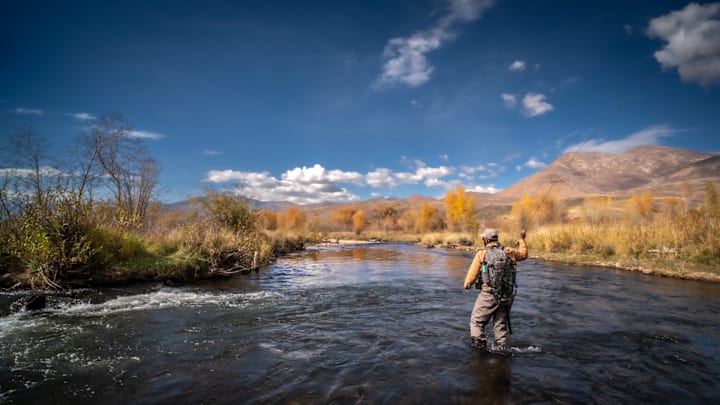
A few months ago, I wrote two articles on Presentation—the skill of putting a fly in front of a fish in a way that makes it eat. This article sits in the same wheelhouse, but from a different angle. This time, I’m writing about the exact circumstances at the moment the fish ate—and how those clues can reveal a pattern that leads to more strikes.
What Is a Fishing Pattern?
Bass anglers—especially on the tournament scene—talk constantly about “finding the pattern.” But what is a pattern? And once you find one, what do you actually do with it?
A pattern is simply a repeatable set of clues that leads to more bites. It’s not limited to where fish hold or what fly you are using. Most patterns come from small adjustments anglers make that trigger a fish to strike.

Patterns Are Found in All Fishing
Sometimes the pattern is brown trout preferring a fast, erratic streamer instead of a dead drift. Other days, it’s redfish sliding off baitfish and switching to crabs, or stripers pinning sand eels tight to the beach at last light.
Patterns can come from how you present the fly—the depth you're fishing, the speed of the retrieve, the color and size of the fly, or even the cadence you’re using. Current, structure, cover, and weather all factor in, too.

The Clues to Look For is Endless
A pattern can be as broad as “fish are on grass edges” or as specific as “two quick strips, then a pause.” There’s no limit to what can qualify as a pattern. For this article, I’m focusing on one thing—the details of what was happening the moment the fish ate.
Why Attention Beats Luck
Fishing on autopilot is a sure way to miss opportunities. Let’s say you’re stripping a streamer for brown trout. A fish eats, gives you a good fight, you admire it, and send it on its way. Great moment—but were you actually mentally present when the fish hit? Were you paying attention?
Here's the test. Can you replay all the details that led to the strike? Or were you just casting and stripping and hoping something grabbed your fly?

The Questions You Should Ask After a Fish Strikes
These apply to streamer fishing, but the concept can be applied to all variations of fly fishing.
• Was the fly moving or paused when it ate?
• How was it moving—fast, slow, erratic, or accelerating out of a pause?
• If it ate on a pause, was that pause long or short?
• How deep was the fly?
• Did the fly land with a loud splat or soft entry?
• Was it moving with or against the current?
• Were your strips long, short, or mixed?
• What color were you using
• What was the size of the fly?
So Many Pieces of the Puzzle, but You Don’t Need All of Them
You don’t have to ask all of these questions every time. You can come up with some different ones. It is the questioning and observation that matters. Noticing specific details when the strike happens will turn luck into intention.

The Key To Success
The key and most important part of this technique is: Were you paying attention? Were you present and aware? Can you replicate what led to success?
A Real Pattern in Action (Lower Niagara Smallmouth)
Last spring, I joined a crew of product reps and writers for a week of fishing on the Lower Niagara. I was the only "fly fishing" guy in the group. In fact, that is what they called me - "Oh, you're the fly fishing guy." Until the group got to know me, I could feel the side-eye when the fishing began—they weren’t used to a fly guy fishing ten feet down for smallmouth.

Paid Attention and Looked for Patterns
I let the conventional guys do the heavy lifting on day one. The other angler in my boat was fishing with a baitcaster, smashing fish on a chartreuse Spro jerkbait while ripping it back hard. Most of his hits came between 6–12 feet deep. I caught some fish on a Clouser, but not in his numbers or size class.
With a Little Help From My Friends
That night at dinner, I talked with Joe Cermele – media guy, podcaster, Outdoor Life fishing editor – about what I’d observed. He walked me out to his truck, popped open a fly box, and handed me a couple of big chartreuse and brown-orange streamers. “Drunk and Disorderly,” he said. “They move like jerkbaits—take ’em.” Joe's a mensch.

Following a Pattern Leads to Success
The next morning, my fly reel was spooled with an SA full sinking line, and a D&D tied on. On my first cast, I let the fly sink to about eight feet. I made three big, aggressive strips, then paused. A smallmouth crushed it on the first strip after the pause. After the excitement and fist bumps, I took note –
• Chartreuse
• Jerkbait action
• Roughly eight feet down
• Big, erratic strips
• Hit after the pause

The Fish Will Tell You What They Like If You Know What to Look For
One fish doesn’t make a pattern, but it’s a starting point. During the week, I paid attention, made adjustments, and was as productive, and sometimes more, than the conventional tackle guys. Not because I was lucky, but because I kept looking for a pattern.
Bring It All Together
Every fish that eats gives you data. Stack enough of those details—depth, speed, cadence, color, timing—and you end up with a pattern. Presentation gets the fly in front of a fish. Paying attention to the eat is what turns one bite into a repeatable pattern. KB – For more fly fishing content and photos, follow me on my Fishing On SI Facebook page.
"Slow down...listen to the hoppers...be patient with yer wife...eat sardines with hot sauce... catch “Gagger” trout!!!"–Flip Pallot
You Might Also Like These Other Fly Fishing Related Articles:
 Add us as a preferred source on Google
Ken Baldwin is a writer and editor for Fishing On SI, covering fly fishing gear, travel, and all other aspects of a life well fished. His writing and photography have appeared in Men’s Journal, Catch Magazine, Fish Alaska, and American Angler. Ken also created and hosts Season on the Edge, a television series exploring travel, adventure, and culture through fishing that aired on NBC Sports and in seven countries. For twenty years, Ken guided fly anglers in Alaska, keeping him in close proximity to brown bears and launching his path into wildlife photography. That field experience led to his work as a bear guard and consultant on the Netflix documentary Our Planet II, narrated by David Attenborough. His photography was also featured in the series promotion. His career has taken a few memorable turns – professionally dancing and teaching salsa, bartending at the House of Blues on the Sunset Strip, and played the terrorist “Mulkey” in the film Die Hard 2. Ken graduated from the University of Washington with a degree that had absolutely nothing to do with any of those choices.
Follow KenBaldwinOnSI