%22%3E%0A%3Cpath%20fill-rule%3D%22evenodd%22%20clip-rule%3D%22evenodd%22%20d%3D%22M156.868%204.36764C162.691%20-1.45588%20172.132%20-1.45588%20177.956%204.36764C183.779%2010.1912%20183.779%2019.6324%20177.956%2025.4559L167.412%2036L156.868%2025.4559C151.044%2019.6324%20151.044%2010.1912%20156.868%204.36764ZM159.509%207.55761C159.448%207.86849%20159.416%208.39718%20159.416%209.14566V10.4189C159.416%2011.1832%20159.448%2011.7198%20159.513%2012.0267C159.578%2012.3317%20159.778%2012.6168%20160.117%2012.8762C160.456%2013.1376%20160.903%2013.3316%20161.458%2013.4623C162.012%2013.593%20162.6%2013.6584%20163.337%2013.6584C164.073%2013.6584%20164.717%2013.591%20165.269%2013.4524C165.822%2013.3158%20166.261%2013.1178%20166.586%2012.8604C166.911%2012.6029%20167.105%2012.3178%20167.166%2012.0069C167.228%2011.6961%20167.259%2011.1674%20167.259%2010.4189V9.14566C167.259%208.38134%20167.228%207.84473%20167.162%207.53781C167.097%207.23287%20166.897%206.94971%20166.558%206.68834C166.22%206.42696%20165.772%206.23291%20165.218%206.10223C164.663%205.97154%20164.036%205.90619%20163.339%205.90619C162.602%205.90619%20161.959%205.97352%20161.406%206.11213C160.852%206.24875%20160.414%206.44677%20160.089%206.70418C159.765%206.9616%20159.571%207.24673%20159.509%207.55761ZM164.776%2024.8638C168.376%2024.8638%20170.057%2024.2064%20170.057%2021.862V21.858V21.3155C170.057%2019.6581%20169.016%2018.971%20165.752%2018.3136C164.778%2018.1136%20164.408%2017.9136%20164.408%2017.3136V16.9414C164.408%2016.6543%20164.677%2016.5117%20164.913%2016.5117C165.249%2016.5117%20165.418%2016.7137%20165.418%2016.9414V18.1136H169.891V17.3988C169.891%2015.4563%20168.847%2014.4266%20164.677%2014.4266C161.65%2014.4266%20159.396%2015.3414%20159.396%2017.3711V17.7433C159.396%2019.5155%20160.305%2020.3155%20163.701%2021.0303C163.78%2021.0472%20163.855%2021.063%20163.927%2021.0781C164.829%2021.2674%20165.147%2021.3341%20165.147%2021.9174V22.2897C165.147%2022.6619%20165.046%2022.8045%20164.642%2022.8045C164.17%2022.8045%20164.137%2022.5471%20164.137%2022.262V21.2897H159.394V21.7471C159.394%2024.149%20160.976%2024.8638%20164.776%2024.8638ZM170.924%2024.5569H175.425V14.7355H170.924V24.5569ZM172.455%2013.5019H175.425V6.06064H172.592V9.411L170.693%206.06064H167.859V13.5019H170.693V10.1199L172.455%2013.5019ZM163.769%2012.152C163.704%2012.2688%20163.555%2012.3262%20163.325%2012.3262L163.327%2012.3282C163.104%2012.3282%20162.959%2012.2767%20162.898%2012.1758C162.836%2012.0748%20162.805%2011.8074%20162.805%2011.3758V7.90068C162.805%207.51852%20162.852%207.28684%20162.945%207.20962C163.038%207.13239%20163.175%207.09279%20163.351%207.09279C163.559%207.09279%20163.698%207.14031%20163.765%207.23734C163.832%207.33239%20163.866%207.55416%20163.866%207.90068V11.3203C163.866%2011.7579%20163.834%2012.0352%20163.769%2012.152Z%22%20fill%3D%22white%22%2F%3E%0A%3Cpath%20d%3D%22M134.707%2035.9991C129.823%2035.9991%20126.029%2035.0305%20122.478%2033.2547L125.303%2027.7255C127.765%2029.017%20130.227%2029.8242%20133.254%2029.8242C136.684%2029.8242%20138.5%2028.0484%20138.5%2024.9811V24.3354C137.249%2025.7479%20135.191%2027.3623%20132.124%2027.3623C126.433%2027.3623%20122.316%2023.3264%20122.316%2017.2322V17.1515C122.316%2010.9766%20126.514%206.90039%20131.599%206.90039C134.828%206.90039%20136.724%208.11115%20138.339%209.76586V7.42506H147.5V23.8914C147.5%2027.9677%20146.653%2030.7524%20144.635%2032.7704C142.657%2034.748%20139.63%2035.9991%20134.707%2035.9991ZM134.868%2020.6627C137.128%2020.6627%20138.541%2019.1291%20138.541%2017.1919V17.1112C138.541%2015.2143%20137.088%2013.6807%20134.868%2013.6807C132.608%2013.6807%20131.195%2015.2547%20131.195%2017.1919V17.2726C131.195%2019.1695%20132.648%2020.6627%20134.868%2020.6627Z%22%20fill%3D%22white%22%2F%3E%0A%3Cpath%20d%3D%22M96.9492%2029.4629V7.42701H106.111V10.4943C107.523%208.67813%20109.743%206.90234%20112.851%206.90234C117.492%206.90234%20120.398%209.96961%20120.398%2014.9337V29.4629H111.236V17.8799C111.236%2015.9831%20110.106%2014.8934%20108.734%2014.8934C107.362%2014.8934%20106.111%2015.9831%20106.111%2017.8799V29.4629H96.9492Z%22%20fill%3D%22white%22%2F%3E%0A%3Cpath%20d%3D%22M84.8096%205.85202V0H94.2939V5.85202H84.8096ZM84.971%2029.4619V7.42602H94.1324V29.4619H84.971Z%22%20fill%3D%22white%22%2F%3E%0A%3Cpath%20d%3D%22M58.877%2029.4619V0H68.0384V10.3722C69.451%208.55606%2071.6707%206.90135%2074.7783%206.90135C79.4196%206.90135%2082.3254%209.96862%2082.3254%2014.9327V29.4619H73.164V17.8789C73.164%2015.9821%2072.0339%2014.8924%2070.6617%2014.8924C69.2895%2014.8924%2068.0384%2015.9821%2068.0384%2017.8789V29.4619H58.877Z%22%20fill%3D%22white%22%2F%3E%0A%3Cpath%20d%3D%22M47.3991%2029.9876C43.1211%2029.9876%2039.2466%2028.8979%2036.0986%2026.7992L39.2063%2021.5929C41.8699%2023.2477%2044.8565%2024.0548%2047.3587%2024.0548C48.2466%2024.0548%2048.6906%2023.853%2048.6906%2023.3284V23.2477C48.6906%2022.8037%2048.287%2022.5212%2046.0673%2021.9562C40.4977%2020.584%2037.0672%2019.0907%2037.0672%2014.5302V14.4494C37.0672%209.60638%2040.9417%206.90234%2046.6726%206.90234C50.3049%206.90234%2053.8969%207.8306%2056.5605%209.44495L53.6547%2014.8934C51.3139%2013.6019%2048.4888%2012.8351%2046.6323%2012.8351C45.7444%2012.8351%2045.3408%2013.0772%2045.3408%2013.5212V13.6019C45.3408%2014.0458%2045.8251%2014.3284%2048.0448%2014.8934C53.6143%2016.2656%2056.9641%2017.7992%2056.9641%2022.3194V22.4001C56.9641%2027.2028%2053.3722%2029.9876%2047.3991%2029.9876Z%22%20fill%3D%22white%22%2F%3E%0A%3Cpath%20d%3D%22M25.5312%205.85202V0H35.0156V5.85202H25.5312ZM25.6927%2029.4619V7.42602H34.8541V29.4619H25.6927Z%22%20fill%3D%22white%22%2F%3E%0A%3Cpath%20d%3D%22M0%2029.4621V1.21094H23.6503V9.2827H9.44396V12.8746H22.6413V20.2199H9.44396V29.4621H0Z%22%20fill%3D%22white%22%2F%3E%0A%3C%2Fg%3E%0A%3Cdefs%3E%0A%3CclipPath%20id%3D%22clip0_16330_64756%22%3E%0A%3Crect%20width%3D%22182%22%20height%3D%2236%22%20fill%3D%22white%22%2F%3E%0A%3C%2FclipPath%3E%0A%3C%2Fdefs%3E%0A%3C%2Fsvg%3E%0A)
The Fly-Fishing Gift Everyone Overlooks, But Every Angler Needs
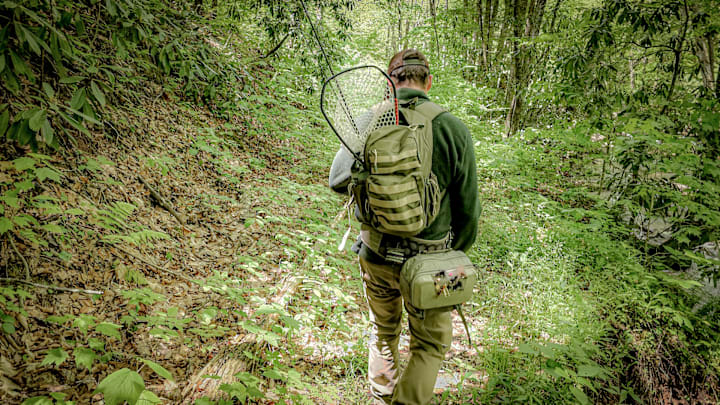
A small first-aid kit isn’t flashy, but it’s one of the most important things an angler can carry. I’ve seen enough hooks embedded in hands, cuts, stings, and accidents to know this: when something goes wrong, having the basics close at hand can save a day—or stop a bad situation from getting worse.
I’m not a doctor. This kit is based on common first-aid practices and what I’ve found helpful on the water. Use your judgment and seek medical instruction and expertise when needed.
Don't Skip the First-aid Kit
Every time an angler heads outdoors, they should have a first aid kit with them – end of story. It doesn’t need to be a big one. But it should cover the basic cuts, scrapes, stings, bites, and, in a pinch, take care of a more serious accident until you can get to real help.
For Your EDC
Get the angler a smaller first aid kit they can throw in a pack or vest and forget about until needed. It shouldn't take up much space or add any real weight. If it does, it probably won't be carried.

Don't Get the Already Packaged Kit
Here's the dilemma: store-bought small first-aid kits are too general and not well thought out. They try to cover all the bases and give you stuff you don't need.
Make It a Custom Kit
To keep the kit small and still useful, you should create a custom first-aid kit as a gift. It isn't difficult; it may take one session at your computer and one trip to your drugstore. I'll list what you need here, and you can always add your personal touches.
Keeping it Basic
This kit isn't equipped for bigger, more serious accidents. I recommend having a full-size first-aid kit in the car or boat. This one is for carrying in a pack or on the body, filled with simple basics.

Why This Matters
If you spend enough time outdoors, things are going to happen—a fish hook in the arm, a turned ankle, stings, cuts, and relentless mosquitoes. It’s usually the small stuff that interferes with a good day, the kind of problems where all you really need is one Band-Aid, a mosquito wipe, or a couple of aspirin.

What Goes in the Kit (And Why)
This isn’t a wilderness EMT setup. It’s a small kit meant to live in a sling pack, vest, or wader pocket—so it actually gets carried.
Adhesive bandages (various sizes)
For small cuts, nicks, and abrasions. You’ll use these more than anything else. You don't need to carry many sizes. My favorites are the small, butterfly bandages.

Sterile gauze pads
I always throw a few of these in. They are great for absorbing blood, applying pressure, and protecting a wound when bleeding needs to be controlled.
Liquid Skin
This is a medical-grade liquid bandage that functions similarly to super glue, but is made specifically for use on skin, sealing small cuts, blisters, and abrasions.
Medical tape (cloth or athletic tape)
All you need is a small roll. I never bring the whole roll. I save space by taking some off and rolling it around a broken pencil. Remember, this kit is meant to be refilled once something is used. Bring a little, and then replace.
Antiseptic wipes or packets
Cleaning a cut properly matters. River water doesn’t count.
I have both antiseptic wipes, and iodine wipes.
Triple antibiotic ointment (small packets)
As small a tube as I can find. Used after I clean the wound to speed up healing.
Pain reliever (ibuprofen or acetaminophen)
Yes. You will get a lot of use out of these.

Antihistamine (Benadryl or similar)
For allergic reactions, bug bites, or unexpected stings.
Alcohol prep pads
Extra cleaning power. Doesn't take up much room.
Two More Items Worth Carrying
Adhesive bandages made by DrySee. These bandages are waterproof and change color when compromised by external moisture. The interior pad will also change color if it becomes saturated with wound fluid. This is brilliant and a higher level of safety. Wet bandages trap bacteria.
A high-absorbency women’s sanitary pad: Read that again. They are small, compact, and extra absorbent. In an emergency, they can help control heavy bleeding. I know this from an incident I had on a lake. I slapped the pad onto a deep cut, wrapped it, and took the person to the hospital. It's a quick, temporary fix until you get the victim to the appropriate help.
Make it Easy to Carry
Remember: keep the kit small and keep a larger one in the primary vehicle. If this one is too big, too heavy, or too complicated, it’ll get left behind.
A first aid kit left behind doesn’t help anyone. Ken Baldwin - Follow me on my Fishing On SI Facebook page.
"Slow down...listen to the hoppers...be patient with yer wife...eat sardines with hot sauce... catch “Gagger” trout!!!" – Flip Pallot
You Might Also Like These Other Gear Related Articles:
 Add us as a preferred source on Google
Ken Baldwin is a writer and editor for Fishing On SI, covering fly fishing gear, travel, and all other aspects of a life well fished. His writing and photography have appeared in Men’s Journal, Catch Magazine, Fish Alaska, and American Angler. Ken also created and hosts Season on the Edge, a television series exploring travel, adventure, and culture through fishing that aired on NBC Sports and in seven countries. For twenty years, Ken guided fly anglers in Alaska, keeping him in close proximity to brown bears and launching his path into wildlife photography. That field experience led to his work as a bear guard and consultant on the Netflix documentary Our Planet II, narrated by David Attenborough. His photography was also featured in the series promotion. His career has taken a few memorable turns – professionally dancing and teaching salsa, bartending at the House of Blues on the Sunset Strip, and played the terrorist “Mulkey” in the film Die Hard 2. Ken graduated from the University of Washington with a degree that had absolutely nothing to do with any of those choices.
Follow KenBaldwinOnSI