
Dover Confirms All-Star Format; Open Axed For First Time Since 1985
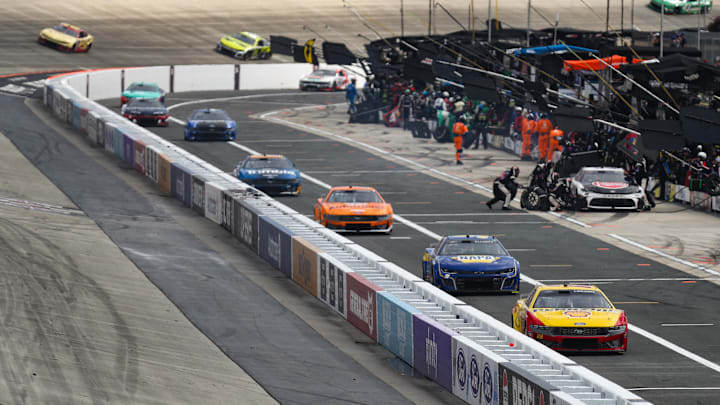
NASCAR and Dover Motor Speedway have come together to officially reveal the format for the 2026 NASCAR All-Star Race, and the first-ever exhibition event at the one-mile racetrack in Dover, Delaware, will come with some unique features and surprises... plus, some math.
For the first time since The Winston's first running in 1985 (at Charlotte Motor Speedway), there will be no qualifying race happening prior to the green flag of the main event. Instead, this year, the "All-Star Open" as its come to be known, will be baked into the NASCAR All-Star Race.
The 2026 NASCAR All-Star Race at Dover Motor Speedway will take place over a 350-lap contest, broken up into segments of 75 laps, 75 laps, and 200 laps. At the conclusion of the 200-lap segment, the winner of the race, as usual, will be awarded the $1 million prize.
But, it's not quite that simple... When the green flag drops on Sunday, everybody who was featured on the entry list for the event will be on the racetrack. After the first 75-lap segment ends, only the top-26 in the running order will be inverted for another 75-lap run.
Moving through the pack in the second segment is paramount, as it could ultimately be the different between whether or not you compete in the final 200-lap segment and have a chance at the seven-figure grand prize.
That's right... we're (kind of) heading back to the days of the early 2000's. where some drivers will be leaving the racetrack after the penultimate segment of the race, whittling the field down to just 26 drivers for a final 200-lap showdown -- the exact distance of the NASCAR Craftsman Truck Series and NASCAR O'Reilly Auto Parts Series events happening on All-Star Weekend.
Some drivers will know heading into the race, whether they'll be advancing to the final segment of the NASCAR All-Star Race. This year, NASCAR's criteria includes winners from 2025 or 2026, past champions of the series or the All-Star Race (who are still full-time), plus a Fan Vote winner.
Should that number not equal out to 26 by the time the NASCAR All-Star Race rolls around (as of February 25, it equals 18 drivers), NASCAR will allow the drivers with the best combined finishes between the first two segments to fill the pack, until the final segment reaches 26 drivers.
The following drivers are currently locked in: #1-Ross Chastain, #2-Austin Cindric, #3-Austin Dillon, #5-Kyle Larson, #6-Brad Keselowski, #8-Kyle Busch, #9-Chase Elliott, #11-Denny Hamlin, #12-Ryan Blaney, #19-Chase Briscoe, #20-Christopher Bell, #21-Josh Berry, #22-Joey Logano, #23-Bubba Wallace, #24-William Byron, #45-Tyler Reddick, and #97-Shane Van Gisbergen.
Qualifying will determine the starting lineup for the NASCAR All-Star Race. The session will be like All-Star Qualifying sessions of the past, where drivers will run two laps, with a hot entry onto pit road and a four-tire pit stop (without fuel). The team that completes the fastest four-tire pit stop will get the best pit selection for the All-Star Race, with the pit stop order also serving as pit selection order.
The NASCAR All-Star Race will air live on FOX Sports 1, MRN Radio, and SiriusXM NASCAR Radio Channel 90, with coverage beginning at 1:00 PM ET on Sunday, May 17.
 Add us as a preferred source on Google
Joseph Srigley covers NASCAR for TobyChristie.com, Racing America, and OnSI, and is the owner of the #SrigleyStats brand. With a higher education in the subjects of business, mathematics, and data analytics, Joseph is able to fully understand the inner workings of the sport through multiple points of perspective.
Follow joe_srigley