%20%20--%3E%0A%3Csvg%20version%3D%221.1%22%20id%3D%22Layer_1%22%20xmlns%3D%22http%3A%2F%2Fwww.w3.org%2F2000%2Fsvg%22%20xmlns%3Axlink%3D%22http%3A%2F%2Fwww.w3.org%2F1999%2Fxlink%22%20x%3D%220px%22%20y%3D%220px%22%0A%09%20width%3D%2239px%22%20height%3D%2240px%22%20viewBox%3D%220%200%2039%2040%22%20enable-background%3D%22new%200%200%2039%2040%22%20xml%3Aspace%3D%22preserve%22%3E%0A%3Cpath%20fill%3D%22%23FFFFFF%22%20d%3D%22M38.5%2C7H28.2v26h10.3V7z%22%2F%3E%0A%3Cpath%20fill-rule%3D%22evenodd%22%20clip-rule%3D%22evenodd%22%20fill%3D%22%23FFFFFF%22%20d%3D%22M26.1%2C25.5c0%2C5.8-4.1%2C7.5-12.9%2C7.5C3.9%2C33%2C0%2C31.2%2C0%2C25.2v-1.1h11.6%0A%09v2.4c0%2C0.7%2C0.1%2C1.4%2C1.2%2C1.4c1%2C0%2C1.2-0.4%2C1.2-1.3v-0.9c0-1.6-0.9-1.6-3.5-2.2C2.2%2C21.7%2C0%2C19.7%2C0%2C15.3v-0.9C0%2C9.3%2C5.5%2C7%2C12.9%2C7%0A%09c10.2%2C0%2C12.8%2C2.6%2C12.8%2C7.4v1.8h-11v-2.9c0-0.6-0.4-1.1-1.2-1.1c-0.6%2C0-1.2%2C0.4-1.2%2C1.1v0.9c0%2C1.5%2C0.9%2C2%2C3.3%2C2.5%0A%09c8%2C1.6%2C10.5%2C3.3%2C10.5%2C7.5V25.5z%22%2F%3E%0A%3C%2Fsvg%3E%0A)
Predicting Which Seed Will Win March Madness Based on Kalshi Markets
March Madness tipped off in dramatic fashion last night, with the Howard Bison and Texas Longhorns narrowly punching their tickets to the Round of 64, setting the stage for one of the most volatile sporting events of the year.
Prediction markets like Kalshi have introduced another way to follow how expectations evolve throughout the tournament. These platforms provide real-time insight into how outcomes are being priced, reflecting changing probabilities as games are played. While these markets can offer useful context, outcomes remain uncertain and participants should be aware that losses are possible.
One of the most active markets this March is “Seed to Win the Men’s College Basketball Championship,” which has already attracted significant participation. Based on current pricing, No. 1 and No. 2 seeds are viewed as the most likely paths to producing a national champion (67% and 20% respectively).

Historical March Madness Winners
To better understand how expectations align with past results, it’s helpful to review the historical distribution of champions by seed.
2025: Florida (No. 1)
2024: UConn (No. 1)
2023: UConn (No. 4)
2022: Kansas (No. 1)
2021: Baylor (No. 1)
2019: Virginia (No. 1)
2018: Villanova (No. 1)
2017: North Carolina (No. 1)
2016: Villanova (No. 2)
2015: Duke (No. 1)
2014: UConn (No. 7)
2013: Louisville (No. 1)
2012: Kentucky (No. 1)
2011: UConn (No. 3)
2010: Duke (No. 1)
2009: North Carolina (No. 1)
2008: Kansas (No. 1)
2007: Florida (No. 1)
2006: Florida (No. 3)
2005: North Carolina (No. 1)
2004: UConn (No. 2)
2003: Syracuse (No. 3)
2002: Maryland (No. 1)
2001: Duke (No. 1)
2000: Michigan State (No. 1)
Since 2000, No. 1 seeds have won 18 of 25 national championships (72%), while only two teams seeded No. 4 or worse have won the title. While upsets are a defining feature of the tournament, the eventual champion has most often emerged from the top of the bracket.

It’s important to note that historical trends do not guarantee future results, and relying too heavily on past outcomes can introduce additional risk when evaluating current markets.
The data creates an interesting dynamic. If the implied probability of a No. 1 seed winning is lower than its historical hit rate, there’s a strong argument that the “chalk” play is actually the sharp play in 2026. But we need to look closer at this year’s contenders and pretenders to determine if this year’s crop of top seeds could dominate their way to the Final Four and beyond like in years past.
2026 March Madness Top Contenders
This year’s No. 1 seeds—Duke Blue Devils, Arizona Wildcats, Michigan Wolverines, and Florida Gators—each bring strong profiles, though none are without questions.

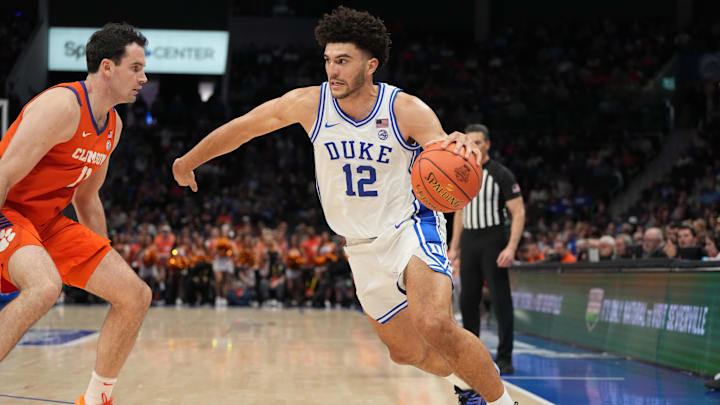
The Blue Devils are the top ranked team for the 2026 tournament and currently carry the highest implied probability on Kalshi, but their 19% probability (which dropped from 21% just two days ago) reflects the market's understanding of the difficulty of winning six straight games in this chaotic tournament. Duke has one of the best players in the nation in Cameron Boozer and their path to a championship isn’t all that easy with a potential matchup against St. Johns (No. 5) in the Sweet 16. In the Elite 8, they would face off with likely UConn (No. 2) or Michigan State (No. 3), two teams with plenty of tournament experience and coaches with winning pedigrees. Still, Duke is likely the team to beat this year.
Michigan’s price has climbed in recent days (surpassing Arizona) and comes in with the second-highest price at 18 cents. Michigan has a more clear path to the Final Four, but a shaky conference tournament showing in which they were defeated by Purdue may have scared some traders away. While many still expect them to represent the Midwest, Iowa State (No. 2) and Virginia (No. 3) definitely have the chops to take them down in the Elite 8. If I’m selecting a No. 1 seed to win the title, it’s not because I have a ton of faith in the Wolverines.
In the West, Arizona currently has the third-best chance (17%) of winning the championship, and for good reason. The Wildcats may offer the best combination of value and roster construction. Outside of Duke, they are probably my favorite pick this year and in the majority of my brackets, I have the two teams meeting in the championship round.

Fresh off an impressive conference tournament run in which they dispatched Houston in the Big 12 championship, Zona boasts depth, scoring balance, and efficiency on both ends—traits that historically translate well in tournament settings. Arizona has five different players averaging double-digit points (Brayden Burries, Koa Peat, Jaden Bradley, Motiejus Krivas, and Ivan Kharchenkov). From a trading lens, they check nearly every box you’re looking for in a championship ticket.
It’s hard to envision Zona struggling with any opponent until the Elite 8 where they are poised to meet either Purdue (No. 2) or Gonzaga (No. 3). Purdue is not quite the team most analysts expected them to be when the season began, though they did finish strong. And Braden Smith is clearly the real deal. But Gonzaga isn’t the same Bulldogs team of years past. The Wildcats should represent the West in the Final Four and the only team that I think has a shot at knocking them off is the Boilermakers. But that still seems like a tall task against a very deep Zona team.
The final No. 1 seed is Florida, who represents the South bracket. The reigning champions have arguably the most difficult path to the Final Four of any No. 1 seed and their price on Kalshi represents that (9 cents). That’s a steep drop off from the other three top seeds. Although the Gators have the experience factor working in their favor, a potential Sweet 16 matchup with Vanderbilt could spell trouble. And then even if they are able to advance, an Elite 8 contest against Houston (No. 2) or Illinois (No. 3) could halt their run at back-to-back titles. I think Houston is the team to beat in the South but Florida definitely has potential. The market for Florida clearly has already baked in their difficult schedule.
The No. 2 & No. 3 Seeds
The No. 2 seeds offer intriguing upside but come with added risk. That being said, Houston (7%), Purdue (5%), Iowa State (4%), and UConn (4%) are all teams who have historically performed well and have the metrics that scream championship caliber.

The question is whether you believe any of these teams can advance out of their bracket and defeat the No. 1 seed. Personally, I’d buy Houston advancing in the South over Florida, but the rest of the No. 2 seeds are clear underdogs if they meet the top seed in the Elite 8. Iowa State is really the only other No. 2 seed I could see potentially advancing to the Final Four but even that would be difficult with matchups against Kentucky (No. 7) in the Round of 32, Virginia (No. 3) in the Sweet 16, and of course Michigan (No. 1) in the Elite 8.
The only No. 3 seed with a 4% or higher chance at cutting down the nets is Illinois, which is in large part due to being in the South bracket with the weakest No. 1 seed (Florida). The Fighting Illini would still have to get through Houston and the aforementioned Gators.
Gonzaga is being traded at 2% and I just don’t think they are getting through either Purdue or Arizona if the bracket plays out as anticipated. Of course, every year there are tons of surprises so you never know, but this isn’t a longshot that I’d feel confident about.
Michigan State and Virginia also have a 2% chance at hoisting the trophy. Michigan State is in arguably the most difficult bracket with teams like Duke, UConn, and even St. Johns if an upset occurs in the Sweet 16. I like the Spartans but I don’t expect them to get further than the Elite 8.
Virginia is a dark horse to represent the Midwest in the Final Four and I actually can see that happening if all the right dominoes fall. But that doesn’t mean that they could win the whole tournament. Ultimately, I just don’t see any teams with the consistency, depth, and both offensive and defensive prowess to keep up with Duke and Arizona.
Which Seed Will Win March Madness?
From a broad perspective, both historical outcomes and current market pricing suggest that top seeds provide the most consistent path to a national champion. However, consistency does not eliminate risk, and the single-elimination format introduces significant variability.
Duke and Arizona seem like the two teams to beat and Michigan is also among that top tier. While Florida isn't quite at that caliber, they at least have momentum from 2025, and if they advance to the Final Four against Duke, you at least know you will have a No. 1 seed playing in the championship round.
March Madness is defined by unpredictability, and that volatility should always be considered when evaluating any market-based position. Rather than focusing on certainty, the more practical approach is understanding how probabilities are being priced and recognizing the range of possible outcomes.
Trading is risky, always trade responsibly. If your activity is becoming a problem, support is available by calling 1-800-522-4700.
More Prediction Markets On SI News:
 Add us as a preferred source on Google
-93d081519425a2ac5afbaba6a5df6de3-3036e449d69db41b963949c70323b829_(1)-c5832e6a88979ccd3a359b31c9071624.webp "Matt Brandon")
Matt Brandon has spent more than a decade in the fantasy sports and sports media world, with stops at Scout Media, CBS Sports, Sports Illustrated, DrRoto.com, Fantasy SP, FullTime Fantasy, and several other industry staples. A three-time Top-10 finisher in FantasyPros’ national rankings competition, Brandon has also captured multiple major DFS tournament wins on FanDuel and DraftKings. His true expertise lies in season-long fantasy football and fantasy basketball, along with sports betting analysis. A lifelong New Yorker, he proudly bleeds blue for his Giants, Knicks, Rangers, and Mets. Brandon also covers Major League Baseball, with a particular focus on the Seattle Mariners, San Francisco Giants, and Philadelphia Phillies