
Darryll Pines Addresses Concerns As Big Ten Analyzes Potential Winter Season
In a virtual town hall co-moderated by The Diamondback, university president Darryll Pines spoke to students as the University of Maryland is expected to return students to campus beginning September 14. While virtual classes will begin as planned on August 31, Pines noted the “4Maryland” checklist for students to help minimize the spread of COVID-19. Pines also highlighted the university’s cumulative positivity rate of 0.15%, according to the university’s COVID-19 Dashboard, with six positive cases in 4,350 administered tests since August 19.
The university's new school president noted the initiative outlined at the beginning of his presentation will take a collective effort from all students, a plan that has yet to work consistently as universities resume classes across the nation. Alabama reported 531 positive cases since classes resumed last Wednesday while both NC State and Vanderbilt—both expected to kick off their season in September—paused workouts following positive cases. Maryland will look to minimize large social gatherings by adding health ambassadors hired by the Prince George’s County Department of Health, tasked with carrying masks and reporting such gatherings to university authorities. Pines noted the ambassadors have been told to not intervene but to rather gather evidence.
Pines admitted the University of Maryland now faces “a sizeable deficit as a result of the COVID-19 pandemic,” in an email sent to students on Monday morning as he highlights the next hurdle that schools face across the country. Iowa cancelled four programs last week as they project lost revenue of “approximately $100 million and an overall deficit between $60-75 million this fiscal year,” the school said in a statement.
The decision to postpone fall sports from both the Big Ten and Pac-12 have littered universities with financial complications heading into the new academic year. While the ongoing debate surrounding the decision to postpone continues, Pines reiterated “we supported the Big Ten Conference decision to postpone fall sports” as parents of conference athletes protests Warren’s controversial decision. After organizing on Friday at the Big Ten headquarters in Illinois, Randy Wade, the father of Ohio State cornerback Shaun Wade, is organizing a second protest in Columbus at 11 AM.
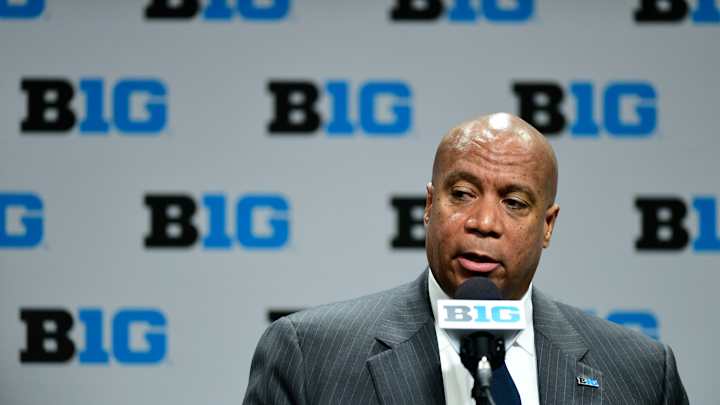
Big Ten commissioner Kevin Warren doubled down on the conference’s decision last week, adding “the vote by the Big Ten Council of Presidents and Chancellors (COP/C) was overwhelmingly in support of postponing fall sports and will not be revisited.” While Warren originally stated the focus shifts to the logistics of a spring season, the Big Ten is reportedly looking into an eight-week winter season that could begin in 2021 with NFL teams potentially willing to offer assistance with available domes in Detroit, Indianapolis, Minneapolis, St. Louis and Syracuse. Maryland won’t have to worry about practice logistics with the indoor facility at their disposal, but one bit of relief was provided when the Division I Council approved the recommendation to grant impacted student-athletes an additional year of eligibility.
As Maryland expects to welcome back students in mid-September, the football team added a bit more clarity after the Division I Council approved a plan for schools to practice 12 hours a week in a model that will run through October 5. Head coach Mike Locksley and the Terps will look to put the added time to good use ahead of new preseason camp.
“One thing I can tell you is that I'm extremely proud of the work that these guys put in and how they've adjusted,” Locksley said in a virtual press conference with reporters. “This has been really, really fluid, for all football programs across the country and the one thing that we've talked to our players about constantly is that there's always going to be change and it will be a really fluid situation, and to each and every one of our players, they've done a tremendous job of just handling the uncertainty and not knowing and adjusting with everything thrown their way.”
 Add us as a preferred source on Google