
Social Media Reactions to Brendan Sorsby's Current Situation
In this story:
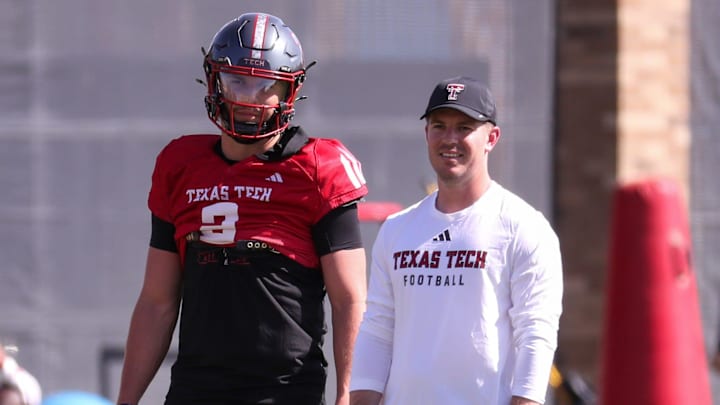
News this week broke that Red Raiders transfer quarterback Brendan Sorsby will seek residential treatment for a gambling addiction.
Breaking: Texas Tech transfer quarterback Brendan Sorsby is checking into a residential treatment program for a gambling addiction, sources told @PeteThamel.
— ESPN (@espn) April 27, 2026
He’s under NCAA investigation in the wake of the discovery of Sorsby making thousands of bets via a gambling app. pic.twitter.com/ecRJZPHF0t
NEW: Brendan Sorsby attended Cincinnati Reds games on repeated occasions and placed live wagers on balls and strikes, @PeteNakos reports.
— On3 (@On3) April 27, 2026
The bets ranged anywhere from $2.50 to less than $1 per pitch. https://t.co/IvnmNlbncx https://t.co/nLYokP0tvz pic.twitter.com/t80K3pPMUG
Texas Tech's Brendan Sorsby is entering a residential treatment program for a gambling addiction.@PeteThamel shares more details and what that means for the Red Raiders moving forward. pic.twitter.com/r85Lqh7cKu
— SportsCenter (@SportsCenter) April 27, 2026
BREAKING: Texas Tech transfer quarterback Brendan Sorsby is taking an “immediate indefinite leave of absence from the football program” to enter a residential treatment program for a gambling addiction, the school announced.
— Yahoo Sports (@YahooSports) April 27, 2026
Sorsby's decision to seek treatment for gambling… pic.twitter.com/vQSFeHt3cP
NEW: Texas Tech QB Brendan Sorsby hosted a QB camp this past weekend in Lubbock.
— College Transfer Portal (@CollegeFBPortal) April 27, 2026
Sorsby’s a great role model for the next generation! 👏 pic.twitter.com/ZXlzohiNyM
There is no excuse for Division 1 college athletes to participate in these activities. Many, if not all, universities with Division 1 sports programs have extensive educational programs and training for their student-athletes to educate them on what they can and can't do while being student-athletes per NCAA guidelines and rules. However, there are a large number of ads for sports betting that have made gambling a normal part of sports culture, especially among male adults. The culture and popularity of sports betting have made it harder for student athletes like Sorsby to tell the difference between "engaging with the game" and "wagering."
In the case of Sorsby, published reports say that Sorsby made thousands of online bets on a wide range of sports. This amount of money suggests that he may be addicted to sports gambling because it is easy to access on a phone and place bets through various apps and because betting is a normal part of being a sports fan in American culture.
Sorsby was a top transfer (ranked No. 2 in the transfer portal) and is scheduled to make more than $5 million in NIL (Name, Image, and Likeness) money. Being ineligible or violating the NCAA's rules could prevent him from playing college football this season and entering the NFL supplemental draft this spring. The NCAA has a "zero tolerance" policy for student-athletes who bet on any NCAA-sponsored sport. Sorsby may face an NCAA investigation based on bets he made as far back as 2022, when he was at Indiana. Even if an athlete bets on their team, they are breaking the rules and could lose their eligibility to continue playing college football.
Young adults (18–22 years old) are more likely to act on impulse and become addicted, so the "risk-free bet" or "bonus credit" marketing strategies can be very appealing to them. Advertising creates a culture of betting that directly harasses players, as people who bet on college sports and lose bets sometimes DM and/or send messages to players blaming them because those who placed the bets lost their bets on the games that players played in. "Bettor Rage" is when a player misses a shot or a quarterback throws an interception, and bettors who lost money often send them targeted abuse on social media. The culture of betting on collegiate sports needs to be fixed, as it is creating a series of problems.
NCAA data from early 2026 shows that 1 in 3 men's basketball players said fans directly blamed them for losing bets. Such behavior makes for a lot of "bad mental health days" and anxiety, which were much less common before sports betting became legal and heavily promoted. A report predicts that by 2026, rates of mental exhaustion and anxiety among student-athletes will be 150% higher than in 2019. This trend is closely linked to many states making sports betting legal. However, this trend doesn't necessarily correlate to Sorsby and his alleged betting allegations, but it gives an idea of the negative consequences of sports betting on college athletic events and games.
There is a national effort to eliminate "prop bets," which are bets on individual player stats like how many yards Sorsby throws in a game or how many yards a running back runs for in any given game. These bets make individual athletes easy targets for harassment and bribery. There is also growing debate about whether athletes who are addicted to gambling should be treated like "rule-breakers" who should be banned or like "patients" who need help, like the NCAA does with drug abuse.
Social media posts that are getting attention and likes about his situation can be seen in two ways. One way to look at it is that people are trying to make this situation humorous with their posts. Another viewpoint is that people are asking for the NCAA to forgive him or that some people believe he should be ineligible to play college football. People have a right to their opinion, but social media sometimes assumes that athletes in situations like these are guilty and need to prove their innocence instead of finding out the whole story before casting judgment.
Sorsby's choice to obtain professional help shows the human cost of the "glamour" of sports betting ads. It makes clear that student-athletes make mistakes, and it is up to the NCAA to determine if they are eligible to play this upcoming season.
Stay up-to-date on Texas Tech athletics by bookmarking Texas Tech On SI and following us on X/Twitter.
 Add us as a preferred source on Google
Ryan Kay is a journalist who graduated from Michigan State in 2003 and is passionate about covering college sports and enjoys writing features and articles covering various collegiate teams. He has worked as an editor at Go Joe Bruin and has been a contributor for Longhorns Wire and Busting Brackets. He is a contributor for Texas Tech On SI.