%20%20--%3E%0A%3Csvg%20version%3D%221.1%22%20id%3D%22Layer_1%22%20xmlns%3D%22http%3A%2F%2Fwww.w3.org%2F2000%2Fsvg%22%20xmlns%3Axlink%3D%22http%3A%2F%2Fwww.w3.org%2F1999%2Fxlink%22%20x%3D%220px%22%20y%3D%220px%22%0A%09%20viewBox%3D%220%200%20163.6%2028.9%22%20style%3D%22enable-background%3Anew%200%200%20163.6%2028.9%3B%22%20xml%3Aspace%3D%22preserve%22%3E%0A%3Cstyle%20type%3D%22text%2Fcss%22%3E%0A%09.st0%7Bfill%3A%23FFFFFF%3B%7D%0A%3C%2Fstyle%3E%0A%3Cg%20id%3D%22GUIDES%22%3E%0A%09%3Cpath%20class%3D%22st0%22%20d%3D%22M67.2%2C12.9c-0.3-1.4-1.6-2.4-3-2.3c-1.3-0.1-2.4%2C0.8-2.6%2C2.1c0%2C0%2C0%2C0%2C0%2C0c0%2C0.9%2C0.6%2C1.6%2C1.8%2C1.9l2.3%2C0.4%0A%09%09c3%2C0.6%2C4.6%2C2.5%2C4.6%2C4.8c0%2C2.5-2.1%2C5.1-6%2C5.1c-4.4%2C0-6.3-2.8-6.6-5.1l3-0.8c0.1%2C1.8%2C1.7%2C3.2%2C3.5%2C3.1c0%2C0%2C0.1%2C0%2C0.1%2C0%0A%09%09c1.7%2C0%2C2.7-0.9%2C2.7-2c0-0.9-0.7-1.7-2-1.9l-2.3-0.5c-2.6-0.5-4.3-2.2-4.3-4.7c0-2.9%2C2.6-5.1%2C5.7-5.1c4%2C0%2C5.5%2C2.4%2C5.9%2C4.2L67.2%2C12.9%0A%09%09z%22%2F%3E%0A%09%3Cpath%20class%3D%22st0%22%20d%3D%22M71.5%2C28.9V13.1h3v1.4c0.8-1.1%2C2.1-1.7%2C3.5-1.6c3.3%2C0%2C5.3%2C2.5%2C5.3%2C5.9s-2.2%2C6-5.4%2C6c-1.3%2C0.1-2.5-0.4-3.3-1.4%0A%09%09v5.5L71.5%2C28.9z%20M77.4%2C15.6c-1.6%2C0-2.9%2C1.3-2.9%2C2.9c0%2C0.1%2C0%2C0.2%2C0%2C0.3c-0.2%2C1.6%2C0.9%2C3%2C2.5%2C3.2c1.6%2C0.2%2C3-0.9%2C3.2-2.5%0A%09%09c0-0.2%2C0-0.5%2C0-0.7c0.2-1.6-1-3-2.6-3.2C77.6%2C15.6%2C77.5%2C15.6%2C77.4%2C15.6z%22%2F%3E%0A%09%3Cpath%20class%3D%22st0%22%20d%3D%22M95.5%2C18.8c0%2C3.3-2.7%2C6-6%2C6s-6-2.7-6-6s2.7-6%2C6-6S95.5%2C15.5%2C95.5%2C18.8z%20M92.4%2C18.8c0.2-1.6-1-3.1-2.6-3.3%0A%09%09c-1.6-0.2-3.1%2C1-3.3%2C2.6c0%2C0.2%2C0%2C0.5%2C0%2C0.7c-0.1%2C1.6%2C1.1%2C3%2C2.7%2C3.2s3-1.1%2C3.2-2.7C92.4%2C19.1%2C92.4%2C19%2C92.4%2C18.8z%22%2F%3E%0A%09%3Cpath%20class%3D%22st0%22%20d%3D%22M103.6%2C16.2c-0.3-0.1-0.6-0.1-0.9-0.1c-1.6%2C0-3%2C0.8-3%2C3.2v5.2h-3.1V13.1h3v1.7c0.6-1.2%2C1.9-1.9%2C3.3-1.8%0A%09%09c0.2%2C0%2C0.5%2C0%2C0.7%2C0V16.2z%22%2F%3E%0A%09%3Cpath%20class%3D%22st0%22%20d%3D%22M108.2%2C13.1h2.3v2.7h-2.3v4.8c0%2C1%2C0.5%2C1.3%2C1.3%2C1.3c0.3%2C0%2C0.6%2C0%2C0.9-0.1v2.5c-0.6%2C0.2-1.1%2C0.3-1.7%2C0.3%0A%09%09c-1.8%2C0.2-3.4-1.1-3.6-2.9c0-0.2%2C0-0.4%2C0-0.6v-5.3H103v-2.7h0.6c0.9%2C0.1%2C1.7-0.6%2C1.8-1.5c0-0.1%2C0-0.2%2C0-0.3V9.8h2.8V13.1z%22%2F%3E%0A%09%3Cpath%20class%3D%22st0%22%20d%3D%22M113.3%2C20.8c0.1%2C1%2C1%2C1.8%2C2%2C1.8c0%2C0%2C0.1%2C0%2C0.1%2C0c1%2C0%2C1.5-0.5%2C1.5-1.1s-0.3-0.9-1.2-1.1l-1.5-0.4%0A%09%09c-2.2-0.5-3.2-1.8-3.2-3.4c0-2%2C1.8-3.7%2C4.3-3.7c3.3%2C0%2C4.3%2C2%2C4.5%2C3.3l-2.6%2C0.6c-0.1-0.9-1-1.6-1.9-1.5c-0.7-0.1-1.4%2C0.4-1.5%2C1.1%0A%09%09c0%2C0.6%2C0.4%2C0.9%2C1%2C1l1.6%2C0.4c2.3%2C0.5%2C3.4%2C1.8%2C3.4%2C3.5c0%2C1.8-1.4%2C3.7-4.4%2C3.7c-3.4%2C0-4.6-2.2-4.8-3.5L113.3%2C20.8z%22%2F%3E%0A%09%3Cpath%20class%3D%22st0%22%20d%3D%22M151.4%2C8.6l12-8.1c0.1-0.1%2C0.2-0.3%2C0.1-0.4C163.5%2C0%2C163.4%2C0%2C163.3%2C0h-33.5c-1.9%2C0-2.4%2C1.1-2.4%2C2.9v21.4%0A%09%09c0%2C1%2C3.4-2.4%2C6.2-5.5h29.6c0.1%2C0%2C0.3-0.1%2C0.3-0.2c0-0.1%2C0-0.3-0.1-0.4l-11.9-8c-0.4-0.3-0.6-0.9-0.3-1.3%0A%09%09C151.2%2C8.8%2C151.3%2C8.7%2C151.4%2C8.6L151.4%2C8.6z%20M138.1%2C6.2c0%2C0.1-0.1%2C0.2-0.2%2C0.2h-4.6v2.2h4.1c0.1%2C0%2C0.2%2C0.1%2C0.2%2C0.2c0%2C0%2C0%2C0%2C0%2C0v1.8%0A%09%09c0%2C0.1-0.1%2C0.2-0.2%2C0.2l0%2C0h-4v3.8c0%2C0.1-0.1%2C0.2-0.2%2C0.2h-2.1c-0.1%2C0-0.2-0.1-0.2-0.2V4.3c0-0.1%2C0.1-0.2%2C0.2-0.2l0%2C0h6.9%0A%09%09c0.1%2C0%2C0.2%2C0.1%2C0.2%2C0.2c0%2C0%2C0%2C0%2C0%2C0L138.1%2C6.2z%20M148.9%2C14.5c0%2C0.1-0.1%2C0.2-0.2%2C0.2h-2.2c-0.1%2C0-0.1%2C0-0.1-0.1l-4.6-6.8v6.7%0A%09%09c0%2C0.1-0.1%2C0.2-0.2%2C0.2h-2.1c-0.1%2C0-0.2-0.1-0.2-0.2V4.3c0-0.1%2C0.1-0.2%2C0.2-0.2l0%2C0h2.6c0.1%2C0%2C0.1%2C0%2C0.1%2C0.1l4.2%2C6.3V4.3%0A%09%09c0-0.1%2C0.1-0.2%2C0.2-0.2h2.1c0.1%2C0%2C0.2%2C0.1%2C0.2%2C0.2c0%2C0%2C0%2C0%2C0%2C0L148.9%2C14.5z%22%2F%3E%0A%09%3Cpath%20class%3D%22st0%22%20d%3D%22M8.4%2C11v13.3H5.2V11H0V8h13.7v3H8.4z%22%2F%3E%0A%09%3Cpath%20class%3D%22st0%22%20d%3D%22M29.8%2C24.4V12.9L25%2C24.4h-2.7L17.6%2C13v11.4h-3.1V8h4.2l5%2C11.8L28.6%2C8H33v16.4H29.8z%22%2F%3E%0A%09%3Cpath%20class%3D%22st0%22%20d%3D%22M47.7%2C24.4l-0.2-1.9c-1.2%2C1.5-3%2C2.3-4.9%2C2.2c-4.5%2C0.1-8.2-3.5-8.2-7.9c0-0.2%2C0-0.4%2C0-0.6%0A%09%09c-0.2-4.6%2C3.4-8.4%2C8-8.5c0.2%2C0%2C0.3%2C0%2C0.5%2C0c4.3%2C0%2C6.7%2C2.5%2C7.5%2C5l-3.1%2C1.1c-0.6-2-2.4-3.3-4.5-3.1c-2.5%2C0-5.2%2C1.7-5.2%2C5.6%0A%09%09c0%2C3.7%2C2.5%2C5.6%2C5.2%2C5.6c3%2C0%2C4.2-2%2C4.4-3.2h-5.2v-2.8h8.2v8.5H47.7z%22%2F%3E%0A%3C%2Fg%3E%0A%3C%2Fsvg%3E%0A)
Lovie Smith Talks About Coaching in a Time of Protest and Pandemic
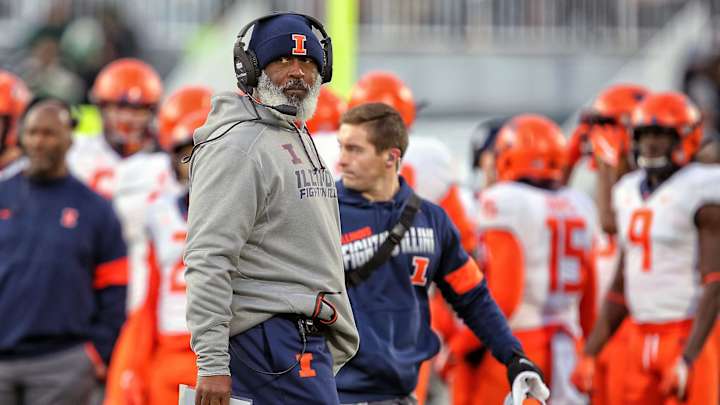
Illinois coach Lovie Smith did a very thoughtful interview with Mike Tirico on NBC Sports Network's Lunch Talk Live the other day. And it got me thinking. . .
Sports such as college football provide a great opportunity, but only for a select few. And even those talented athletes need to make the most of their opportunity.
Lovie Smith is obviously someone who has done that. And as we get closer, fingers-crossed, to the start of a much-needed 2020 college football season, Illinois is very fortunate to have a leader who has gone through his kind of life journey at the helm.
How many of us caught breaks at a traffic stop, a loud party, merely walking down the street at the wrong time—breaks that were not given to people like Lovie Smith?
``A lot of life experiences have prepared me for this moment,’’ Smith told Tirico. ``When I say life experiences, I'm a 62-year-old black man from the South in a biracial marriage. MaryAnne and I have seen an awful lot. I get a chance to lead men from all different places, all different nationalities. As football players and coaches we live in a cocoon a lot of times where the real world doesn't actually touch us. We teach, we develop, we talk about developing the man first and then we develop the football player. As we look at what's going on right now in our society, I've always encouraged our players to be involved in what's happening in your normal world, your normal life.’’
Players will have a lot on their plates this fall. When the Black Lives Matter movement that has been fueled by George Floyd’s death is piled on top of COVID-19 peril, the upcoming college football season, if it happens, will be uncharted territory for everyone involved, from players, staff and coaches to those who watch the games. Athletes will need to stay safe from a dangerous virus and manage their feelings about the spotlight on prejudice.
``I talk to our players about `You have the right to protest,’ ’’ Smith said. ``That's great. That's what college life is all about too. In a peaceful manner. But then what else do you do? And that's where we are right now. What else can we do to make football better and make the world better.’’
As much as the pandemic has been on people’s minds, the protests against racial bias by police are likely to be a major topic this football season.
NFL commissioner Roger Goodell made that clear when he apologized to players for not listening to those who previously had spoken out against racial injustice.
Goodell did not mention Colin Kaepernick, who sparked the NFL fury by taking a knee during the national anthem in 2016 to protest racial injustice, in his apology. Kaepernick paid a heavy price. No teams would touch him.
What if the protest had been staged by a player with irresistible skills? Teams have taken chances on standout players with drug-abuse and domestic-violence baggage. That’s another part of the challenge for athletes. Their voices carry more weight if they are more successful.
Coming off a breakout 2019 season that saw Illinois go to a bowl for the first time in five years, Lovie Smith has an added incentive for continued success. His voice will carry more weight if the Illini play well. The path for future minority candidates also will be aided.
``Eventually, sports do come down to `What's your record?’ That's all people really want to know,’’ he said. ``I've been blessed with the opportunity to lead NFL teams, to lead college programs. For me to help the next person that looks like me, the next black person to get that opportunity, the wins and the losses do come up. But it is more than that. When I say it is more than that, that's what we're dealing with on a daily basis. As these discussions happen right now, we have to really look at ourselves a little bit. The civil rights movement was about eliminating segregation and making this society a more integrated place.’’
The University of Illinois, he pointed out, is an example of racial progress.
``We're led by a black chancellor, black head football coach,’’ Smith said. ``Seven of the 10 assistant coaches are black men. Our Director of Personnel, our Director of Man Development, our Director of High School Relations is a black female, our Director of Academics. . . So to me it's about the platform of putting a model together to see exactly what can happen when you look beyond your normal comfort zone of people and what can get done and seeing people of a different color. But, the [won-loss] record, it eventually comes back to it. I realize that. That's why we're getting in position. We need to do better. We need to do better. The University of Illinois is headed in the right direction. We made progress, we made noise last year. This year is our time to really knock down the door.’’
A lot to play for? Yes. A lot to play through? That, too.
But conquering challenges is not a new thing for Lovie Smith.
``Right now, I see a lot of people protest[ing],’’ he said. ``Protests are good. Then what do we do? What I'm going to insist on, first off, all of our guys register to vote. But that's just a part of it, registering to vote. Be informed. If you don't like what's going on right now, and we in America have acknowledged that we don't like what's going on right now, we have to look at first our leader. The policies that he has in place. Congress, local government, this is how you have true change. And for us, it's going to get back to making sure people, they are informed. I think we all know right from wrong. We've all been taught that. And I think most of us really do know right from wrong. That's what we've been preaching. We are going to continue to do that with our program. There's diversity. And the only way to make real change is to come together. Diversity does that.’’
 Add us as a preferred source on Google