
Vanderbilt Baseball 's 2026 Team Cements Disappointing Legacy By Missing NCAA Baseball Tournament
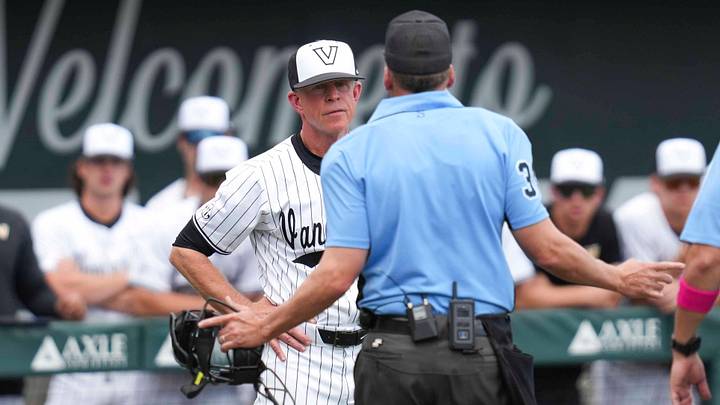
NASHVILLE—Tim Corbin must be driving himself nuts.
His program has made it a tradition to sit somewhere on Vanderbilt’s campus together so that the ESPN broadcast can pick up their reaction to their inevitable reaction to their selection in the NCAA Tournament. The moment is so expected that the reaction is never the most rambunctious in the show, and it often isn’t close to it.
After that, Corbin meets the media to amplify the efforts of everyone involved in the operation and the consistency that they’ve produced. For 19-consecutive seasons, this program has been the beacon of that. They had their ups and their downs, but they always found their way into the field. It was a near guarantee that they’d always have a chance to get out of a regional, regardless of the type of season that they did or didn’t have.
This time, though, Corbin has to process that streak of a lifetime ending. So do his players. No media was invited to the facility. If there was a party, it was private and didn’t include much celebration. Vanderbilt’s players expected to stay on campus through Monday when they lost to Florida in the SEC Tournament on Wednesday, multiple sources told Vandy on SI, but none of them expected to find their way into the Tournament.
They could try to rationalize how they could be considered over certain teams and how the tournament could potentially discount their RPI in favor of their 15 SEC wins, but they had to know that this was coming. This was the fate that they earned.
The fate cements this Vanderbilt team as the least successful in this program in the last 20 years.
The last time Vanderbilt didn’t make the NCAA Tournament, Corbin was in his third season as its head coach, a number of its players weren’t alive and George W. Bush was the president of the United States. College baseball wasn’t nearly as largely popularized back then. Vanderbilt baseball didn’t have the expectation of getting into the tournament every year, either.
Since then, Corbin’s program has won national titles and has become one of college baseball’s perennial winners. Now, it has to think about getting back to that. It has to do some soul searching.

“We've been very consistent for a long period of time, and we'll always be measured against those years that we were at the top. And that's okay,” Corbin said from the podium at the Hoover Met. “There's nothing wrong with that. But that's the challenge for the program; is getting back to that point.”
Corbin knew this was likely coming when he addressed the elephant in the room after Vanderbilt’s Wednesday loss by thanking the four media members on hand individually for their coverage of his program. It’s a gesture that he pulls out when a season ends, and this time he informally declared it to be over by doing so.
Back then, Corbin could cling to some sort of optimism that his team could be considered if he made a strong enough case and crunched the numbers a certain way. He knew that was futile, though. He had to know that this was coming. It seemed like he did. How could he not? Vanderbilt finished the season with a 33-25 record, an RPI in the 70s–which all but disqualified it from the tournament–and a number of bad losses that haunted it in the end.
Corbin knows this tournament. He knows what it takes to get into it. He knew that what his team did wasn’t enough–even if he tried to argue that it was. As a result, he had no problem reflecting on this early.
“Streaks are streaks are streaks,” Corbin said. “That's what they are. But sometimes when you don't go, a lot of times people start to understand ‘whoa, that really was tough. That was difficult to do.’”

Vanderbilt’s fanbase will now have a month-long stretch of postseason baseball to watch and reflect on that reality.
As for Corbin, he says he’ll conduct an internal audit of the program in every sense. If it hasn’t already, that will account for a number of sleepless nights and long days in the office. Corbin believes that he’s got a promising young team coming back in a year, but the fact that and his staff couldn’t get enough out of this explosive offense will likely sit with him until opening day.
The next time this program takes the field, it will likely look different–although not as different as it bottoming out to this level would expect. It will have a pseudo general manager on its staff. It will likely have more transfer arms. It will have a chip on its shoulder that it didn’t have this season.
If Monday taught this program anything, it's that it's got to be better than it was in 2026. If it's not, it's at the risk of being obsolete and allowing a sport that it used to rule to pass it by. It's harsh, but harsh conversations must happen when a program hits bottom like Vanderbilt did on Monday.
For now, though, its players will be packing their things up and saying their goodbyes while Corbin and company are left to sit in this and where it all went wrong.
NCAA Tournament, Seedings
National Seeds
1. UCLA, 51-6
2. Georgia Tech, 48-9
3. Georgia, 45-12
4. Auburn, 38-19
5. North Carolina, 45-11-1
6. Texas, 40-13
7. Alabama, 37-19
8. Florida, 39-19
Los Angeles Regional
1. UCLA, (51-6)
2. Virginia Tech, (30-24)
3. Cal Poly, (36-22)
4. St. Mary (34-25)
Atlanta Regional
1. Georgia Tech, (48-9)
2. Oklahoma, (32-21
3. Citadel, (35-24)
4. UIC, (25-27-1)
Athens Regional
1. Georgia, (46-12)
2. Boston College, (36-21)
3. Liberty, (41-19)
4. LIU, (28-20)
Auburn Regional
1. Auburn, (38-19)
2. UCF, (31-21)
3. NC State, (32-22)
4. Milwaukee, (25-31)
Chapel Hill Regional
1. North Carolina, (45-11-1)
2. Tennessee, (38-20)
3. East Carolina, (35-22-1)
4. VCU, (34-22)
Austin Regional
1. Texas, (40-13)
2. UCSB, (38-18)
3. Tarleton State, (37-19)
4. Holy Cross, (25-28)
Tuscaloosa Regional
1. Alabama, (37-19)
2. Oklahoma State, (37-20)
3. USC Upstate, (31-27)
4. Alabama State, (31-21)
Gainesville Regional
1. Florida, (39-19)
2. Miami, (38-18)
3. Troy, (32-29)
4. Rider, (32-17)
Hattiesburg Regional
1. Southern Miss, (44-15)
2. Virginia, (36-21)
3. Jacksonville State, (46-13)
4. Little Rock, (36-26)
Tallahassee Regional
1. Florida State, (38-17)
2. Coastal Carolina, (37-20)
3. NIU, (35-17)
4. St. John's, (33-24)
Eugene Regional
1. Oregon, (40-16)
2. Oregon State, (43-12)
3. Washington State, (28-25)
4. Yale, (30-13)
College Station Regional
1. Texas, A&M, (39-14)
2. Southern Cal, (43-14)
3. Texas State, (36-22)
4. Lamar, (34-25)
Lincoln Regional
1. Nebraska, (42-15)
2. Ole Miss, (36-21)
3. Arizona State, (37-19)
4. South Dakota State, (23-30)
Starkville Regional
1. Mississippi State, (40-17)
2. Cincinnati, (37-20)
3. Louisiana, (39-22)
4. Lipscomb, (29-24)
Lawrence Regional
1. Kansas, (42-16)
2. Northeastern (38-20)
3. Missouri State (34-19)
4. Arkansas (39-20)
Morgantown Regional
1. West Virginia, (39-14)
2. Binghamton, (31-20)
3. Kentucky, (31-21)
4. Wake Forest, (38-19)
Follow us onTwitter/X,Facebook,YouTube,Instagram,ThreadsandBlue Skyfor the latest news.
 Add us as a preferred source on Google
_(1)-b3e453dfe426b2dd4b83a12540ebdb37.jpeg "Joey Dwyer")
Joey Dwyer is the lead writer on Vanderbilt Commodores On SI. He found his first love in college sports at nearby Lipscomb University and decided to make a career of telling its best stories. He got his start doing a Notre Dame basketball podcast from his basement as a 14-year-old during COVID and has since aimed to make that 14-year-old proud. Dwyer has covered Vanderbilt sports for three years and previously worked for 247 Sports and Rivals. He contributes to Seth Davis' Hoops HQ, Basket Under Review and Mainstreet Nashville.
Follow joey_dwy