%20%20--%3E%0A%3Csvg%20version%3D%221.1%22%20id%3D%22Layer_1%22%20xmlns%3D%22http%3A%2F%2Fwww.w3.org%2F2000%2Fsvg%22%20xmlns%3Axlink%3D%22http%3A%2F%2Fwww.w3.org%2F1999%2Fxlink%22%20x%3D%220px%22%20y%3D%220px%22%0A%09%20width%3D%2239px%22%20height%3D%2240px%22%20viewBox%3D%220%200%2039%2040%22%20enable-background%3D%22new%200%200%2039%2040%22%20xml%3Aspace%3D%22preserve%22%3E%0A%3Cpath%20fill%3D%22%23FFFFFF%22%20d%3D%22M38.5%2C7H28.2v26h10.3V7z%22%2F%3E%0A%3Cpath%20fill-rule%3D%22evenodd%22%20clip-rule%3D%22evenodd%22%20fill%3D%22%23FFFFFF%22%20d%3D%22M26.1%2C25.5c0%2C5.8-4.1%2C7.5-12.9%2C7.5C3.9%2C33%2C0%2C31.2%2C0%2C25.2v-1.1h11.6%0A%09v2.4c0%2C0.7%2C0.1%2C1.4%2C1.2%2C1.4c1%2C0%2C1.2-0.4%2C1.2-1.3v-0.9c0-1.6-0.9-1.6-3.5-2.2C2.2%2C21.7%2C0%2C19.7%2C0%2C15.3v-0.9C0%2C9.3%2C5.5%2C7%2C12.9%2C7%0A%09c10.2%2C0%2C12.8%2C2.6%2C12.8%2C7.4v1.8h-11v-2.9c0-0.6-0.4-1.1-1.2-1.1c-0.6%2C0-1.2%2C0.4-1.2%2C1.1v0.9c0%2C1.5%2C0.9%2C2%2C3.3%2C2.5%0A%09c8%2C1.6%2C10.5%2C3.3%2C10.5%2C7.5V25.5z%22%2F%3E%0A%3C%2Fsvg%3E%0A)

00:13:02 |
Up Next
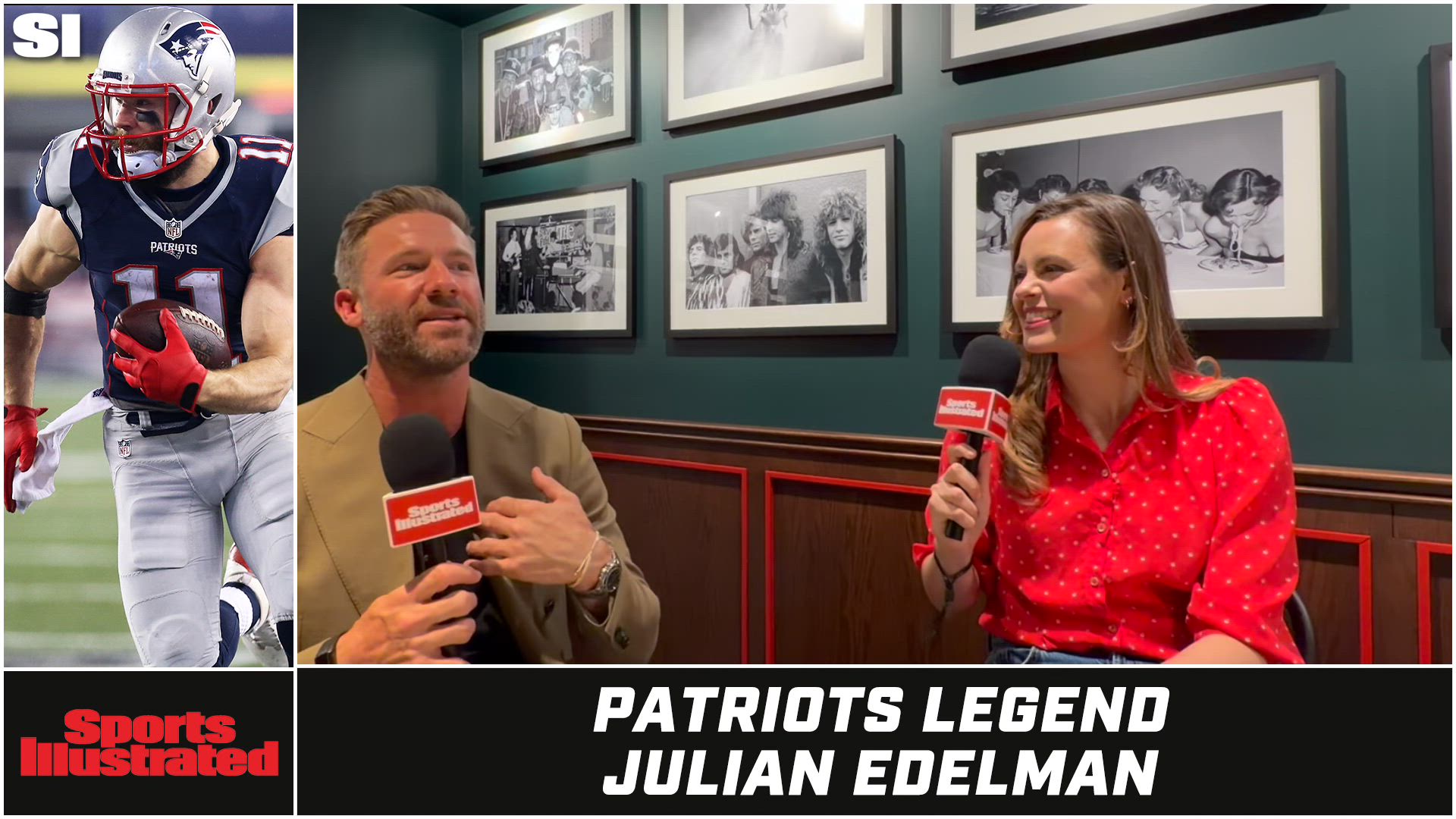
Julian Edelman Really Wants to See Tom Brady in WWE
15 hours ago
“Knock His Head Off” — Chris Duncan Sends Warning to Renato Moicano 😳
Apr 2, 2026
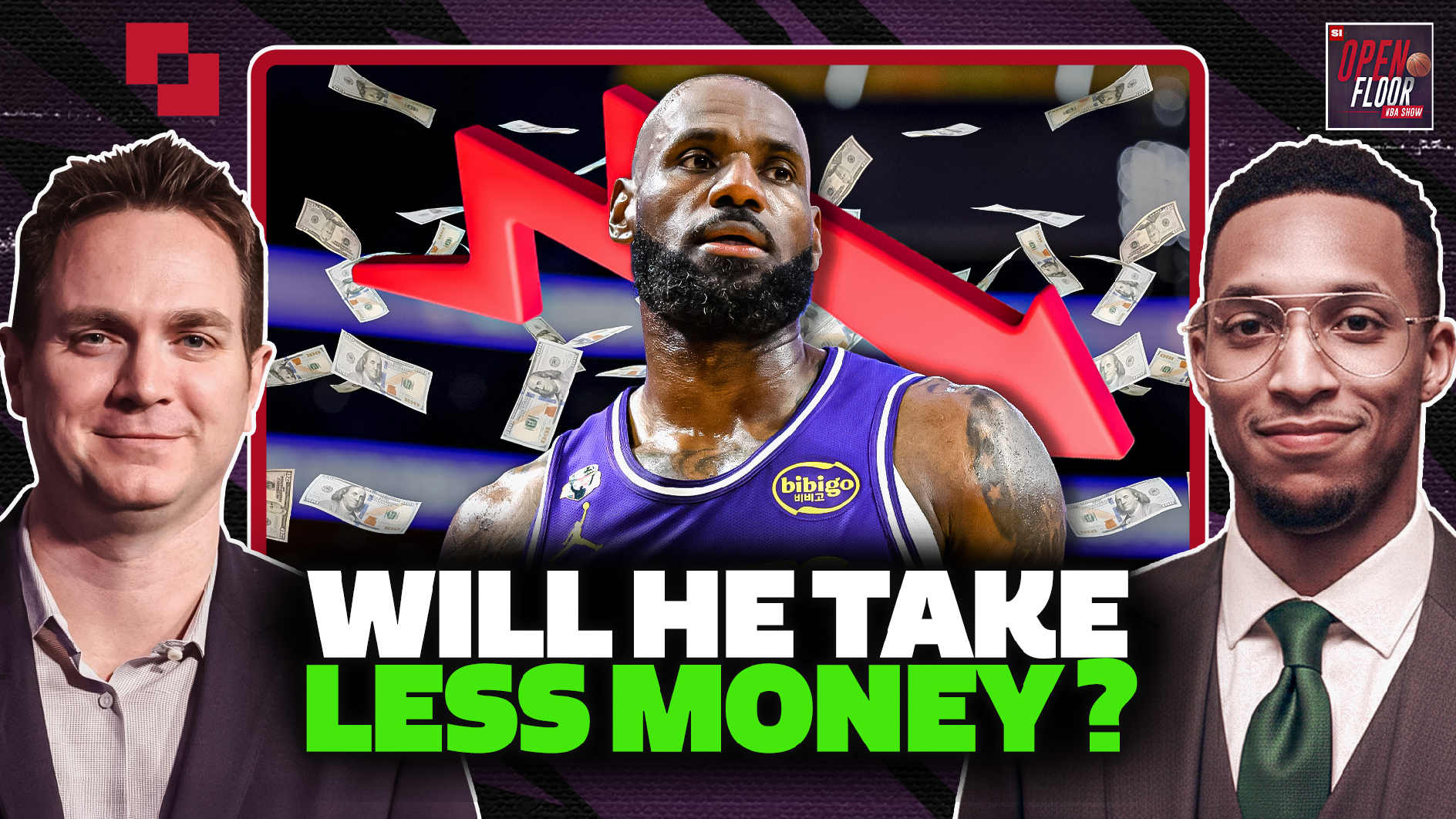
A Title Contender is Not Giving LeBron $50 Million
10 hours ago
Could Notre Dame MISS The CFP? Championship Weekend Preview | Others Receiving Votes
Dec 16, 2025
Cinderella Runs Are College Basketball’s Ultimate Game-Changer
Mar 19, 2026
Julian Edelman Really Wants to See Tom Brady in WWE
15 hours ago
“Knock His Head Off” — Chris Duncan Sends Warning to Renato Moicano 😳
Apr 2, 2026
A Title Contender is Not Giving LeBron $50 Million
10 hours ago
Could Notre Dame MISS The CFP? Championship Weekend Preview | Others Receiving Votes
Dec 16, 2025
Cinderella Runs Are College Basketball’s Ultimate Game-Changer
Mar 19, 2026
We Predict the Remaining Free Agent QB Signings
Mar 12, 2026
Jayson Tatum Returns 10 Months After Achilles Tear
Mar 6, 2026
Giannis & Trae Are Back: But For How Long?
Mar 3, 2026
Ffion Davies Eyes History in Fight for Inaugural UFC BJJ Bantamweight Title
Mar 12, 2026
Tom Verducci Explains What Makes Konnor Griffin’s Swing Elite
Feb 27, 2026
Alexa Grasso Locked In on Maycee Barber… But Still Wants Shevchenko 4 👀
Mar 26, 2026
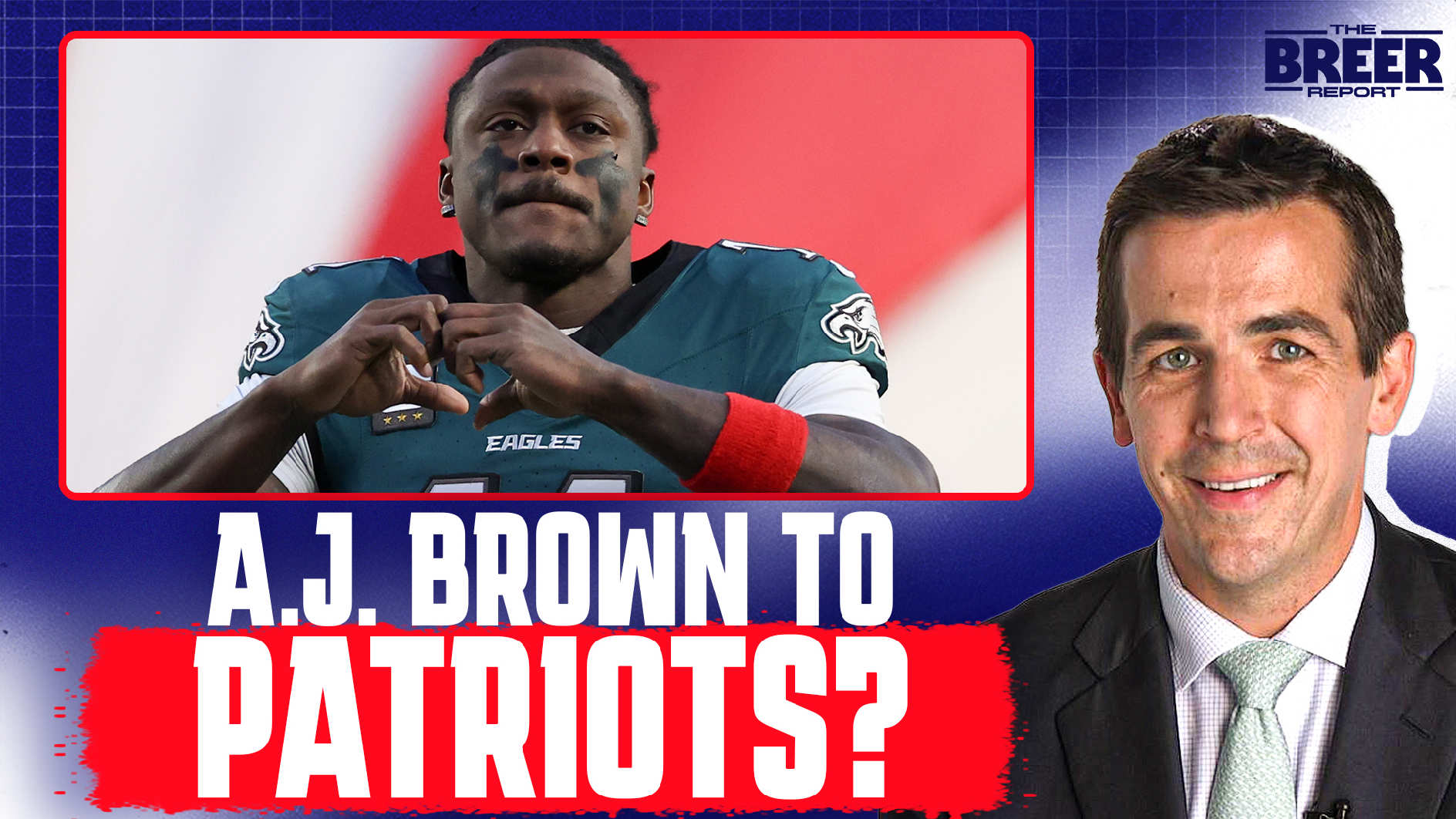
Albert Breer on if Pats Can Land A.J. Brown, Ty Simpson QB1?, Lions Draft QB Early?
Mar 26, 2026
Transcript
This is funny and it's not going to like the words are going to come out in a way that are meant to be funny, but obviously I don't mean it to be, but like imagine taking like a Titans fan from the Vrabel era and just like almost wiping his memory clean and just being like, you're going to fire this coach and then, and then you're going.
To hire almost the entire staff of the Jets team that got fired like the year before that.
I think like everybody would probably burn Nashville down.
That said, I, I think that the Titans are doing a really good job and I'm, I'm excited about where they're going.
Um, but because I, I, I think that Woody Johnson was a disaster there, but that's neither here nor there.
This is not a Jets podcast.
But, um, I, I've, I have another thought here on the Patriots, but I want to save it because I wanna, we're giving our first looks here at the Super Bowl in a minute.
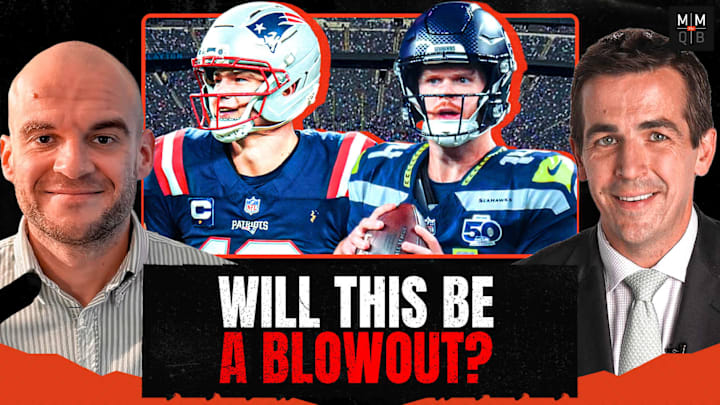
The NFC championship game, Albert, which I will, uh, pedantically refer to as the real Super Bowl, uh, until I, uh, the Patriots prove that they can hang with Seattle in this game, and I'm sorry, I'm sorry, but Seattle just looks so good.
Um, is, is, so do you think this is like a, a Super Bowl 47 situation?
48, 48, Super Rule 48.
We're talking about the New York one, right?
Yeah.
So where people don't realize how good the Seahawks are until they find out.
One of the, I'll tell you why this is one of the great moments of my life, that Super Bowl, OK.
Um, I'm working at the Star Ledger.
So the, so the Super Bowl is in our city.
It's in our state.
This is our home turf Super Bowl, big deal, sold a lot of ads.
I get tapped to write the page one Super Bowl story, which is different than the one from the sports section because the page one Super Bowl story you would refer to it as a one at the papers a one, right, and it, it needs to be accessible to non-sports readers.
There needs to be a lot more people as Mr.
or no.
We didn't have to refer to people as Mr., but the Dallas.
Morning News, that was their, uh, I remember I wrote, I wrote a couple of A1 stories of the Dallas Morning News and it was weird, but you had to refer to them as Mr.
and Mrs.
Yeah, Mr.
and Mrs.
We used to call them uh when sports went a one, we used to call them, uh, uh, a football is oval shaped stories because like that's how dumbed down you needed to make the copy.
And so, and it also had to be in, um, like, essentially.
At the gun, totally finished and then for the later editions, you'd add quotes.
And so the Broncos that year had a ton of guys from New Jersey on it.
And, and so that was gonna complicate everything because if the Broncos won, you had to incorporate the fact that, oh, Chris Harris is from Morristown and this guy's from Red Bank and, you know, all this stuff and know their history and stuff.
And I was, I said to my boss on the way in, the only way this works.
is if the Seattle Seahawks kick the absolute shit out of the Broncos and they're up by 25 points at halftime and it happened and I'm sitting there in the press box and I'm just like, yes, like I'm like, oh my God, I'm gonna just enjoy the second half.
And the story was done.
I had my, uh, I was, oh, I was so happy.
Um, I don't know if I, I think, and, and, and I'll get to why I think the Patriots are gonna keep this close in a second, but The NFC title game, I think was interesting, Albert, because.
Boy, to me, I think that out of anybody who wants this game back for the Rams, it's probably McVeigh because I, I just felt like he was off in this one, and it's OK.
You're gonna have that, I, I think the most impressive thing about what the Seahawks did is Stafford had his A game.
He did.
He did, and I think they gave up, I forget what the stat was, but like 6 times the amount of explosives as they normally do.
And I don't know if it was all year or just against the Rams.
I don't know what the stat ended up being.
But you could tell Albert, and again, we need to normalize this.
We have Pua and Devonte Adams, and like that to me is like the equalizer, you know what I mean?
Like that's, that's the one thing the Niners couldn't replicate that with what they've got currently at receiver, and that's why they got the crap knocked out of them.
Like you need something like that Seattle defense can smother you in so many different ways and to like I thought in this game.
Devonte and Puka were the were the equalizers, right?
And like I that that's, but anyway, go ahead with your point.
We haven't gotten any, we haven't even gotten to the point where we're talking about the matchup, but with the Seahawks, Connor, sorry about that.
No, no, no, no.
What I wanted to say was that um we can, we need to normalize these offensive geniuses.
Having bad moments and bad games because when we get into situations like this, we're just like, oh, they have Sean McVeigh, they're going to win.
Oh, they have Kyle Shanahan, they're going to win, and their offense is going to be awesome.
Sometimes like quarterbacks who are overthrowing their wide receivers, coaches get a little hot.
On that 4th-down call, Albert, McVeigh like ran down the field at the end of the game and tried To call a timeout and then opted against it because he wasn't sure about the call.
And you could see him like screaming into his play sheet during the game.
Like he burned that timeout, like, and didn't challenge the call.
Like, uh, he was a little off his game at the end of that one.
And I think that, and, and it, and situations get away from us all the time, and I think it's totally fine that it, Um, but it's one of those things where cooler heads prevail and that, and the Seahawks were ice cold in the, for the rest of that 4th quarter and they handled their business, even when stuff wasn't going right.
I mean, they had the Tariq Woollen taunting thing.
They had the touchdown, like they could have lost it.
There was people fighting on the sidelines and they found their cool and I think the Rams just didn't.
Yeah, I mean, I, I think it's, I, I, I.
I think the one thing that's interesting about this is the, so I think this is the first.
I wanna say this is the first defensive coach versus defensive coach Super Bowl since that Super Bowl, right, because that was Pete Carroll versus yeah, and I, and in a cycle when we're getting Jesse Minor and we're getting Jeff Halley, uh.
Do you feel like the one, the one issue with the offensive coaches is game management sometimes?
It's not sometimes, it's all I'm, I'm, I'm, I've talked to a too, like, and it's just like, I, I don't know, it just feels like sometimes like when you watch a defensive-minded coach's team.
It sometimes feels like they've got more command over like the actual game, and I'm not, but like, I, I think part of that might be a product of having your head in the play sheet, right?
Like versus, like a defensive coach is looking at the whole thing, like, it's kind of like looking at the big picture and what does my team need?
And I, I read something, I think Mike said something on Mike, Mike Frabel said something on the radio this morning about Like , he tries to go into every game thinking about how many points he needs, you know what I mean ?
Like, and it's, and I, and I've heard that a lot from Mike's players is like, what's our formula for winning this week, right?
Like, just, it's sort of like, it sounds simple, but I don't know that every coach thinks that way, where it's like, it's like the Bill Belichick thing, right?
Like when he would walk in the room, walk at the beginning of the week when he'd walk in the meeting room, hey guys, we do these 3 things, we win the game, you know, and I, I just think that like sometimes that when, when you've got like a really great offensive play call as your head coach, sometimes the game management stuff can get away from you and, you know, the fourth-down calls to me.
Here's what I don't like about the analytic part of this, and we can dive into this with McVeigh here, right?
What I, what I don't like about, about like the analytics on this stuff is They generally don't take into account the weather.
They don't take into account, like, has, has your guard, has your, has your right guard had a tough series against the tackle?
Exactly, exactly.
Where's the confidence of your team?
What's the momentum of the game?
There's all these different things where it's like, and I think there's instincts and feeling and it's impossible.
Like there was like, uh, like the, the, the Broncos have really good guards, right?
They're really good guards, Powers and minors, right?
Really good.
Maybe the best duo guards in the league.
They had a huge problem blocking Milton Williams.
I was gonna say the same thing and Christian Barmore.
He was all over minors in that game.
I was just gonna say that.
I'm glad you did.
And I believe Milton Williams was the one that blew up the 4th down play and was in the backfield, you know, and it's just like there's stuff like that that goes into the 4th-down call where it's like that's not gonna show up on a spreadsheet, you know, but like you have to take that into account, you know, and like on that play is that matchup going to cost you.
So, um, and that's what I love about football, like so much of it is about.
Like, momentum and how's your team playing and where's his psyche?
And um I just think in these situations, Connor, it's like so many times, it's like, if I was weighing it.
I would say The difference in 4 points for me.
I Less beneficial.
Like the extra 4 points would be less beneficial to me than the momentum swing would be to my opponent.
Does that make sense?
Yeah, yeah.
Like, so if I just take the points, I maintain where I'm at in that game, right?
If, if, like, and, and same thing with the Rams.
If I just take the points, I maintain like where I am in the flow of that game.
What I'm risking is like swinging it all together.
And I've just seen that happen too many times because of what a fourth-down stop does to a team.
You know what I mean?
Like, the kind of psychological impact it can have on, on, on an offense, you know, the kind of psychological impact it can have on the defense's entire team.
Um, I don't know.
So that's my tangent on that .
No, I, I think it's valuable, and, and, and we should say, you know, uh, like Peyton, for example, has one of the more revered, uh, Evan Rothstein, one of the more revered kind of game management coaches in the league, but same situation over there where I felt like Albert, that, um, that challenge of the, of the Drake Mint quarterback sneak was kind of felt like an emotional one to me because there's no, I, I thought, I thought 100% I'm with you, 100%.
There's no way.
That you are, um, getting that, right?
There's no, there's just no way that you're gonna find clear evidence to overturn it.
And so I do think buried under a pile of bodies, yeah, I do think it's interesting.
It's like you, you were always the first one that said this, uh, when I started at the MMQB and I didn't want to listen, where it's not evolution, it's revolution, right?
And so, and, and, and I do wonder if, if data has gotten us to a point where OK, I'm glad that we're here, right?
Like, I'm glad that we're not like Jason Garrett and we're at 4th and 1 at midfield and we're just gonna punt and fold up the wagon, right?
I'm glad we're not there anymore, but like, did we tip a little too far in the other direction?
You know what I mean?
Like, did, did, and, and , and is there, is there a recalibration on that, uh, a little bit?
And is it more popular now, much to the NFL chagrin.
To focus on hyper game management situations, on taking points, on being a little bit more conservative, I don't know, because I do think the people and have we empowered the people who have the data.
To a degree that's a little overboard, where somebody's got to be feeling the game too, and it's the guy on the sideline is the one who is , has access to those players.
He's not in the booth, he's on the field with them.
He knows where their confidence is, he knows where the momentum of the game is.
I mean, it is not like these aren't robots, you know, and I just, I think that that feel for the game, I mean, and that's probably the fact that Mike Vrabel was a player, is probably a huge part of why he's good at it.
Well, you know what I mean?
I'll say this, and I'm gonna write something about this.
I mean, every year something emerges as a trend.
And it's no secret that Vrabel turned this team around, and then the Giants moved heaven and earth for John Harbaugh.
The Steelers passed up a lot of guys who fit their profile to bring in Mike McCarthy.
Um, you know, I think that there is a value to, The idea that some of these people have done it before, and that they're going to bring some modicum of, you know, keeping the train on the tracks, um, because this game management stuff is, is bonkers.
So, so yeah, I, I would say, like just one quick story on that.
So there's a coach, so Chip Kelly, you talked about the evolution versus revolution thing, right?
So Chip Kelly, I like, I, I asked him about changing the NFL and he always kinda get it, he, he was one of the first ones who said to me, like, I'm not reinventing the wheel.
Like, everybody thinks I am, I'm not.
And he said to me, there's a coach at TCU in the 40s.
I just looked up the name again.
His name was Dutch Meyer, right?
Dutch Meyer, Dutch Meyer.
He was running RPOs in like 1945 and like this thing was like this thing was like you go back and you look at it.
They weren't called that then, right?
Like they weren't called, but it's the same freaking thing, you know what I mean?
Like if you're reading the linebacker, if he comes down, you throw over his head.
If, if he stays back, you hand the ball off, you know.
So, anyway, it's, it's interesting that way.