
2025 NBA Mock Draft 8.0: Pelicans Move Up For Ace Bailey, Sixers Land Khaman Maluach
In this story:
With the 2025 NBA Draft rapidly approaching, the basketball world is buzzing with anticipation—and uncertainty. While Cooper Flagg and Dylan Harper are near-locks for the top two selections, the real drama starts at No. 3, where the Philadelphia 76ers hold a franchise-altering decision. Will they roll the dice on Ace Bailey, VJ Edgecombe, or Tre Johnson—or shake up the draft board entirely with a blockbuster trade? In this full first-round 2025 NBA Mock Draft, we project all 30 picks and explore how each selection could reshape the league’s future.
1. Dallas Mavericks: F Cooper Flagg, Duke
For months, it’s felt inevitable—Cooper Flagg is bound for Dallas. Despite the Mavericks holding just a 1.8% chance to win the lottery, the ping pong balls bounced their way, and now they’re reloading with a generational talent to pair with Anthony Davis and Kyrie Irving. After shipping Luka Doncic to the Lakers in a blockbuster midseason deal, the Mavs are diving headfirst into a new era built on length, defense, and high-flying rejections—thanks to a terrifying frontcourt anchored by Flagg and AD.
Flagg is a cerebral, two-way phenom who dominated at Duke, averaging 19.2 points, 7.5 rebounds, 4.2 assists, and playing elite-level defense. He’s the perfect fit for Nico Harrison’s defense-first vision—an unselfish playmaker, relentless competitor, and versatile forward who can stretch the floor and lock down multiple positions.
The 6’9” forward led the Blue Devils in scoring, boards, dimes, and steals, showcasing rare polish for a freshman. With impeccable footwork, ambidextrous touch in the post, fluid passing instincts, and a smooth catch-and-shoot stroke, Flagg checks every box. He’s not just the best two-way player in this class—he’s the most complete prospect in years and a slam-dunk No. 1 pick.
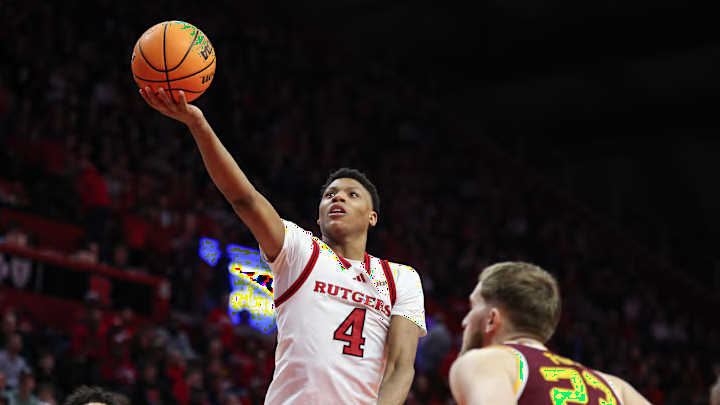
2. San Antonio Spurs: G Dylan Harper, Rutgers
Just as Cooper Flagg is destined for Dallas, Dylan Harper landing in San Antonio feels like a foregone conclusion. The son of five-time NBA champion Ron Harper, Dylan enters the league with a high floor and an old-school blend of composure, vision, and game-controlling savvy well beyond his years. While the Spurs' backcourt already features De’Aaron Fox and rising star Stephon Castle, and questions linger about Harper’s jumper (36.8% on catch-and-shoot threes, just 28.7% off the dribble), it’s tough to imagine San Antonio passing on a player many scouts consider the clear-cut No. 2 talent in this class.
Drawing frequent comparisons to Cade Cunningham, the 6'6" lefty out of Rutgers posted 19.4 points, 4.6 boards, and 4.0 assists per game, impressing with his polished shot creation, deceptive footwork, and next-level poise. He may not crack the starting five from Day 1, but Harper’s basketball IQ, off-ball fluidity, and three-level scoring toolkit make him a natural fit alongside Victor Wembanyama — forming a duo that could soon turn the Spurs into must-watch TV and one of the NBA’s most electrifying young cores.
3. New Orleans Pelicans (Trade Via Philadelphia 76ers): F Ace Bailey, Rutgers
In a dramatic draft night twist, the Philadelphia 76ers fail to trade up for Dylan Harper and pivot by dealing the No. 3 pick to the New Orleans Pelicans in exchange for a veteran presence like Herb Jones or Dejounte Murray, along with the No. 7 selection. That puts the Pelicans on the clock—and they waste no time grabbing the dynamic wing they desperately need by selecting Ace Bailey, the polarizing Rutgers standout who could slide seamlessly into the void left by Brandon Ingram. A midrange assassin who has drawn comparisons to Ingram himself, as well as Michael Porter Jr., Bailey brings instant intrigue to a team looking to claw its way out of the Western Conference cellar.
Bailey averaged 17.6 points, 7.2 rebounds, and 1.3 assists while drilling 34.6% of his threes—a respectable clip given the high degree of difficulty on many of his attempts as Rutgers’ offensive centerpiece. With NBA-level spacing and offensive juggernauts like Zion Williamson and CJ McCollum drawing defensive gravity, Bailey should feast on cleaner looks and take a noticeable leap in efficiency.
At 6'10" with a smooth handle, silky jumper, and high-end athleticism, Bailey fits the mold of the modern do-it-all wing that every team covets. He’s still refining his decision-making and tightening up on the defensive end, but his upside is undeniable. For New Orleans, this is a bold swing on a high-ceiling prospect who could end up being one of the biggest steals in the draft.
Ace Bailey scoring 39 points vs Indiana
— Jazz Lead (@JazzLead) June 13, 2025
What stands out after watching him pop off in this game? pic.twitter.com/byQWInX8ec
4. Charlotte Hornets: G VJ Edgecombe, Baylor
The Charlotte Hornets may not have hit the lottery jackpot, but landing VJ Edgecombe at No. 4 is a rock-solid consolation prize with star potential written all over it. The electric wing feels like a perfect fit in Buzz City — a turbo-charged athlete with game-breaking speed, sky-walking hops, and an infectious motor. Whether he’s detonating on a putback dunk, swatting a shot from behind, or sparking a fast break with a timely steal, Edgecombe injects instant adrenaline every time he hits the floor.
His highlight-reel athleticism is backed by a smooth, confident spot-up jumper, making him a seamless off-ball partner for a healthy LaMelo Ball. While he's still refining his handle and shot creation, those aren’t pressing concerns with Ball running the offense — and Edgecombe more than makes up for it with his defensive disruptiveness, averaging 2.1 steals per game and using his length to pester opponents into mistakes.
A three-level scorer who plays with relentless effort and rising polish, Edgecombe projects as Charlotte’s long-term solution at shooting guard. He's got all the tools to become a franchise cornerstone in this rebuild — think prime Victor Oladipo, but with even more vertical pop.
5. Utah Jazz: G Tre Johnson, Texas
The No. 5 pick represents a crucial inflection point for the Utah Jazz, and instead of doubling down at point guard, they appear poised to snag one of the draft’s purest scorers in Tre Johnson. With Keyonte George and Isaiah Collier already in the backcourt mix, Johnson — a smooth, high-upside wing with elite shooting touch — checks every box as a dynamic offensive weapon. Widely regarded as the top scorer in this class, he poured in 19.9 points per game while drilling 40% from three on high volume, showcasing deep range, quick release, and serious microwave potential.
Standing 6'6" with a 6'10" wingspan and fluid shot mechanics, Johnson becomes a threat the instant he crosses half court. He excels as a catch-and-shoot sniper, creates his own looks with ease, and already flashes NBA-level pull-up ability. While his playmaking is still a developing part of his game, and his defense a bit raw, his physical tools — length, mobility, and strength — give him a promising defensive ceiling with the right development.
Utah’s front office has made it clear they want perimeter firepower, and Johnson fits the mold of a modern-day two-guard who can float between positions and stretch defenses thin. He brings high-level scoring, versatility, and upside to a Jazz team ready to ignite the next phase of their rebuild.
6. Washington Wizards: F Kon Knueppel, Duke
The Washington Wizards have no shortage of roster needs, but with this pick, expect them to bypass backcourt reinforcements like Jeremiah Fears and instead lock in on Duke’s do-it-all wing, Kon Knueppel. With Bub Carrington showing enough promise at point guard, the Wiz look poised to snag a polished, high-IQ forward who can make an immediate impact. Knueppel’s game is built on savvy and skill — the 6'6", 219-pound freshman boasts a veteran-like offensive arsenal, shooting a blistering 40.6% from deep, averaging 14.4 points, 4.0 boards, 2.7 dimes, and sinking free throws at a ridiculous 91.4% clip.
Knueppel's stock skyrocketed during Duke’s Final Four run, where he poured in 19.0 points per game and shot a jaw-dropping 63.6% from beyond the arc. When Cooper Flagg went down in the ACC Tournament, Knueppel stepped up in MVP fashion, proving he can carry a team under pressure. His combination of feel, spacing, and shot-making makes him a perfect fit for a Washington squad looking for a culture reset.
In a small forward room that includes Khris Middleton, Justin Champagnie, and Corey Kispert, Knueppel should rise to the top quickly. He’s the kind of glue guy who makes good teams great — and for the Wizards, he could be the spark that finally flips the script.
Kon Knueppel (2.92) has a faster shuttle run than VJ Edgecombe (2.93)
— Point Made Basketball (@pointmadebball) June 14, 2025
A higher standing vertical jump (31.5 inches) than Harper (30.5), Richardson (30.5), and Edgecombe (30.0)
A better max vert (36.5 inches) than Flagg (35.5) and Bailey (34.5)
So can we stop saying he can’t… pic.twitter.com/xcxBQhjB4l
7. Philadelphia 76ers (Via Trade New Orleans Pelicans): C Khaman Maluach, Duke
After dealing the No. 3 pick to New Orleans, the Sixers still walk away with a gem at No. 7 — Duke’s Khaman Maluach, the best big man in the draft not named Cooper Flagg. The 7'1" tower with a staggering 7'7" wingspan brings elite physical tools, eye-catching mobility, and the kind of two-way upside that front offices dream about. Whether he’s running the floor for lobs, swatting shots into the fourth row, or sliding with guards on switches, Maluach is the type of defensive anchor who can immediately elevate a team’s paint presence.
Philly has long needed a reliable contingency plan behind Joel Embiid, and Maluach offers just that — and then some. He’s a rim-running force who doesn’t need touches to impact winning, making him a perfect complement to a star-studded core that now includes Embiid, Tyrese Maxey, Paul George, and Jared McCain. Maluach averaged 1.3 blocks per game, plays with Mitchell Robinson-like intensity on the boards, and has shown flashes of a developing jumper — though he still needs to refine that jumper if he ever wants to develop into a true stretch five.
If Embiid stays healthy, Philly can experiment with a twin-towers look. If not, Maluach gives them a future franchise big with sky-high potential. Either way, this is a high-upside swing that fits beautifully with the Sixers' win-now and win-later vision.
8. Brooklyn Nets: G Jeremiah Fears, Oklahoma
With four picks inside the top 27, the Brooklyn Nets are in full reset mode — and snagging their point guard of the future with their first selection is a no-brainer. Enter Jeremiah Fears, one of the youngest and most electrifying prospects in the class, whose top-five upside makes him a tantalizing bet despite the occasional growing pains. His decision-making needs refinement, sure, but that’s par for the course with young floor generals, and the tools are all there.
Fears is a pick-and-roll wizard who dictates pace like a seasoned pro, showcasing next-level burst, crafty finishes, and a smooth 56.4% mark on two-pointers. While his three-point shot (28.4%) is still developing, his midrange game is advanced and his ability to shake defenders with shifty footwork keeps defenses on their heels. His ability to get to his spots is sensational. Think Jamal Murray meets Monta Ellis.
If he can sharpen his handle and cut down on turnovers, Fears has a clear path to stardom. For a Nets team looking to rebuild with upside, he’s the kind of bold, high-ceiling talent that could anchor their next era.
9. Toronto Raptors: G Kasparis Jakucionis, Illinois
With Khaman Maluach off the board, the Raptors pivot from frontcourt flash to backcourt brilliance — and Kasparas Jakucionis feels like the perfect pick. While Derik Queen is tempting, Toronto seizes the opportunity to grab their lead guard of the future in the savvy Lithuanian playmaker.
Jakucionis is all grit, feel, and finesse — a high-IQ floor general with surgical vision, buttery handles, and a calm command of tempo. His smooth scoring and innate creativity make him a nightmare to guard, and scouts are already tossing out Tyrese Haliburton comps for good reason. He fits like a glove next to Scottie Barnes and Brandon Ingram, allowing Immanuel Quickley to slide into a high-octane scorer role off the bench.
The Raptors still need to fortify the frontcourt, but when a poised, unselfish quarterback with Jakucionis’ upside is on the board, you don’t overthink it. This is a long-term chess move for a team building toward something special.
10. Houston Rockets: F Carter Bryant, Arizona
The Rockets are overflowing with young talent, and while their playoff run ended at the hands of the Golden State Warriors, locking in the No. 2 seed in the loaded Western Conference proves they’re way ahead of schedule. With a stockpile of assets and rumors swirling about a blockbuster run at Giannis Antetokounmpo, Houston holds one of the most intriguing picks in this year’s draft — but don’t expect them to cash it in on a mega-deal just yet.
Instead, the Rockets make a calculated move and grab one of the draft’s top 3-and-D prospects: Carter Bryant out of Arizona. Sure, his college numbers — 6.5 points, 4.1 boards, and 1.0 assists — aren’t eye-popping, but the film tells a different story. At 6’7” with long arms, bounce, and positional versatility, Bryant brings the kind of switchable defense and off-ball shooting that modern NBA wings are built on. His handle needs refining, but his fluid shot mechanics, high motor, and ability to guard multiple spots give him a high-floor, high-ceiling blend that fits Houston’s developmental timeline perfectly.
He’s not a volume scorer, and that’s exactly the point — with Jalen Green, Amen Thompson, and Alperen Sengun carrying the offensive load, Bryant’s low-usage, high-impact style fits seamlessly. He’ll feast on open threes, move the ball smartly, and provide a jolt of energy on defense, where his 1.0 steals and 0.9 blocks per game hint at his disruptive upside. It’s a savvy, forward-thinking pick for a team that’s clearly building something special.
11. Portland Trail Blazers: F Noa Essengue, France
The Trail Blazers find themselves with options aplenty, but the buzz suggests they’ll roll the dice on rising French phenom Noa Essengue — and it’s easy to see why. A breakout star in EuroCup play, Essengue averaged 12.4 points and 5.3 rebounds while putting his elite athleticism, relentless motor, and two-way spark on full display. He’s the kind of player who brings instant juice the moment he steps on the floor.
Still deep in their rebuild, Portland can afford to swing for upside — and Essengue’s stock has been soaring thanks to a string of standout performances on the international stage. At 6'9" with a 6'11" wingspan and uncommon speed for his size, he’s a blur in transition and a menace when attacking closeouts, giving the Blazers a toolsy, high-energy weapon with sky-high potential.
Sure, he’ll need to add muscle to handle the NBA grind, but his fluid game, refined instincts, and international polish make him a solid long-term investment. For a franchise searching for its next cornerstone, Essengue could be the spark that lights the fire in Rip City.
12. Chicago Bulls: F/C Derik Queen, Maryland
Nikola Vucevic continues to provide a steady veteran presence in Chicago’s frontcourt, but the Bulls are in desperate need of fresh legs at the forward and center positions, especially with Patrick Williams not panning out. That’s where Maryland’s Derik Queen comes in — a high-IQ big man with the polish, poise, and passing touch to thrive in today’s NBA. Queen isn’t just a traditional center; he’s a modern offensive hub who can pick apart defenses with sharp reads and crafty finishes.
Arguably the most well-rounded big in this class, Queen combines smooth footwork, soft touch around the rim, and next-level vision that’s rare for his position. He turned heads during March Madness, sinking a game-winner to punch Maryland’s Sweet 16 ticket and dropping 27 points in a loss to the eventual champs — proving he can rise when the lights are brightest. Offensively, he’s a paint bully with the finesse to make everyone around him better.
Derik Queen’s game winner set to the Titanic song. pic.twitter.com/6b925fKmOk
— Terps Recruiting (@TerpRecruiting) March 24, 2025
While the three-point shot is still a work in progress and his rim protection could use a tune-up, Queen’s upside as a pick-and-roll master and interior scorer would instantly juice a stagnant Bulls offense. With Josh Giddey likely staying put and the backcourt already loaded, Queen’s versatility could be the missing piece that reshapes Chicago’s identity. He might not check every box yet, but he’s the best player on the board — and exactly the kind of foundational piece the Bulls need for their next chapter.
13. Atlanta Hawks: F Collin Murray-Boyles, South Carolina
With Clint Capela likely headed out of town — and Larry Nance Jr. potentially joining him — the Hawks are poised to reinforce their frontcourt depth. While the dream scenario may have included snagging Khaman Maluach or Derik Queen, both are off the board, leaving Collin Murray-Boyles as the top frontcourt talent available. And despite being a bit undersized and lacking a perimeter game, the South Carolina product offers exactly what Atlanta needs: grit, versatility, and nonstop energy.
Murray-Boyles averaged an impressive 16.8 points and 8.3 rebounds last season, making a name for himself as a high-motor, high-impact presence who doesn't need the ball to make a difference — a perfect fit alongside a usage-heavy star like Trae Young. His switchable defense, physical toughness, and relentless hustle have scouts and coaches alike singing his praises.
Expect him to carve out a role off the bench behind Jalen Johnson, bringing valuable minutes as a rebounder, interior scorer, and defensive disruptor. He checks the kind of boxes Quinn Snyder covets in his rotation players — and his athleticism and effort level make him a seamless fit on a Hawks roster looking to get younger, tougher, and more dynamic.
14. San Antonio Spurs: F Liam McNeeley, Connecticut
After locking in Dylan Harper at No. 2, the Spurs are back on the clock—and this time, they’re targeting a sharpshooting wing to complement their young core. Enter UConn’s Liam McNeeley, one of the purest perimeter snipers in the draft and a seamless fit for a San Antonio squad hungry for floor spacing.
Despite missing over a month with an ankle sprain, McNeeley’s stock never dipped, thanks to his polished game, high IQ, and confident stroke from beyond the arc. As a freshman, he averaged 14.5 points, 6.0 rebounds, and 2.3 assists per game—modest on the surface, but his smooth mechanics, quick release, and feel for the game pop on film far more than the numbers suggest.
McNeeley isn’t just a specialist—he’s a connector. He makes the right read, moves well without the ball, and thrives in team-first systems. On a Spurs roster built around Victor Wembanyama and now Harper, McNeeley offers the perfect blend of shooting, smarts, and unselfishness to elevate the offense and help turn San Antonio into a long-term contender.
15. Oklahoma City Thunder: G Egor Demin, BYU
The Thunder front office might be doing cartwheels if Russian phenom Egor Demin slips to them on draft night. With one of the NBA’s deepest rosters and eyes firmly set on a championship run, Oklahoma City doesn’t need much—but snagging a versatile, supersized guard to lighten Shai Gilgeous-Alexander’s workload would be a masterstroke. Standing 6'9", Demin is a rare breed: a jumbo playmaker with dazzling court vision, feather-soft touch on his passes, and the defensive switchability that OKC covets.
His numbers—10.6 points, 5.5 assists, 3.9 boards, and sub-30% shooting from three—won’t make your jaw drop, but the flashes are electric. He’s a fast-break maestro, a surgical halfcourt passer, and operates with the kind of calm, read-the-defense-in-real-time brilliance that hints at star-level upside. Yes, he’ll need to clean up the turnovers (2.9 per game) and develop a more consistent jumper, but his feel for the game is well beyond his years.
For a team that thrives on length, IQ, and untapped potential, Demin feels like a Thunder special: a long-limbed chess piece who could grow into either a dynamic sixth man or a positionless Swiss Army knife next to SGA.
16. Memphis Grizzlies (Via Trade Orlando Magic): G Nique Clifford, Colorado State
After shipping Desmond Bane to Orlando, the Memphis Grizzlies walked away with the No. 16 pick—and a golden opportunity to reload on the wing. With Ja Morant orchestrating the offense and Jaren Jackson Jr. anchoring the paint, the next logical step is plugging in a high-impact, low-maintenance wing. Enter Nique Clifford, the 23-year-old Colorado State standout with the size, swagger, and skill to step into Bane’s shoes.
FULL TRADE DETAILS:
— Legion Hoops (@LegionHoops) June 15, 2025
Grizzlies receive:
Kentavious Caldwell-Pope
Cole Anthony
4 unprotected 1st round picks
One 1st round pick swap
Magic receive:
Desmond Bane
TRADE SZN IS HERE. (via @ShamsCharania) pic.twitter.com/Tu8Lnt8JcY
At 6'6", Clifford is a wrecking ball on the glass—pulling down 9.6 rebounds per game—and he brings a do-it-all approach that’s already drawing comps to Josh Hart and Christian Braun, but with more length and a cleaner shooting stroke. He plays with the kind of intensity and toughness Memphis fans adore, and his three-and-D upside makes him a tailor-made fit alongside Morant’s explosive playmaking.
Sure, he’s a little older than your typical draftee, but that maturity might be just what the Grizzlies need to stabilize their rotation after a chaotic 2024 season. Clifford’s plug-and-play appeal could help Memphis bounce back in a brutal Western Conference—and if his shot holds up, this could end up being one of the sneakiest value picks in the draft.
17. Minnesota Timberwolves: F Asa Newell, Georgia
The Timberwolves are officially Ant Edwards’ team—and now it’s time to build around their superstar with purpose. With Naz Reid hitting free agency and Julius Randle entering a contract year, Minnesota has a clear need for a long-term solution in the frontcourt. After addressing their backcourt depth last year with Terrence Shannon Jr. and Rob Dillingham, the stage is set for a high-upside forward to round out the core.
Cue Asa Newell, a bouncy, modern-day power forward tailor-made for today’s NBA. He put up 15.4 points per game on a sizzling 54.3% from the field, carving up defenses as a slasher, lob threat, and high-IQ cutter. While his three-point shot (29.2%) is still a work in progress, his explosive athleticism, tireless motor, and switchable defense give him all the tools to make an early impact.
If that jumper comes around, Newell could become the perfect complementary piece to Minnesota’s ascending roster.
18. Washington Wizards: G Jase Richardson, Michigan State
After opting for sharpshooting wing Kon Knueppel over Jeremiah Fears at No. 6, the Wizards are primed to address their backcourt with the No. 18 pick — and Jase Richardson checks every box. The son of former NBA Slam Dunk Champion Jason Richardson, Jase brings more than just pedigree — he offers a dynamic blend of smooth shot-making, floor-spacing savvy, and emerging playmaking chops that fit seamlessly into Washington’s rebuild.
Though a bit undersized for a traditional two-guard, Richardson’s ability to light it up in a hurry makes him a perfect spark plug off the bench behind Bub Carrington. After a slow start to his freshman season, he surged down the stretch, averaging 12.1 points, 3.3 boards, and 1.9 assists while flashing the confidence and polish of a future NBA contributor.
For a Wizards team looking to build a young, explosive backcourt, Richardson is the best player available and a high-upside swing worth taking.
19. Brooklyn Nets: C Thomas Sorber, Georgetown
After locking in their point guard of the future earlier in the draft, the Nets are rolling the dice on a big man—even with Nic Claxton already in the mix. Enter Georgetown’s Thomas Sorber. While he might not be the next Patrick Ewing, Sorber’s stat line demands attention: 14.5 points, 8.5 rebounds, 2.0 blocks, and 1.5 steals per game on an efficient 53.2% shooting clip.
Though a foot injury cut his season short, Sorber embodies the tough, impactful presence Brooklyn craves. He dominates the glass, fires smart outlet passes to ignite fast breaks, and plays with the kind of relentless grit that championship contenders cherish. His foot speed might need some polish to thrive in today’s switch-heavy defenses, but his court savvy, impeccable timing, and 7'6" wingspan already make him an intriguing NBA-ready prospect on both ends of the floor.
20. Miami Heat: F Rasheer Fleming, Saint Joseph’s
With Jimmy Butler heading west to Golden State, the Miami Heat have officially handed the reins to Tyler Herro and Bam Adebayo — and the front office is all-in on retooling for a quick rebound. Enter Rasheer Fleming, a high-energy forward out of Saint Joseph’s who could be the secret weapon that propels Miami back into contender territory.
Fleming embodies Heat Culture to a tee: standing 6'8" with a staggering 7'5" wingspan, he’s a defensive disruptor with relentless motor and the kind of switchability every team dreams of. Last season, he put up 14.7 points, 8.5 rebounds, 1.3 assists, and 1.4 steals, showcasing a rare blend of physicality, awareness, and hustle that’s quietly turning heads among league insiders. But it’s his offensive leap that’s really turning up the heat — knocking down 39% of his threes (62-of-159), he’s flashing legit stretch-four potential.
21. Utah Jazz: C Joan Beringer, France
After locking in Tre Johnson earlier in the draft, the Jazz are smart to bolster their frontcourt depth — and 18-year-old Beringer fits the bill perfectly. With a staggering 7’4” wingspan and natural defensive instincts, he’s a rim protector in the making who can ease the load for Lauri Markkanen and Walker Kessler. While he’s not quite ready to log heavy NBA minutes, Utah is clearly playing the patient, long-term game here.
At 6'11" with fluid mobility and impeccable timing, Beringer projects as a versatile rim protector capable of switching onto guards—a prized skill in today’s switch-heavy NBA defenses. His offensive polish is still a work in progress, but his defensive ceiling is impossible to ignore. If the Jazz nurture his raw talent, they might just have unearthed the next evolution of Clint Capela.
22. Atlanta Hawks: G Nolan Traore, France
After passing on a point guard earlier to select Collin Murray-Boyles at No. 13, the Hawks now have the perfect chance to add some serious backcourt juice. Enter Nolan Traore, France’s electrifying—and yes, somewhat polarizing—prospect, who could be the dynamic spark off the bench behind Trae Young—or maybe even his eventual heir in Atlanta.
Once considered a potential top-five pick, Traore falling to No. 22 would be a golden opportunity for the Hawks to lock in their point guard of the future. Sure, his game might take a couple of seasons to fully blossom, but with Young still in his prime, patience is part of the plan.
Traore is lightning-fast with the ball, excelling in pick-and-roll situations and slicing through defenses with a rare combination of burst and creativity. While his jumper and shot creation still need work, his elite court vision, masterful tempo control, and leading assist percentage among first-rounders make him a solid long-term investment for Atlanta’s backcourt future.
Maybe the best game of the season for Nolan Traore vs Le Mans. 21 points (4/7 3P), 7 assists, 2 turnovers in 28 minutes. Some impressive shot-making and pick and roll playmaking, while showing his handle and speed getting downhill and finishing for the 18-year-old. pic.twitter.com/Jwe9aqFqjy
— Jonathan Givony (@DraftExpress) May 8, 2025
23. Indiana Pacers: C Maxime Raynaud, Stanford
The Pacers have built a core that’s ready to make some serious noise in the playoffs, but with Myles Turner entering the final year of his contract, it’s smart for Indiana to lock in a big man for the future. Enter Maxime Raynaud, the 7-foot Stanford standout who perfectly fits the mold of today’s versatile big.
Raynaud put up eye-catching numbers—20.2 points and 10.6 rebounds per game—while knocking down a respectable 34.7% from beyond the arc, showcasing an impressive inside-out game. Year after year, he’s sharpened his skills, evolving into a big who can pop threes, slash with a silky handle, and make smart, efficient plays. He’s not the type to steal the spotlight but knows exactly how to complement stars like Tyrese Haliburton and Pascal Siakam.
With a rare combo of floor spacing, toughness inside, and reliable rim protection, Raynaud could be the underrated gem that helps the Pacers reload and push deep into the postseason once again.
24. Oklahoma City Thunder: G/F Cedrick Coward, Washington State
Cedric Coward is shaping up as one of the biggest wild cards in the 2025 NBA Draft—a physically gifted, high-upside wing whose promising season at Washington State was unfortunately cut short after just six games due to a leg injury. Originally committed to Duke, Coward turned heads at the combine before making the bold move to stay in the draft.
Standing 6'5" and 213 pounds with a jaw-dropping 7'2" wingspan, Coward boasts NBA-ready size and two-way versatility that would slide right into the Thunder’s athletic lineup. Despite limited court time, he still posted impressive averages of 17.7 points, 7.0 rebounds, and 3.7 assists, knocking down 40% from beyond the arc—a clear signal that his game is trending upward. At 21, he’s a bit older than your typical prospect, but his raw potential makes him an intriguing—and exciting—option for an OKC squad already loaded with talent.
25. Orlando Magic: G Walter Clayton Jr., Florida
After trading the No. 16 pick to snag Desmond Bane from the Memphis Grizzlies, the Magic now boast an impressive wing trio led by Paulo Banchero and Franz Wagner. With Jalen Suggs struggling to prove he’s the long-term answer at point guard, Orlando is primed to lock in their future floor general. Enter Walter Clayton Jr.—fresh off a national title run with Florida and bringing that winning pedigree plus confident swagger perfectly suited to the Magic’s hungry, up-and-coming roster.
Clayton is a bona fide shot-maker with deep range, slick quickness off the dribble, and a fearless approach when slicing through defenses. While Bane offered some three-point shooting upside, the Magic need more firepower beyond the arc—and Clayton delivered, knocking down a scorching 38.6% on nearly eight attempts per game. If he’s still available, he’d be an absolute slam dunk pick for a Magic team looking to rise in an Eastern Conference suddenly wide open after Jayson Tatum’s injury.
26. Brooklyn Nets: F/C Danny Wolf, Michigan
If Danny Wolf slides this far, the Nets should sprint to the podium. The 7-footer with a 7'2" wingspan brings a rare blend of size and shooting touch, drilling 33.6% of his threes with a fluid, confident stroke that’s eye-catching for a big man. He’s not a lockdown defender just yet, but his high basketball IQ, feel for the game, and calm demeanor suggest there's untapped potential on that end.
What makes Wolf especially intriguing is his positional flexibility—capable of toggling between the four and five, he gives Brooklyn the freedom to roll out creative, floor-spacing lineups. With Nic Claxton and Thomas Sorber already handling the gritty interior work, Wolf can focus on stretching the floor, facilitating from the elbows, and leaning into the offensive side of his game. He’ll need to bulk up defensively to carve out a consistent role, but in terms of upside and fit, this could be a steal for the Nets.
27. Brooklyn Nets: G/F Will Riley, Illinois
Will Riley is still refining his game, but the upside is loud and clear. The 6'8" Canadian freshman showed flashes of brilliance at Illinois, averaging 12.2 points, 4.1 boards, and 2.2 assists while emerging as a clutch performer down the stretch.
Though his shooting splits (43.2% FG, 32.6% from three) leave room for growth, his size, shot-creation ability, and confident scoring instincts make him a tantalizing long-term bet. He’ll need time to adjust to NBA speed and physicality, but with the right development, Riley could become a serious difference-maker in Brooklyn’s future plans.
28. Boston Celtics: C Ryan Kalkbrenner, Creighton
The Celtics' title bid fell just short, and a big reason was their lack of reliable center depth—especially with Al Horford aging and Kristaps Porzingis battling injuries. That’s where Creighton’s Ryan Kalkbrenner steps in. A towering 7-footer with a modern twist, Kalkbrenner isn’t just a four-time Big East Defensive Player of the Year—he’s a floor-spacing shot-blocker who knocked down 34.4% of his threes last season. Don't forget his impressive 49-point performance from the beginning of last season.
RYAN KALKBRENNER PLAYED OUT OF HIS MIND TONIGHT😳
— B/R Hoops (@brhoops) November 7, 2024
▪️ 49 PTS
▪️ 20-22 FG
▪️ 2-2 3PT
▪️ 11 REB
▪️ 3 BLK pic.twitter.com/9OI0mm1eWn
He brings elite rim protection, crisp timing, and the kind of mobility that fits perfectly in Boston’s defensive scheme. Whether he eventually replaces Porzingis or provides immediate value off the bench, Kalkbrenner feels like a seamless fit. Of course, the direction of this pick hinges on the Celtics’ offseason moves—especially if they consider shaking up their core of Porzingis, Jrue Holiday, Derrick White, or Jaylen Brown.
29. Phoenix Suns: G Ben Saraf, Israel
The Phoenix Suns may be heading for a roster shakeup after a frustrating 2024 campaign, with Kevin Durant trade chatter growing louder and Tyus Jones headed for free agency. That leaves a clear opening for a new backcourt conductor—someone who can lighten Devin Booker’s load and keep the offense flowing. Enter 18-year-old Israeli sensation Ben Saraf.
Despite his age, Saraf plays with the poise of a seasoned pro, dissecting defenses in the pick-and-roll and making high-level reads with ease. He’s not a high-volume scorer, but his sharp vision, unselfishness, and natural feel for the game make him a true floor general. Think Pablo Prigioni’s brain meets Manu Ginóbili’s flair—Saraf could be the unexpected spark that launches Phoenix into its next era.
30. Los Angeles Clippers: G/F Drake Powell, North Carolina
Once a top-tier high school prospect, Drake Powell’s lone season at North Carolina didn’t quite live up to the buzz—but the tools are still tantalizing. At 6'6" with a 7-foot wingspan, Powell boasts explosive athleticism, high-end defensive upside, and an offensive game that’s just beginning to bloom.
For a Clippers team craving reliable wing depth behind James Harden and Kawhi Leonard, Powell checks a lot of boxes. And with L.A.'s stars often sidelined, he could carve out a meaningful role right away—bringing energy, versatility, and plenty of room to grow in a veteran-laden system.
More Fantasy Sports On SI News:
 Add us as a preferred source on Google
-93d081519425a2ac5afbaba6a5df6de3.jpg "Matt Brandon")
Matt Brandon has spent more than a decade in the fantasy sports and sports media world, with stops at Scout Media, CBS Sports, Sports Illustrated, DrRoto.com, Fantasy SP, FullTime Fantasy, and several other industry staples. A three-time Top-10 finisher in FantasyPros’ national rankings competition, Brandon has also captured multiple major DFS tournament wins on FanDuel and DraftKings. His true expertise lies in season-long fantasy football and fantasy basketball, along with sports betting analysis. A lifelong New Yorker, he proudly bleeds blue for his Giants, Knicks, Rangers, and Mets.
Follow MattFantasyFF