
Justin Herbert vs. Trevor Lawrence: Who Is the Better Fantasy Football QB?
In this story:
When building a winning fantasy football roster, drafting quarterback value late in the middle rounds is one of the most reliable strategies for maximizing overall roster flexibility. While top-tier signal-callers routinely go off the board in the early rounds, waiting for mid-range options allows fantasy managers to load up on high-ceiling running backs and wide receivers.
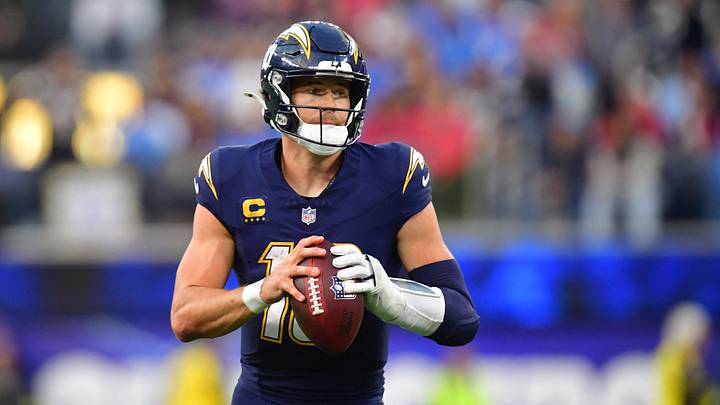
Entering the 2026 season, two middle-round quarterbacks who stand out as prime targets are Justin Herbert and Trevor Lawrence. Both players offer distinct paths to high-end fantasy viability, but one presents a clear edge in draft-day value and overall ceiling.
The Case for Justin Herbert: Scheme Upgrade and Massive Ceiling
Herbert is currently falling to around QB10 in drafts, offering a significantly lower cost than the elite quarterbacks without sacrificing top-five overall upside. Drafted as a fringe QB1, his current ADP carries minimal risk relative to his sky-high talent.
Several key factors matter toward a major bounce-back campaign for the Chargers' signal-caller:
The Mike McDaniel Effect
With McDaniel now running the offense, Herbert steps into one of the most quarterback-friendly, modern passing schemes in football. The interesting part is that Herbert doesn't necessarily need 600 pass attempts to have a huge fantasy season.
If McDaniel gives him more efficient throws, more red-zone opportunities and more explosive plays while the running game keeps defenses honest, Herbert's fantasy ceiling could rise substantially.
A Healthier Protection Unit
The Chargers enter 2026 with a retooled, far healthier offensive line. Pocket stability is crucial for Herbert to stretch the field vertically and fully showcase his generational arm strength.
Draft Equity Advantage
Because he is priced well below the elite tier, choosing Herbert allows fantasy managers to build a powerhouse core at skill positions without giving up top-tier quarterback output.
The Case for Trevor Lawrence: Rushing Floor and Late-Season Momentum
Lawrence shouldn't be dismissed by fantasy managers as he broke out in 2025, setting career highs in touchdown passes, rushing attempts, and rushing yards. That added mobility gives Lawrence a durable fantasy baseline that few pocket passers can match.
Rushing Baseline
Dual-threat quarterbacks inherent to fantasy success carry a safe floor. Lawrence's willingness to use his legs guarantees volume even on tough passing days.
Late-Season Surge
Lawrence finished the previous season on a strong trajectory, building substantial momentum that makes him a legitimate candidate to maintain his QB1 status.
Projected Production
Fantasy Pros projections reflect his dual-threat advantage, rating Lawrence slightly ahead of Herbert at 20.4 fantasy points per game compared to 18.7 per game.
The Bottom Line
While baseline projections narrowly favor Lawrence due to his projected rushing output, draft equity ultimately dictates the choice. The gap between their projected scoring is small, but the cost difference on draft day can be significant.
Verdict
If they are available at similar draft prices, take Herbert. The explosive potential of McDaniel's offensive system gives Herbert a direct path to a major fantasy breakout, while his current draft cost remains highly reasonable. If Lawrence falls around or past his ADP, he becomes an excellent pivot who could easily finish as the better fantasy quarterback.
 Add us as a preferred source on Google
Daniel Outerbridge covers the NBA, NFL, WNBA, and MLB with an emphasis on the numbers behind the game. His work breaks down player performance, team strategy, and emerging statistical trends to provide actionable insights for fans and fantasy players. Outerbridge has written for a myriad of other outlets including Anubis Sports and FanSided.