
Caitlin Clark Acknowledges Weakness Portland Fire Exploited Shamelessly
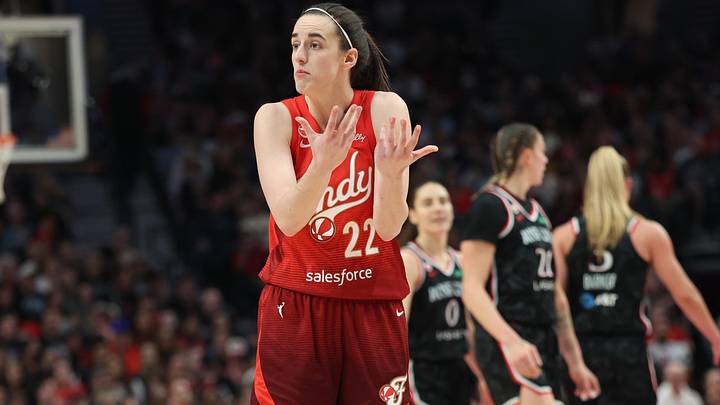
The Indiana Fever’s 100-84 loss to the Portland Fire was Caitlin Clark’s worst game of the season. She finished with 6 points, 2 rebounds, 6 assists, and 1 steal in just 22 minutes on the court. After the game, she acknowledged a clear area of improvement.
“I just need to do a better job being straight up, keep the defender in front of me, and also, if they’re going to hunt isos, just move my feet a little bit better,” Clark said in the postgame media availability.
Not long after Clark held her own when the Golden State Valkyries targeted her, the Fever star came into the game with another target on her back. The Fire put her in isos whenever they had a chance, which led to several successful drives for Carla Leite, foul trouble, and some bad rotations for the Fever.
But the first step toward change is awareness. Clark is a competitor and wants to win, which should encourage her to put in the work to be better defensively.
Caitlin Clark struggled to guard Carla Leite

Carla Leite excels at getting to the rim and using her quickness to her advantage in one-on-one matchups as one of the Fire’s top offensive options. So, the Fire were determined to get Clark, the weakest link in the Fever’s defensive rotation, switched onto her.
Clark struggled immensely with the matchup. Leite scored on her a couple of times and drew two fouls, including Clark’s fifth late in the third quarter.
The Fever eventually tried to bring doubles whenever Clark ended up on Leite to take the isos away, but Leite made the right passes to force bad rotations from the Fever that ultimately led to points for other Fire players. For example, less than a minute into the second quarter, Frieda Bühner made Clark switch onto Leite on the perimeter. Aliyah Boston came over to help and avoid a drive from Leite, which left Emily Engstler wide open to sink a 3-pointer.
Clark also struggled to stay in front of Sarah Ashlee Barker on a couple of baseline drives, especially once she was limited defensively due to foul trouble.
But, to Clark’s credit, the Fire’s plan to attack her one-on-one didn’t work when they went at her with Teja Oblak instead of Carla Leite. Clark mostly managed to stay in front of the 35-year-old rookie in those situations.
Clark also struggled to score

The Fire tried very hard to keep the ball out of Clark’s hands on the other end of the floor. Nyadiew Puoch, Barker, and Bridget Carleton picked her up early in the backcourt to force other players, like Boston and Kelsey Mitchell, to bring the ball up for the Fever. They also did a good job of being glued to her in the halfcourt, which made it difficult for her to get any open looks, and her offense was mostly restricted to setting up her teammates with six assists.
Clark took only seven shots—a season low by five shots—and made just one. She did get to the free-throw line a few times for four points, though. Clark rarely strings together bad offensive games, so she should bounce back quickly.
The fact that the Fire were able to limit and target Clark in this way speaks to their defensive commitment and abiity to draw up a game plan and execute it well. Portland was largely expected to be one of the worst teams in the WNBA this season, but the Fire already beat two supposed contenders now and just continue to give opponents trouble.
 Add us as a preferred source on Google
Elaine Blum covers women’s basketball for On SI from Europe. She has been writing about women's hoops since 2023 and holds a Bachelor’s degree in English and Journalism and a master’s degree in American Studies with a focus on women’s and gender studies. She started playing basketball when she was 10 years old and won several league and state championships at the youth and senior level.