
LSU Cannot Keep Asking Its Defense to Carry the Team
In this story:
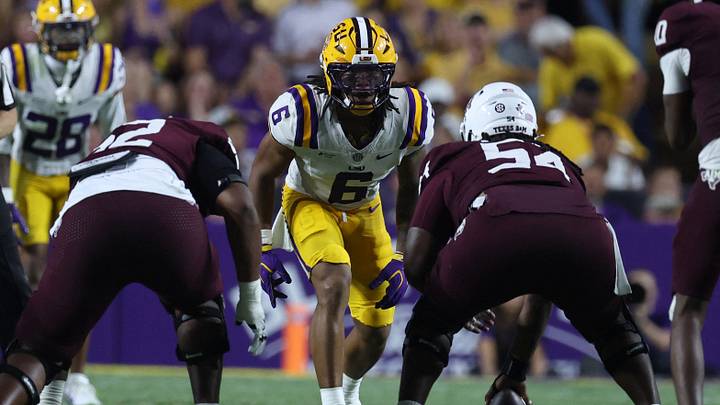
LSU football has gotten strong production from its defense throughout the 2026 season. But even after a dominant shutout of Mississippi State, the Tigers still need more consistency from their offense if they want to compete with the best teams in the SEC.
LSU defeated Mississippi State 31-0 this past Saturday, getting four touchdown passes from quarterback Sam Leavitt while the defense continued to make life difficult for the Bulldogs.
But one strong performance doesn't change what LSU needs moving forward.
The Tigers have shown they can score points, but they also need to do a better job of controlling games when the pressure increases. The defense can create opportunities and limit opposing offenses, but LSU cannot expect that unit to solve every problem throughout the season.
LSU's Offense Responded Against Mississippi State

The Tigers' performance against Mississippi State showed what the offense can accomplish when it moves the ball and finishes drives.
Leavitt completed 31 of 38 passes for 289 yards and four touchdowns, helping LSU build a 21-0 halftime lead. The Tigers also put together a 16-play, 74-yard drive in the third quarter that ended with a field goal.
LSU finished with 379 total yards and converted eight of 13 third downs, giving the offense a solid performance on a day when the defense never allowed Mississippi State to score.
The defense also helped LSU maintain control. Safety Ty Benefield intercepted Mississippi State quarterback Parker Puckett in the first quarter, and the Tigers later stopped the Bulldogs on fourth-and-1 at the LSU 31.
Those plays helped keep Mississippi State off the scoreboard, but the offense still had to take advantage of the opportunities.
LSU cannot assume its defense will always come up with a turnover or a fourth-down stop when a game starts to get away from them. Against tougher competition, the offense will need to produce consistently instead of relying on the defense to keep the game under control.
The Kentucky Loss Showed How Quickly Things Can Change

LSU's 35-34 overtime loss to Kentucky on Oct. 10 offered a different example of why offensive execution matters.
The Tigers moved the ball well early, opening the game with a 14-play, 69-yard drive that ended in a field goal. LSU followed with an 11-play, 75-yard touchdown drive and continued to find ways to move the ball throughout the first half.
However, costly mistakes made it harder for LSU to maintain control.
Kentucky returned a punt 55 yards for a touchdown in the second quarter, giving the Wildcats points without requiring their offense to sustain a drive. Later, Leavitt threw an interception that gave Kentucky possession at the LSU 36-yard line.
The Tigers also lost a late fumble when Leavitt was sacked at the LSU 28, giving Kentucky another opportunity to tie the game.
Those moments show why LSU needs to protect possessions and limit mistakes. Even when the offense is moving the ball, turnovers and special-teams mistakes can put the team in difficult situations.
The defense cannot always be expected to overcome those problems. LSU needs to make the most of its offensive possessions, especially late in close games when one mistake can change the outcome.
LSU Needs More Consistency Moving Forward

Field position is another part of the equation.
Against Mississippi State, LSU's defense repeatedly forced the Bulldogs to give up possession on fourth down. The Tigers then had opportunities to take control, including an 85-yard touchdown drive in the second quarter.
That is the kind of response LSU needs more often. When the defense creates an opportunity, the offense has to turn it into points. When a drive starts deep in LSU territory, the Tigers need to move the chains and avoid giving the opponent another chance to take control.
The Tigers have already shown they can put together productive drives. The challenge is doing it consistently, regardless of the opponent or the situation.
LSU's defense has been an important part of the team's identity this season, and the Mississippi State shutout was another example of its potential. But the Tigers will face more difficult tests as the schedule continues, and those games will demand contributions from both sides of the ball.
Leavitt and the offense took a step in the right direction against Mississippi State. Now they need to build on that performance, protect the football and finish drives when the opportunities are there.
The defense has shown it can set the tone.
For LSU to reach its goals in 2026, the offense has to do its part, too.
Sign up to our free newsletter and follow us on Facebook and X for the latest news.
 Add us as a preferred source on Google

Adrian is a writer for LSU Tigers on SI, covering LSU Athletics. A 2026 graduate of Texas State University with a B.S. in Journalism and a concentration in Sports Media, he developed extensive experience covering college athletics during his time with The University Star. As the publication’s Sports Editor, he led a staff of writers while overseeing coverage across digital, print and social media. He previously served as a sports analyst with Death Valley Insider in Baton Rouge, gaining experience covering LSU baseball and basketball. His reporting background also includes professional baseball, covering the Houston Astros for Last Word on Sports, as well as experience covering high school football in the Central Texas area. Adrian can be found on Twitter at @Adrian_Ram55
Follow Adrian_Ram55