
NASCAR Champion Corey Heim Wants You to Take a Breath. Here's Why.
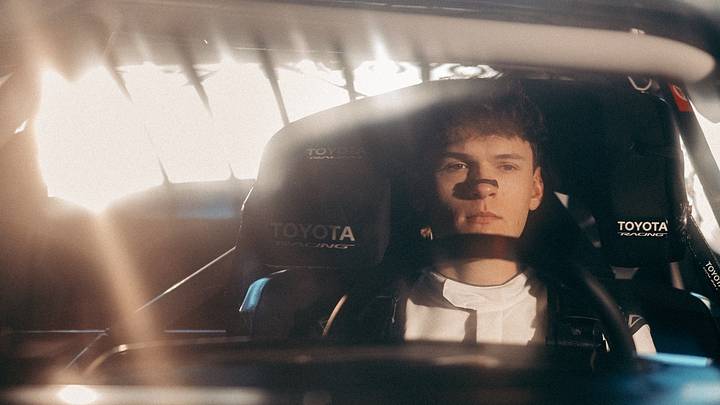
Corey Heim knows how to make a race car go fast. Learning how to keep his body from wearing down over hundreds of miles has been a different challenge entirely.
The NASCAR Craftsman Truck Series champion has won races, collected trophies and established himself as one of the sport's most promising young drivers. But ask him about his first experience competing at NASCAR's highest level, and he remembers something considerably less glamorous.
He thought he might pass out.
"For me, like the first cup race I ever did, I felt like I was going to pass out after the race," Heim told OnSI during an exclusive interview at the Toyota Performance Center in Mooresville, North Carolina.

Heim had grown accustomed to the demands of the Truck Series, where races typically cover around 200 miles. His Cup debut demanded twice that distance, along with the heat, concentration and physical strain that came with it.
The experience forced him to reconsider how he prepared. Endurance became a bigger priority. Recovery required more attention. Even breathing, something most people rarely think about, became part of his performance routine.
Now, with two Cup Series victories in 2026 and a full-time opportunity at Michael Jordan's 23XI Racing awaiting him in 2027, Heim is focused on the work that happens long before the green flag.
It's also how an unexpected partnership with Intake Breathing became part of his story.
What NASCAR Fans Don't See Before Race Day
From the grandstands, NASCAR can look deceptively simple. Drivers sit behind a steering wheel and race for position. What television can't fully convey is how physically punishing those hours inside the cockpit can become.
Heim says the heat alone would surprise most people.
"Typically the rule of thumb is it's about 30 degrees hotter inside the race car than whatever the ambient temperature is," he explained. "So if we go to Texas, it's typically like 95 degrees, so you're looking at 125, 130 degrees inside these race cars."
Unlike athletes in many other sports, drivers can't simply step away when exhaustion sets in. They have to remain sharp while managing the physical toll of racing for hundreds of miles.
Heim has learned that endurance isn't just about being strong enough to finish. It's about knowing how to conserve energy without compromising concentration.
"Since our races are so long, it's important not to get too wound up too early because I feel like it really weighs in the back half of the race because you can get fatigued pretty quick," he said.
That awareness has changed how he approaches training and recovery, including the attention he pays to his breathing.
How a NASCAR Race Led to an Unexpected Partnership
Heim's relationship with Intake Breathing didn't begin with a sponsorship proposal. It started with a product he discovered on social media.
After seeing a track & field athlete discuss Intake, Heim tried the company's magnetic nasal band in his racing simulator. He liked how it felt and eventually incorporated it into his workouts, sleep and race-day routine.
"Our helmets actually push our nose inward so it's harder to open up those nostrils, so intake just naturally helps airflow throughout the races for me," Heim explained.

Intake uses two adhesive tabs containing small metal discs and a reusable magnetic band designed to pull the sides of the nose outward. Unlike conventional nasal strips, the company says its rigid design helps maintain a consistent opening.
Heim says the device has made breathing more comfortable for him, although his experience doesn't establish that it improves athletic performance.
The story of how Intake discovered Heim is just as interesting.
Co-founder Dave Castillo was watching the Coca-Cola 600 when he spotted something familiar during an in-car camera shot: a young NASCAR driver wearing his company's product.
"I texted a friend who works in NASCAR and asked who it was," Castillo told OnSI. "He said it was this new kid, Corey Heim."
Castillo kept watching. When Heim later won in San Diego, he noticed the device again.
"I kept checking — was he still wearing it? Sure enough, right there on his face again," Castillo recalled. "He got out, did the Heim Time celebration, and Intake was still on. I thought, I have to get a hold of this kid."
Castillo reached out to Heim's representation and learned the driver had already been using Intake regularly. That conversation eventually developed into a formal partnership.
For Castillo, whose background includes professional stunt work and motocross, the connection made sense. Intake was originally developed to address restricted nasal airflow caused by protective goggles, and Heim had independently found a use for it inside his racing helmet.
For Heim, it's one more detail in an increasingly deliberate approach to preparation.
The Small Habits Behind Heim's Big Results
Heim's recovery routine isn't especially glamorous. In fact, one of his biggest priorities is getting a good night's sleep.
"I'm an eight-hour-a-night guy, I love to get my sleep," he said. "Normally I'll go to bed around 11, wake up at 7, I'm pretty structured when it comes to that."
He also wears Intake while sleeping, in addition to using it during workouts and races.

But some of the most important changes in his preparation have been mental.
Heim has become more disciplined about handling frustration, particularly when a race starts slipping away. A poor pit stop or unexpected setback can quickly test a driver's patience, but he's learned that losing his temper rarely accomplishes anything.
"It's very, very easy as us drivers to get flustered when something goes wrong, but I think just natural experience has helped me with that and just understanding that there's no benefit from losing your mind and freaking out and taking your anger out on your team," he said.
Instead, Heim tries to take a few deep breaths, reset and communicate with his crew before one mistake becomes several.
That composure will become even more important next season, when he'll face the demands of Cup racing every weekend rather than on a limited schedule.
Michael Jordan Is Already Keeping a Close Eye on Corey Heim
Heim's full-time Cup Series move to 23XI Racing in 2027 comes with considerable expectations. The organization is co-owned by NBA legend Michael Jordan and NASCAR veteran Denny Hamlin, two competitors who understand what it takes to win.
But Heim says Jordan has already made the transition feel less intimidating.
"MJ, he reaches out after almost every race, whether I crash or whether I win, whatever it is," Heim revealed. "He's very supportive, and Denny, of course, I'm competing against him, but I feel like he's good at understanding the balance of supporting your drivers even if they beat you and picking them up off the ground if they have a bad day."
Those relationships are helping Heim prepare for the adjustment from competing in selected Cup races to racing against the sport's best every weekend.
He's approaching the transition with a clear understanding of what he still needs to learn. His part-time schedule has provided opportunities to study tracks, identify weaknesses and build the physical endurance that once caught him off guard.
But he's not entering his rookie season simply hoping to keep up.
"I think the pretty solid goal for me would be make the Chase," he said, referring to the sport's 16-driver championship playoff field.
It's an ambitious target for a first-year full-time Cup driver, but Heim believes the speed and resources at 23XI Racing give him a legitimate opportunity.
The driver who once climbed out of his first Cup race feeling close to collapse is now preparing to tackle that challenge every week.
He knows the hours in the gym, the time in the simulator and the attention paid to recovery won't guarantee him a victory. Neither will the breathing routine that has become part of his preparation.
But they may help him arrive at the starting line better equipped for everything that follows.
And sometimes, even at 200 mph, the smartest thing a driver can do is remember to take a breath.
 Add us as a preferred source on Google

Maggie MacKenzie is a Boston-based writer and editor who has spent more than a decade covering sports and entertainment, with a deep focus on NASCAR. At NASCAR.com she covered the sport from race-weekends and analysis to larger stories covering the athletes, teams and series. Maggie has also held editorial roles across sports media, including as a copy editor and writer at Sports Business Journal, where she worked on coverage of the business side of professional sports, and at Heavy.com covering sports and entertainment. Maggie has been writing and editing professionally for more than ten years. She earned a bachelor’s degree in journalism from Fairfield University and an MBA from Babson College.