%22%3E%0A%3Cpath%20d%3D%22M214.538%204.86816C220.361%20-0.955348%20229.802%20-0.955327%20235.625%204.86816C241.449%2010.6917%20241.449%2020.1325%20235.625%2025.9561L225.082%2036.5L214.538%2025.9561C208.714%2020.1325%20208.714%2010.6917%20214.538%204.86816ZM222.347%2014.9268C219.32%2014.9268%20217.066%2015.8417%20217.066%2017.8711V18.2441C217.066%2020.016%20217.975%2020.8155%20221.371%2021.5303C222.446%2021.76%20222.816%2021.7883%20222.816%2022.418V22.79C222.816%2023.1623%20222.715%2023.3047%20222.311%2023.3047C221.84%2023.3046%20221.806%2023.0476%20221.806%2022.7627V21.79H217.064V22.2471C217.064%2024.6489%20218.646%2025.3642%20222.446%2025.3643C226.046%2025.3643%20227.727%2024.7068%20227.727%2022.3623V21.8154C227.727%2020.1584%20226.685%2019.4718%20223.422%2018.8145C222.448%2018.6145%20222.078%2018.4141%20222.078%2017.8145V17.4414C222.078%2017.1546%20222.347%2017.0118%20222.583%2017.0117C222.919%2017.0117%20223.087%2017.2138%20223.087%2017.4414V18.6143H227.561V17.8994C227.561%2015.9569%20226.517%2014.9268%20222.347%2014.9268ZM228.594%2015.2363V25.0576H233.095V15.2363H228.594ZM221.008%206.40625C220.272%206.40626%20219.628%206.47371%20219.076%206.6123C218.522%206.74889%20218.084%206.94683%20217.759%207.2041C217.435%207.4614%20217.241%207.7469%20217.179%208.05762C217.118%208.3685%20217.085%208.898%20217.085%209.64648V10.9189C217.085%2011.6833%20217.118%2012.2204%20217.183%2012.5273C217.249%2012.8322%20217.448%2013.1176%20217.787%2013.377C218.125%2013.6383%20218.573%2013.8322%20219.127%2013.9629C219.682%2014.0936%20220.27%2014.1592%20221.006%2014.1592C221.743%2014.1592%20222.387%2014.0917%20222.939%2013.9531C223.491%2013.8165%20223.932%2013.6178%20224.256%2013.3604C224.581%2013.103%20224.775%2012.8176%20224.836%2012.5068C224.898%2012.1959%20224.929%2011.667%20224.929%2010.9189V9.64648C224.929%208.88216%20224.898%208.345%20224.833%208.03809C224.767%207.73315%20224.567%207.44985%20224.228%207.18848C223.889%206.92717%20223.442%206.7332%20222.887%206.60254C222.333%206.47191%20221.705%206.40625%20221.008%206.40625ZM225.529%206.56055V14.002H228.363V10.6201L230.125%2014.002H233.095V6.56055H230.261V9.91113L228.363%206.56055H225.529ZM221.021%207.59277C221.229%207.59279%20221.368%207.64037%20221.435%207.7373C221.502%207.83235%20221.536%208.05485%20221.536%208.40137V11.8203C221.536%2012.2577%20221.504%2012.5354%20221.439%2012.6523C221.374%2012.7692%20221.224%2012.8262%20220.995%2012.8262L220.998%2012.8281C220.774%2012.8281%20220.629%2012.7768%20220.568%2012.6758C220.507%2012.5748%20220.474%2012.3076%20220.474%2011.876V8.40137C220.474%208.01934%20220.522%207.78727%20220.615%207.70996C220.708%207.63274%20220.845%207.59277%20221.021%207.59277Z%22%20fill%3D%22white%22%2F%3E%0A%3Cpath%20d%3D%22M195.595%2032.2359L193.251%2028.0096L190.907%2032.2359H181.648L188.41%2021.7469L181.648%2011.2578H191.061L193.366%2015.4842L195.71%2011.2578H204.97L198.246%2021.7469L205.008%2032.2359H195.595Z%22%20fill%3D%22white%22%2F%3E%0A%3Cpath%20d%3D%22M171.663%209.75861V4.1875H180.692V9.75861H171.663ZM171.817%2032.2352V11.257H180.538V32.2352H171.817Z%22%20fill%3D%22white%22%2F%3E%0A%3Cpath%20d%3D%22M154.969%2032.2358V11.2577H163.691V15.4841C164.882%2012.6409%20166.803%2010.7966%20170.261%2010.9503V20.2099H169.339C165.65%2020.2099%20163.691%2022.2462%20163.691%2026.8952V32.2358H154.969Z%22%20fill%3D%22white%22%2F%3E%0A%3Cpath%20d%3D%22M129.161%2032.2349V5.33984H141.263C148.41%205.33984%20153.289%208.52882%20153.289%2014.9068V14.9836C153.289%2021.4769%20148.333%2024.9348%20141.071%2024.9348H138.151V32.2349H129.161ZM138.151%2018.5184H140.572C142.877%2018.5184%20144.414%2017.481%20144.414%2015.5599V15.4831C144.414%2013.5236%20142.992%2012.5247%20140.61%2012.5247H138.151V18.5184Z%22%20fill%3D%22white%22%2F%3E%0A%3Cpath%20d%3D%22M101.625%2032.7346C96.5531%2032.7346%2092.5957%2028.3162%2092.5957%2021.8998V21.8229C92.5957%2015.176%2096.5915%2010.7576%20101.548%2010.7576C104.737%2010.7576%20106.504%2012.1407%20107.849%2013.6392V4.1875H116.571V32.2352H107.849V29.6609C106.427%2031.1978%20104.814%2032.7346%20101.625%2032.7346ZM104.545%2025.5498C106.543%2025.5498%20108.041%2023.8977%20108.041%2021.7845V21.7077C108.041%2019.6329%20106.543%2017.9424%20104.545%2017.9424C102.547%2017.9424%20101.048%2019.5945%20101.048%2021.7077V21.7845C101.048%2023.8977%20102.547%2025.5498%20104.545%2025.5498Z%22%20fill%3D%22white%22%2F%3E%0A%3Cpath%20d%3D%22M68.4463%2032.2354V11.2573H77.1679V14.1773C78.5126%2012.4484%2080.6258%2010.7578%2083.5842%2010.7578C88.0027%2010.7578%2090.769%2013.6778%2090.769%2018.4037V32.2354H82.0474V21.2084C82.0474%2019.4026%2080.9716%2018.3653%2079.6653%2018.3653C78.359%2018.3653%2077.1679%2019.4026%2077.1679%2021.2084V32.2354H68.4463Z%22%20fill%3D%22white%22%2F%3E%0A%3Cpath%20d%3D%22M51.2163%2032.7335C47.182%2032.7335%2044.3389%2030.4283%2044.3389%2026.2787V26.2019C44.3389%2022.014%2047.451%2019.6702%2052.3305%2019.6702C54.0979%2019.6702%2056.3647%2020.0545%2057.2868%2020.4387V20.0929C57.2868%2018.1718%2056.0957%2017.0576%2053.4063%2017.0576C51.2547%2017.0576%2049.4489%2017.5186%2047.6047%2018.2487L46.0678%2012.447C48.4884%2011.5249%2051.2547%2010.9102%2054.9047%2010.9102C59.1694%2010.9102%2061.9358%2011.7938%2063.78%2013.6381C65.3553%2015.2134%2065.97%2017.2497%2065.97%2020.285V32.2341H57.2484V30.1209C55.7884%2031.6962%2053.8289%2032.7335%2051.2163%2032.7335ZM54.6742%2027.7003C56.211%2027.7003%2057.3636%2026.4708%2057.3636%2024.4729V23.5892C56.8642%2023.3971%2056.0958%2023.2434%2055.3657%2023.2434C53.6368%2023.2434%2052.6763%2024.2808%2052.6763%2025.5871V25.664C52.6763%2026.8935%2053.5599%2027.7003%2054.6742%2027.7003Z%22%20fill%3D%22white%22%2F%3E%0A%3Cpath%20d%3D%22M29.3491%2032.2358V11.2577H38.0707V15.4841C39.2618%2012.6409%2041.1828%2010.7966%2044.6408%2010.9503V20.2099H43.7186C40.0302%2020.2099%2038.0707%2022.2462%2038.0707%2026.8952V32.2358H29.3491Z%22%20fill%3D%22white%22%2F%3E%0A%3Cpath%20d%3D%22M15.0995%2032.8113C6.72371%2032.8113%200%2027.2018%200%2018.8643V18.7875C0%2010.7574%206.33949%204.76367%2014.8306%204.76367C19.4411%204.76367%2023.168%206.30053%2026.088%208.83635L21.0548%2014.9069C19.2874%2013.4085%2017.328%2012.5632%2015.0995%2012.5632C11.6032%2012.5632%209.0674%2015.2527%209.0674%2018.9028V18.9796C9.0674%2022.7833%2011.7185%2025.396%2015.4837%2025.396C17.0206%2025.396%2017.8659%2025.1655%2018.5574%2024.7812V22.0917H13.9469V16.3285H26.9717V28.7771C24.0517%2031.1592%2019.979%2032.8113%2015.0995%2032.8113Z%22%20fill%3D%22white%22%2F%3E%0A%3C%2Fg%3E%0A%3Cdefs%3E%0A%3CclipPath%20id%3D%22clip0_17412_50443%22%3E%0A%3Crect%20width%3D%22240%22%20height%3D%2236%22%20fill%3D%22white%22%20transform%3D%22translate(0%200.5)%22%2F%3E%0A%3C%2FclipPath%3E%0A%3C%2Fdefs%3E%0A%3C%2Fsvg%3E%0A)
The Spectacle of the IndyCar Freedom 250 (Exclusive)
Putting on an IndyCar race isn't rocket science, until it is. For most of the 17-race calendar in the United States and Canada, the tracks are imbued with history – Laguna Seca, Long Beach, Indianapolis Motor Speedway. Even the advent of the Grand Prix of Arlington was a relatively straightforward process, with months of downtime allotted to construct the track and the city's support behind it.
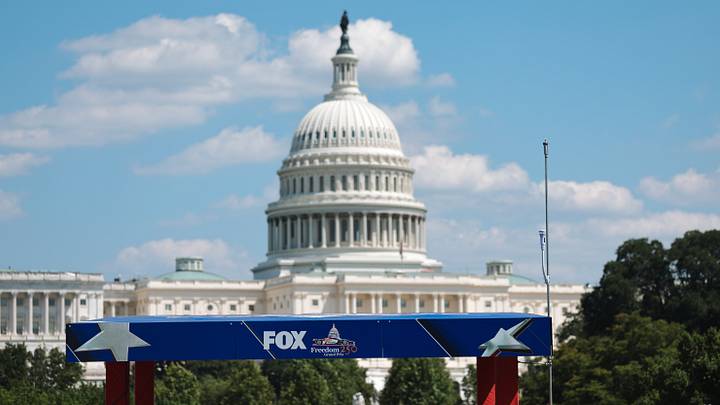
While the IndyCar cast and crew put in tireless hours week in and week out for every race, it is no secret that the Freedom 250 Grand Prix is simply a different beast. A different beast due to the nature of its locale. A different beast due to the involvement of our national government. A different beast due to the sheer scale – building a track amongst the monuments of Washington DC.
The drivers, teams, Fox Sports broadcast team, and IndyCar have come together in a moment that should be a net positive for the series, viewership, press coverage, and cultural relevance. So, how has this all come together?
Government-Sized Elephant in the Room
At the Daytona 24 Hours race in January of this year, the deadline room buzzed with the rumor that a Washington, DC IndyCar race could actually happen. Journalists quickly booked their flights for the race 8 months down the line out of sheer intrigue. No one truly knew if IndyCar and Fox Sports could actually pull it off on their own.

Then, just five days later, the media's questions were answered in the form of an Executive Order from the office of the President – a charge led by Penske's Bud Denker and Sec. of Transportation, Sean Duffy. In it, he stated that 'within 14 days, the Secretary of the Interior and Secretary of Transportation were to designate a route through Washington, D.C., that is suitable for conducting an INDYCAR street race'.
Immediately, the involvement of a deeply contested 47th administration of the United States added politics to the mix of an already 'last-minute' race. After all, the Freedom 250 committee is partisan by nature. Frankly, any major event – sporting or otherwise – with involvement in the 47th administration has been and will be followed by accusations of 'sports-washing'.
This is a difficult narrative to avoid for IndyCar and its drivers and broadcast partners, but they have put on a united front nonetheless that the Freedom 250 Grand Prix is about racing and visibility alone.

At the NASDAQ opening bell ceremony earlier this week, Kyle Kirkwood echoed these sentiments when asked about the scrutiny surrounding the race.
"I think the biggest thing for us drivers and as a series is that we have a massive opportunity to reach far and wide, much wider than we ever have, right? Even the 500 is mostly Midwest-based. This is an opportunity to reach all the way across the country and every little nook and cranny of America... that's what we have to focus on."Kyle Kirkwood, Andretti
Significant Brand Investment
Drivers like Kirkwood aren't the only stakeholders who see the innate value in eyeballs on this race. Navigating to the Freedom 250 GP website will show an impressive list of 60 brands and partners who have invested in this race – names from Delta and United Airlines to Wells Fargo and the Washington, DC Metro.
Investment doesn't stop there – IndyCar footed a bill of $35 million that was needed to transform the area around the National Mall into a track fit for racing. It is speculated that this bill is only a piece of the actual monetary investment needed.
What is the IndyCar ecosystem's return on investment from all of the brands attached to the race? The series has stated that as of a week or so ago, they are approaching $500 million in ad value.

There are pieces to this weekend, though, that are not about the money. Simply put, it is free for fans to attend... something entirely unheard of not just in motorsport, but in any sport. There were approximately 288,000 requests for 100,000 tickets when the raffle was opened a couple of months ago.
"The Indy 500 has 330,000. This one will have 100,000, which is massive for a street course. The fact that it's completely free for everyone that went online and got one of the lottery spots is incredible. My understanding is there actually is excess with the sponsorship that will actually go back into the community."Kyle Kirkwood, Andretti
To conceptualize that, nearly the entire number of people who attend the Indianapolis 500 — the largest single day sporting event in the United States – requested tickets to attend. With a track conceptualized, planned, and built in just seven months, the question then becomes, 'How?'.
Building the Freedom 250 Street Course
A race generally takes one to two years to plan, according to Penske's Bud Denker. This race... seven months. Denker's team broke ground while permits were still being finalized – partially due to the pressure from the national government to 'make this race happen'.
The race was always framed around the premise of the Freedom 250 name – a race that celebrated the United States' 250th birthday. The organizers leaned heavily on that symbolism as they shut down and decorated the streets around the National Mall.
"1895 was the first auto race in the United States. The first Indy 500 happened 16 years later. That's 130 years of history of automobile racing in America which means that for over half of the life of this nation car racing, car culture has been part of what America is. So what better way to celebrate 250 years than to have a car race?"Will Buxton, Fox Sports

That history has been emphasized at length on the ground, with a track that winds through some of the most recognized monuments in American history. With the historic context and the prospect of making history in 2026, a successful track build was crucial for IndyCar, Penske Entertainment, and Fox Sports.
Walking the grounds, the track is like no other. The fan zone demolishes the scale of every other IndyCar fan zone. The walking bridges are not wooden with leaks for rain to come through. Instead, they are polished structures that even include wheelchair lifts for ADA access. The walls are as smooth as butter. The build that started 3 weeks ago? Flawless.
Fox Sports Pulling off 'The Show'
The scale of the Fox Sports production matches the scale of the event. Fox Sports is calling this one of the most ambitious live productions in the network's history, with more than 90 cameras deployed across the track – the same number that Fox brings to the crown jewel of the series: the Indianapolis 500.

The camera drawing the most attention, though, is the Owl Cam, a camera built specifically for this race. The system is a 4D gimbal rig with 4-axis stabilization, mounted on a bridge that spans Pennsylvania Avenue.
The purpose? To capture the cars as they pass beneath the bridge at full speed, framed against the Capitol in the background. The inspiration for this camera comes from an unlikely source, though. Mike Davies, EVP of Technical and Field Operations at Fox Sports, broke down their thought process.
"This camera was informed by what was done in the Formula 1 movie, as well as other racing movies and video games. We were looking to have those quick pans that go underneath so you're able to follow the cars at full speed and get a very unconventional look."Mike Davies, Fox Sports

The Owl Cam itself is one piece of a much larger production built around the setting of Washington DC Monuments. The broadcast includes a camera positioned atop the Washington Monument and several elevated shots around the track. Onboard cameras have been expanded as well, with two cameras running out of the cars on the track.
The scale and investment versus the scrutiny have been the story since the Freedom 250 Race was announced. The story of the race in miniature is a government mandate, tens of millions of dollars, a camera system dreamed up through video games and racing movies, all in service of a 'once-in-a-lifetime' race.
Cars running past the Capitol at full speed, captured by a purpose-built broadcast, will always go down in the history books for the IndyCar Series. Whether that history will stand on its own as a racing spectacle or be marred by the politics that got it to fruition is to be determined.
Even with the investment that has gone into the weekend, none of the friction caused by a deeply divided administration disappears simply because cars are on track. IndyCar, its drivers, and broadcast partners have made their position clear from the outset – this event is about racing and visibility alone.
Critics will see it differently. Both things can be true at once, and it was never going to be uncontested. The fact still remains, though, that IndyCar, Penske Entertainment, their partners, and Fox Sports have done something that no other series has done: pull off an IndyCar Race in Washington, DC.
 Add us as a preferred source on Google
Kaitlin Tucci has been a fan of motorsport for close to a decade. Before joining On SI in 2025, she contributed heavily to the marketing and media efforts at FanAmp, a motorsports startup for which she was the Head of Marketing. She has contributed to a number of publications covering series such as Formula 1, IndyCar, IMSA, and more... Kaitlin graduated from the Massachusetts Institute of Technology with both a degree in Business/Marketing and Political Science. She works full time as a marketer at high-growth tech startups while spending her weekends immersed in the world of racing. Kaitlin was raised in Las Vegas, Nevada, but has lived in New York City for the past 5 years with her 'giant chihuahua' Willow. You'll often catch Willow watching races alongside Kaitlin, but unfortunately she doesn't have enough airline miles to join her at the track just yet.