
MLB Mock Trade: Mariners Acquire Nico Hoerner from the Cubs
In this story:
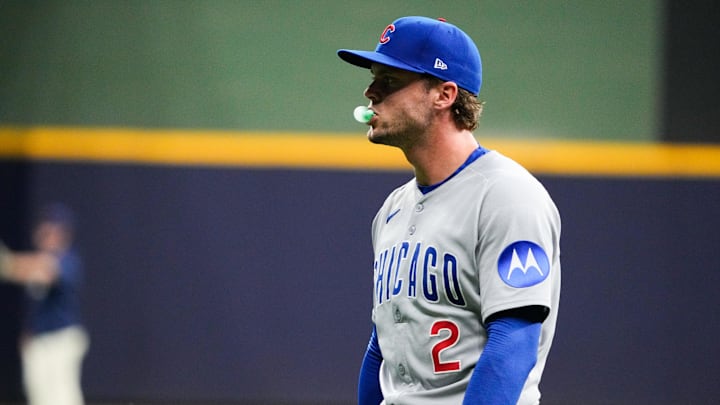
A trade involving Nico Hoerner would give any contending team a reliable, versatile middle infielder who blends elite defense with high-contact hitting and speed. Hoerner has proven himself as a consistent presence at second base, capable of playing shortstop when needed, and he contributes across multiple fantasy and real-world categories — from batting average and runs to stolen bases. While not a traditional power bat, his ability to reach base, move runners, and create scoring opportunities makes him a valuable table-setter at the top of a lineup, particularly for teams that need contact hitters to complement their power core.
At 28 and under team control through 2026, Hoerner offers a cost-effective option with a stable floor and multi-year upside. His presence in a lineup stabilizes infield defense, reduces strikeouts, and generates runs and steals at the top of the order, making him an attractive target for teams looking to win now.
Here’s what it would take for the Seattle Mariners to acquire him:
Seattle Mariners - Chicago Cubs MLB Mock Trade Details & Fantasy Baseball Impact
Mariners Acquire:
Nico Hoerner (2B)
Cubs Acquire:
Emerson Hancock (RHP)
Colt Emerson (INF)
Cole Young (INF)
Nico Hoerner: In 2025, Hoerner provided a strong contact profile, hitting around .275 with modest power and roughly 20 stolen bases, while anchoring elite defense at second base. His value in fantasy stems from a high batting average, run production, and speed, especially valuable in middle infield slots.
If he moved to Seattle, Hoerner would be expected to bat near the top of a deeper lineup, significantly increasing runs scored and RBI opportunities compared with Chicago. The more potent supporting cast could also help elevate his stolen base totals and overall counting stats. In fantasy formats that value batting average, runs, and speed, this would upgrade Hoerner’s profile from a solid MI2/MI3 option to a multi‑category contributor with potential breakout implications.
Emerson Hancock: Hancock spent 2025 developing as a young starter, not yet a full‑time contributor in many fantasy formats. His stat line that year was limited — a small sample with promising strikeout ability and mid‑rotation upside when healthy. In redraft leagues, Hancock’s impact remains minimal in 2025 because he’s not yet a reliable source of innings, wins, or strikeouts. In dynasty formats, however, he represents a mid‑rotation arm with potential, especially in leagues that reward strikeouts and innings pitched. He is a long‑term piece rather than an immediate fantasy asset.
Colt Emerson: As one of Chicago’s top infield prospects, Emerson put up strong numbers in the minors during 2025 (high batting average and on‑base skills with gap power). However, he did not have a full MLB season that year, so his fantasy value in redraft formats was negligible. If Emerson earns a major league promotion, his ability to hit for average and moderate power could make him a valuable MI/CI option in dynasty leagues, but in 2025 he remained strictly a speculative stash rather than a contributor to redraft lineups.
Cole Young: Like Emerson, Cole Young spent 2025 as a high‑upside infield prospect with strong contact skills and emerging power in the minors. He did not make a significant MLB impact in 2025, meaning his fantasy value that year was limited to deeper dynasty or keeper formats. Young’s appeal is long‑term: if given the opportunity in the big leagues, his combination of average and pop could pay dividends down the road. But in standard redraft leagues in 2025, he offered little immediate production.
Why The Mariners Make The Trade

The Mariners would benefit immediately from this trade, as Hoerner would improve their contact rate, infield defense, and baserunning efficiency while stabilizing the top of their lineup. He would likely slot into the No. 2 spot, giving Seattle a dependable table-setter ahead of its power hitters, and his team-friendly contract through 2026 makes him more than just a short-term rental.
Seattle would be willing to give up these prospects because they are in a “win-now” mode, looking to maximize their postseason window while their core of power hitters and young pitching is at its peak. Adding a proven, high-contact, multi-category contributor like Hoerner increases their chances of competing immediately for a playoff run, even if it means sacrificing some future upside.
Why The Cubs Make The Trade

From Chicago’s perspective, moving Hoerner at peak value allows them to acquire controllable assets aligned with a longer-term competitive window. Emerson provides a premium middle infield prospect, Hancock adds a near-MLB-ready starting pitcher, and Young offers a high upside infielder with strong contact skills.
By converting one high-floor, established player into multiple controllable pieces, the Cubs strengthen both their present depth and future upside. In the 2025 market, a player like Hoerner — under contract beyond the season, elite defensively, and capable of 3–4 WAR when healthy — would command a package typically including a Top 100 prospect, a MLB-ready pitcher, and an additional upside piece.
More Fantasy Sports On SI News
 Add us as a preferred source on Google
Ryan Shea is a seasoned sports enthusiast with a sharp eye for strategy and a deep love for the game—no matter the sport. Whether he’s analyzing roster moves or spotting trends before they hit the headlines, Ryan brings a unique mix of research, instinct, and insider perspective to his writing. With over a decade of experience dominating fantasy leagues, he knows what it takes to build championship-caliber lineups. A diehard fan of all things New York, Ryan proudly reps the Jets, Yankees, Knicks, and Rangers—win or lose.