
Amon-Ra St. Brown Highlights Fantasy Football's Key Red Zone Targets For Week 3
In this story:
When setting fantasy lineups, chasing touchdown numbers is always dangerous. High scoring outputs are often volatile, while sustained underlying volume remains the gold standard for predicting future red-zone success. To isolate who is truly being given the best chances to get in the end zone, we must evaluate high-leverage context of target shares, route efficiency and proximity to the goal line.
Red-Zone Volume Leaders
Who Is Accumulating the Most Total Looks?
Volume provides the foundation. Elite alpha receivers are earning heavy looks as soon as their offenses cross the opponent's 20-yard line.
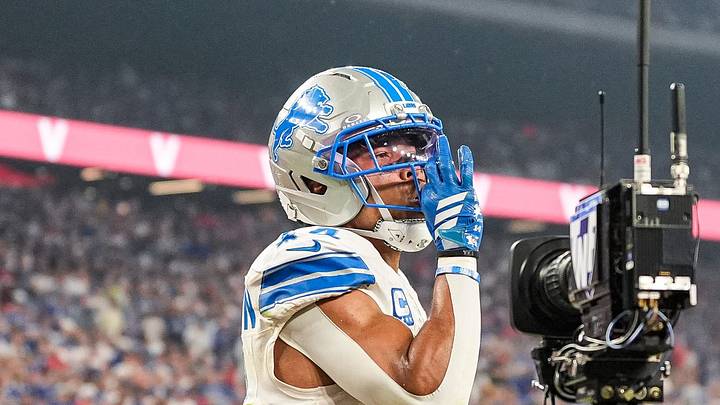
Amon-Ra St. Brown: Leads the NFL with 6 red-zone targets. The four-time Pro Bowl receiver remains a focal point of the Lions pass scheme near the goal line, logging 5 receptions on those looks. His command of a 34% target share translates to an elite slice of Detroit's red-zone attempts. When the Lions enter the 20, the first-read rate (50%) heavily favors St. Brown. He has turned 6 red-zone targets into 5 receptions and 3 receiving touchdowns, showcasing elite conversion in the end zone.
Jaxon Smith-Njigba: Tied at the top of the NFL with 6 red-zone targets, maintaining his high-leverage involvement. The reigning NFL Offensive Player of the Year maintains an elite Target per Route Run (TPRR) rate in tight quarters, proving Seattle's offense is intentionally manufacturing looks for him. He has logged 6 red-zone resulting in 3 receptions and 2 touchdowns.

Inside the 10 Is Where It Gets Interesting
Who Is Getting Targeted In the Condensed Area of the Field?
Rashod Bateman: Bateman has run routes on 75% of team dropbacks, proving that his role in Baltimore's core offense is secured rather than situational. Operating as the Ravens top perimeter wide receiver, Bateman leads the team's receiving room in high-leverage looks. When Baltimore works inside the 20, his 6'1" frame makes him a primary target on back-shoulder throws.

CeeDee Lamb: Lamb's 3 red-zone targets don't tell the whole story. Two of those 3 looks occurred inside the 5-yard line, which is the most valuable real estate on the field for pass-catchers. Dallas heavily prioritizes Lamb in tight quarters as he commands a 34% first-read target share overall, and when Dak Prescott drops back inside the 10, the first progression is designed to isolate Lamb against single coverage.
Volume Without the Scores
Stefon Diggs (Washington Commanders, WR)
Red-Zone Context: 4 red-zone targets (1 TD) 25%+ team red-zone target share

The Breakdown: Diggs has seen consistent volume when Washington drives inside the 20, but most of his targets have occurred in other areas of the field rather than receiving direct shots in the end zone. He maintains a high-floor due to his persistent target share. If his route tree shifts closer to the goal-line, his TD upside will skyrocket.
Mark Andrews (Baltimore Ravens, TE)
Red-Zone Context: 1 red-zone target (0 TDs) 23% target share and 30% first-read share.

The Breakdown: Andrews is dominating middle-of-the-field usage and holding a robust 23% target share. He has logged one single red-zone target through two weeks. Tight end scoring relies heavily on goal-to-go looks. With a 30% first-read share, Baltimore will look for him more with defensive coordinators adjusting to stop Lamar Jackson and Derrick Henry.
Touchdowns Without the Volume
Darren Waller (Carolina Panthers, TE)
Red-Zone Context: 2 red-zone targets (2 TDs) 56% route share and a 100% conversion rate.
The Breakdown: Waller posted impressive fantasy scores solely off back-to-back red-zone TD catches. His underlying utilization is alarming as Waller is running routes on barely half of the Panthers dropbacks and holding a minimal overall target share.
Juwan Johnson (New Orleans Saints)
Red-Zone Context: 4 red-zone targets (2 TDs) 12% overall target share and 12% TPRR vs. Zone

Johnson appears safe at first glance thanks to 4 red-zone targets and early scoring. His underlying profile shows a miniscule 12% target share and poor efficiency against zone coverage. Johnson is relying on high-leverage variance rather than commanding standard target volume. He relies fully on scoring a touchdown every week in order to be relevant in the world of fantasy football.
 Add us as a preferred source on Google
Daniel Outerbridge covers the NBA, NFL, WNBA, and MLB with an emphasis on the numbers behind the game. His work breaks down player performance, team strategy, and emerging statistical trends to provide actionable insights for fans and fantasy players. Outerbridge has written for a myriad of other outlets including Anubis Sports and FanSided.