
Dynasty Fantasy Football Busts Who Are Dangerously Overvalued in 2026 Featuring Quinshon Judkins
In this story:
Evaluating dynasty fantasy football assets requires looking past surface-level draft capital and box scores to uncover underlying volume caps, scheme fit issues, and structural red flags. When high market valuation meets a narrow path to elite production, a player transitions from a solid contributor to a dangerous “dynasty bust”. Here is a breakdown of four prominent names carrying major return-on-investment risk heading into upcoming dynasty drafts and trade negotiations.
1. Dalton Kincaid (TE, Buffalo Bills)
The Valuation Trap: High-volume expectations in a Josh Allen-led passing attack. Kincaid remains a dynamic receiving talent, but his path to an elite, set-and-forge TE1 ceiling is choked by structural workload limitations and medical concerns:
PCL Rehabilitation & Load Management: After suffering a late-season PCL tear in 2024, Kincaid opted for rest and non-operative physical therapy over surgery. While non-surgical rehabilitation can allow PCL injuries to heal effectively, an approach championed by specialist Dr. K. Donald Shelbourne at the Shelbourne Knee Center, residual joint laxity still creates re-aggravation risks. The Bills’ coaching staff has openly discussed load management strategies for Kincaid capping his weekly practice reps and snap share.
The Dawson Knox Wall: Kincaid functions primarily as a big-slot/move tight end rather than an all-downs inline blocker. Knox’s presence and superior blocking ability locks him into heavy playing time in two-tight-end sets and run-heavy personnel groupings.
Sub-50% Snap Rates: Top- tier dynasty tight ends routinely log 75% to 80%+ snap shares. When Kincaid’s snap counts hover in the 40% to 55% range, he loses high-value route opportunities.
Man Coverage Limitations: Advanced metrics show Kincaid excels at finding soft spots in zone schemes, but he faces significantly tighter windows and lower separation rates against physical man coverage.
Dynasty Bottom Line: Kincaid doesn’t need to be a bad NFL player to become a dynasty bust, he simply needs to settle on as a rotational, touchdown-dependent TE12-TE18. If you are buying him at top-5 tight end prices, you are paying for volume he may never consistently see.
2. Isaiah Likely (TE, New York Giants)
The Valuation Trap: Paying elite trade prices based on ceiling highlights rather than weekly baseline volume. Fantasy managers have long waited for Likely to break free from Mark Andrews’ shadow, expecting immediate top-6 fantasy production following his lucrative contract with the New York Giants. However, key systemic risks remain.
Unproven Production: A significant portion of Likely's dynasty trade value stems from sporadic touchdown spikes during injury-fill-in-starts rather than sustained, week-in, week-out production.
Systemic Scheme Limits: Reuniting with head coach John Harbaugh guarantees familiar personnel, but Harbaugh's offenses historically rotate tight ends heavily across multiple packages. Offensive coordinator Matt Nagy's track record rarely features a single high-volume, hyper-targeted TE1.
Inline Blocking & Competition: Third-year tight end Theo Johnson possesses a larger frame and superior inline blocking skills, allowing Johnson to command early-down and run-heavy snaps. Likely's lack of traditional blocking prowess caps his snap ceiling below the 70%-80% threshold required for elite fantasy tight ends.
Dynasty Bottom Line: If Likely remains locked in a committee role alongside Johnson on a run-heavy or developing offense, his actual fantasy output risks settling into the volatile TE12-TE18 range, making him a major bust relative to his peak market acquisition cost.
3. Michael Wilson (WR, Arizona Cardinals)
The Valuation Trap: A classic "sell-high" asset disguises as an ascending WR2. Wilson turned heads by breaking out with 78 receptions, 1,006 receiving yards, and 7 touchdowns. Context is critical when projecting whether those counting stats are repeatable.
The Marvin Harrison Jr. Effect: The bulk of Wilson's target volume occurred down the stretch while Harrison Jr. was sidelined with an injury, during which Wilson averaged roughly 11 targets per contest.
Target Hierarchy Backslide: With Harrison Jr. operating as the focal perimeter target and Trey McBride commanding an elite tight end target share, Wilson's target-per-route-run (TPRR) rate drops back to WR4/WR5 territory when the offense is fully healthy.
Contested-Catch Reliance: Wilson relies heavily on physical downfield contested catches rather than quick press-man separation. Receivers who depend on jump balls rather than elite separation suffer he most severe fantasy falloffs when volume or quaterback accuracy fluctuates.
Michael Wilson Weeks 1-10: Fantasy WR77
— Yahoo Fantasy Sports (@YahooFantasy) January 2, 2026
Michael Wilson Weeks 11-17: Fantasy WR3 pic.twitter.com/nmbc0BSnvt
Dynasty Bottom Line: Wilson is a dependable NFL wide receiver, but dynasty managers trading for him as a guaranteed 1,000-yard asset are walking into a trap. Expecting him to repeat his high-volume stretch behind Harrison Jr. and McBride risks locking a volatile WR4/Flex play into a WR2 price tag.
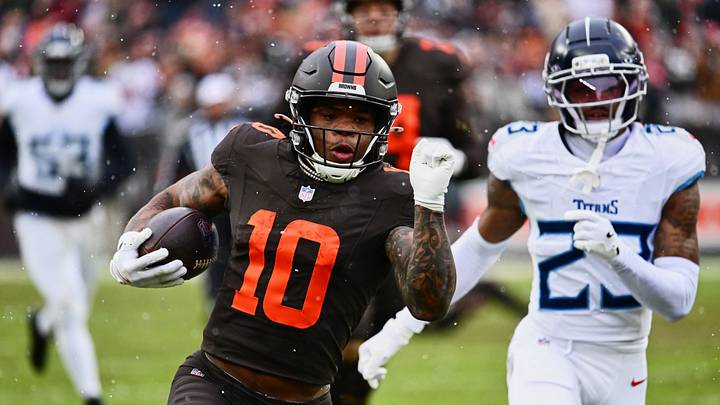
4. Quinshon Judkins (RB, Cleveland Browns)
The Valuation Trap: High rookie/startup draft investment expecting an immediate, three-down workhorse RB1. Selected in the second round of the 2025 NFL Draft, Judkins entered the league with immense fan hype. His rookie profile reveals real structural efficiency concerns.
Poor Per-Touch Efficiency: Despite accumulating 827 rushing yards and 7 touchdowns as a rookie, Judkins averaged a mediocre 3.6 yards per carry and broke 100 rushing yards only once all season. Ground-and-pound running backs who lack big-play explosiveness struggle to sustain fantasy value without massive touch totals.
Limited Passing-Down Work: Judkins was primarily restricted to early-down grinding. Second-year back Dylan Sampson has locked down third-down work, hurry-up drills, and trailing game scripts, putting a hard ceiling on Judkins' PPR potential.
Game-Flow Vulnerability: In an unstable Cleveland offense prone to playing from behind, negative game scripts routinely force the coaching staff to abandon ground attacks, taking Judkins off the field during high-volume passing situations.
These are 4 players you'll regret drafting in fantasy football this year:
— SAL VETRI (@SalVetriDFS) June 7, 2026
1. Quinshon Judkins.. pic.twitter.com/ZuXtTAwwcu
Dynasty Bottom Line: Managers who spent premium early first-round rookie capital on Judkins envisioned a true bell-cow back. If he remains locked into a two-down role with 3.6 YPC efficiency on a volatile offense, he risks settling into touchdown-dependent RB2/RB3 territory, failing to payoff his high startup price.
 Add us as a preferred source on Google
Daniel Outerbridge covers the NBA, NFL, WNBA, and MLB with an emphasis on the numbers behind the game. His work breaks down player performance, team strategy, and emerging statistical trends to provide actionable insights for fans and fantasy players. Outerbridge has written for a myriad of other outlets including Anubis Sports and FanSided.