
Week 6 Fantasy Football Start 'Em, Sit 'Em: DK Metcalf vs. Jaylen Waddle
In this story:
Fantasy football managers often find themselves weighing athletic dominance against explosive open-field speed. A prime example of this dilemma is the head-to-head comparison between Jaylen Waddle and DK Metcalf. On paper, both receivers possess league-winning, WR1 upside. Fantasy value is rarely dictated by draft capital or name recognition alone.
Through five weeks of the 2026 NFL season, both pass-catchers have posted nearly identical total fantasy outputs. Choosing between Waddle and Metcalf isn't just a choice between two players. It comes down to either trusting a high-volume route runner who can turn short touches into home runs, or banking on a classic alpha perimeter receiver who leans on high air yards and touchdown conversion.
Can Waddle Turn Speed Into Consistent Fantasy Production?

Operating in Sean Payton's system gives Waddle manufactured touches through designed screens, jet sweeps, and any other creative ways they can get the football in his hands. Denver loves to scheme and gets the ball into space quickly to allow the playmakers to rack up yardage after the catch. Passing volume with the Broncos offense could fluctuate depending on how much Payton decides decide to lean on the ground game.
Can Metcalf's Size & Scoring Ability Give Him the Edge?

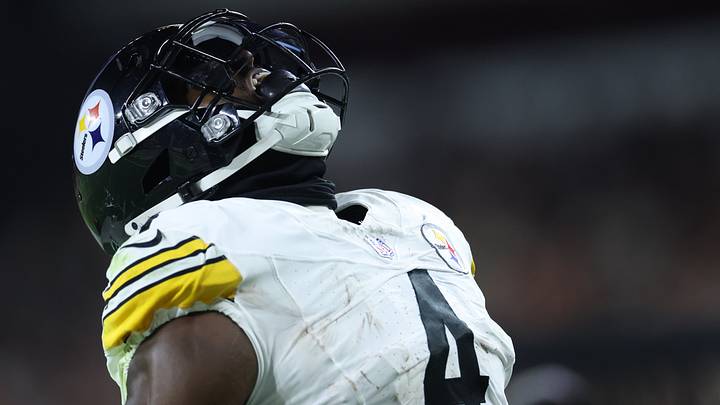
Now operating in Pittsburgh's offense under Mike McCarthy, Metcalf is being moved around the formation to create size mismatches on the outside and in the slot. Standing 6'4" and weighing 235 pounds, Metcalf's primary fantasy appeal lies in his downfield leverage and high-value red-zone opportunities. While efficiency issues and early-season drop rates have capped his game-to-game floor, his commanding air-yard share ensures that he is always a candidate for multi-touchdown upside.
The Numbers Reveal a Narrow Gap in Fantasy Production
Separated by 0.1 total PPR points over five games, neither receiver has established a significant statistical advantage over the other. Both are averaging right at 9.0 points per game, which currently places them in the mid-WR3 territory for fantasy formats.
While their baseline fantasy points match, Metcalf's share of team air-yards gives him a slight edge in yardage, while Waddle's reliance on receptions makes him slightly more sensitive to total target volume.
DK Metcalf on facing Sauce Gardner in Week 5:
— Underdog NFL (@UnderdogNFL) October 11, 2026
"Who?"
"I don't worry about what a DB does well — they've got to guard me."
(via @MySportsUpdate) pic.twitter.com/d5NN0D0rrh
Target Share Parity: Both receivers command a 21% target share within their respective passing offenses.
Air Yards Advantage: Metcalf holds a distinct lead in Air-Yards Share (32% vs. 21%). Because Metcalf is targeted further downfield on vertical routes and perimeter go-routes, his targets yield higher expected fantasy value per catch.
High-Value Touches: Metcalf leads in high-value opportunities with 4 end-zone targets compared to Waddle's 3 red-zone targets, giving Metcalf a structural advantage and increased touchdown probability.
Which Receiver Has the Easier Matchup in Week 6?
One Defensive Weakness Could Decide This Fantasy Showdown
Waddle's Matchup: Seattle presents a tough challenge. Their defense ranks among the top 3 against fantasy receivers in 2026. Their two-high safety coverage limits deep explosive plays, forcing Denver to throw underneath into tight zone windows.
Metcalf's Matchup: Facing Tampa Bay offers an easier route to solid fantasy production. The Bucs run aggressive defensive fronts that leaves secondary cornerbacks in single coverage exposed on the outside. Metcalf's physical size creates direct advantages against Tampa Bay's secondary.
Final Verdict: Who Should Fantasy Managers Start?
Higher Floor: Waddle offers the more dependable weekly workload in full-PPR formats due to Payton's short-area play design in Denver.
Higher Ceiling: Metcalf has the easier matchup in order to produce a 20-point fantasy performance thanks to his dominant air-yard share (32%) and deep chemistry with Aaron Rodgers.
 Add us as a preferred source on Google
Daniel Outerbridge covers the NBA, NFL, WNBA, and MLB with an emphasis on the numbers behind the game. His work breaks down player performance, team strategy, and emerging statistical trends to provide actionable insights for fans and fantasy players. Outerbridge has written for a myriad of other outlets including Anubis Sports and FanSided.