
Week 2 Fantasy Football Players to Avoid Starting: Drake London Among Risky Options
In this story:
Week 1 in the NFL generates huge overreactions, leaving fantasy managers prone to falling for unsustainable usage spikes or benching studs who simply hit an opening-week speedbump. Ahead of Week 2, here are the players who warrant serious caution in Week 2 starting lineups.
Mike Gesicki, TE/ Cincinnati Bengals
The Week 1 Illusion: 5 catches, 78 yards, 1 TD.
The Reality Check Metric: 32.8% Snap Share (21 of 64 offensive snaps).
Mike Gesicki Back on Fantasy Radar After Big Week 1 https://t.co/NKjsjQYDGB
— RotoBaller NFL (@RotoBallerNFL) September 14, 2026
The Verdict: Gesicki's efficiency was astronomical on minimal field time. Tight ends who run a route on fewer than half of their team's dropbacks are touchdown-dependent lottery tickets. Facing a stiff Houston Texans defense in Week 2, expecting a repeat performance without a massive jump in snap volume is a losing bet.
Kendrick Bourne, WR/ Arizona Cardinals
The Week 1 Illusion: 8 catches on 8 targets for 75 yards.
The Reality Check Metric: WR3 Route Participation (logged fewer snaps than both Marvin Harrison Jr. and Michael Wilson).
Kendrick Bourne — Zero chance he ever becomes a consistent starter for you. At best the 4th receiving option on a bad offense. Don’t let Week 1 fool you. pic.twitter.com/HKGLFXyPCz
— Chris Degz (@ChrisDegz) September 15, 2026
The Verdict: Waiver wire managers rushed to claim Bourne after his 100% catch-rate outing. His snap footprint reflects a rotational role rather than a focal point. Down-field priority still belongs ton the perimeter starters, making Bourne's high target rate unsustainable once defenses adapt.
Marvin Harrison Jr., WR/ Arizona Cardinals
The Week 1 Reality: 1 reception, 33 yards.
The Underlying Metric: Seattle Shadow Matchup (Week 2 vs. Seattle secondary).
For anyone wondering who the Cardinals’ WR1 is 👇🏼
— FANTASY UMPIRE (@FantasyUmpire) September 16, 2026
Week 1 1st read target shares:
Trey McBride - 41% (11 targets)
MICHAEL WILSON - 26% (7)
Kendrick Bourne - 22% (6)
Marvin Harrison Jr. - 7% (2) pic.twitter.com/oFWtrfrigM
The Verdict: Do not drop him, but do not consider him an unbenchable WR1 this week. Harrison Jr.'s quiet opener showcased a lack of rhythm in target design, and facing Seattle's stingy, ball-hawking perimeter defense yields a low floor. If you have a high-volume WR2 with a cleaner matchup, benching MHJ for one week is a defensible tactical play.
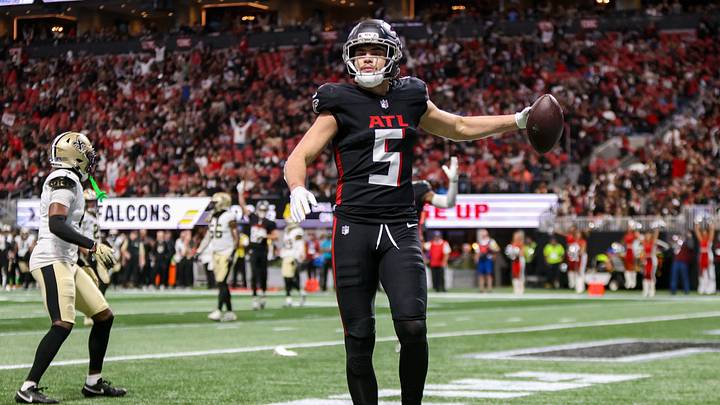
Drake London, WR/ Atlanta Falcons
The Week 1 Reality: Subdued target share and inefficient volume.
The Underlying Metric: Quarterback Volatility Index (Atlanta forced to start Cooper Rush due to injury).
Panic: Drake London❌
— Bryce DeGroat (@NFL_Convo) September 15, 2026
Scored just 5.5 points and looked terrible as a whole
Guy is very inconsistent and the supporting cast is even worse
Plus I can’t trust these QBs
He’s not a Top 20 WR anymore🤷♂️ pic.twitter.com/g8yz1HPWG7
The Verdict: London's ceiling is capped by short-term offensive instability under center. With Atlanta adjusting its passing tree to accommodate a backup quarterback, high-value targets down the field naturally decline. Treat London as a risky FLEX rather than a set-it-and-forget-it WR2.
Marshawn Lloyd, RB/ Green Bay Packers
The Week 1 Reality: Touch-limited rotational work.
The Underlying Metric: Backfield Loom Factor (Impending return of Josh Jacobs)
Where do you stand on Marshawn Lloyd? pic.twitter.com/wXGCDFTwGy
— IKE Packers Podcast (@IKE_Packers) September 15, 2026
The Verdict: Lloyd failed to command a clear workhorse share even with room to operate. With Josh Jacobs nearing a return to lead-back touches, Lloyd's ceiling drops dramatically. Starting him in Week 2 requires a touchdown to break even.
Jordan Addison, WR/ Minnesota Vikings
The Week 1 Reality: Low target depth and low volume.
The Underlying Metric: Target Hierarchy Vacuum (Developing pass-game distribution).
Caught up with #Vikings WR Jordan Addison postgame last night. Thought his reaction to not having a catch was spot-on: pic.twitter.com/FPSkCUVksP
— Darren Wolfson (@DWolfsonKSTP) September 14, 2026
The Verdict: Addison remains secondary in Minnesota's passing progression behind elite target-earners. Until the Vikings establish a higher passing volume or design more first-read looks his way, Addison is an volatile, touchdown-reliant option who belongs on the bench in standard formats.
Trust the Trends, Not the Anomalies
Before locked-in lineups lock you into regret on Sunday, take a hard look at underlying metrics rather than box score totals.
Snap counts over stat lines: If a player isn't on the field for at least 60-70% of snaps, their ceiling is capped.
Quarterback stability over target projection: Backup QB situations directly compress downfield potential for perimeter playmakers.
Role security over waiver hype: Target distributions regress quickly once defenses adjust.
 Add us as a preferred source on Google
Daniel Outerbridge covers the NBA, NFL, WNBA, and MLB with an emphasis on the numbers behind the game. His work breaks down player performance, team strategy, and emerging statistical trends to provide actionable insights for fans and fantasy players. Outerbridge has written for a myriad of other outlets including Anubis Sports and FanSided.