
Are Tennis Balls Really Behind the Tour’s Injury Crisis?
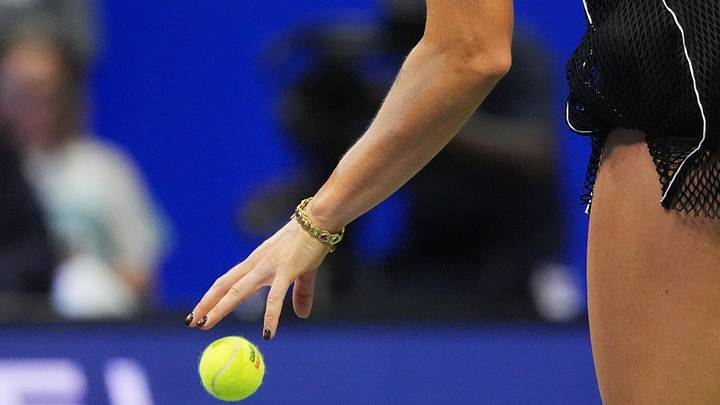
Carlos Alcaraz spent four months away this season with a right wrist injury, missing the French Open and Wimbledon. Jannik Sinner withdrew from the US Open with a knee problem. As injuries pile up, many of tennis’s biggest names keep blaming the same suspect: the ball.
What Players Say Changed
As balls lose pressure and fluff up, they play heavier and slower, so players swing harder for the same pace and spin. That extra force runs through the wrist, elbow, forearm, and shoulder.
At Wimbledon this year, Novak Djokovic said players agree something changed after COVID, pointing to the factories in China that nearly every major brand uses. Taylor Fritz blamed the 2025 Australian Open balls for an oblique injury. He called them “the deadest balls ever.”
A Different Ball Every Week
Have been dealing w wrist issues since beginning of USO series cause of ball changes✌🏻we went 3 different balls in 3 weeks https://t.co/018jWjFPTC
— Taylor Fritz (@Taylor_Fritz97) September 30, 2023
Tournaments sign their own ball deals, so the ball can change week to week. In 2023, Fritz said three different balls in three weeks gave him wrist issues. Practice balls draw complaints too, with Alexander Bublik posting a photo of two battered balls before this year’s Australian Open.
Massive tennis ball rant incoming.
— Taylor Fritz (@Taylor_Fritz97) September 10, 2026
After playing Washington, Cincinnati, and the US Open, plus a full week of training in New York beforehand, I got a VERY good feel for the Wilson US Open balls we were using and know EXACTLY what they should feel like off my racket. They were…
In September, Fritz took his frustration to X, saying retail cans didn’t match the tournament balls they’re sold as. “My last two days of practice with Wilson US Open balls have been miserable,” he wrote.
The Injury Numbers Behind the Controversy
We are saddened to see so many withdrawals from the @nbotoronto. Unfortunately, we are not surprised.
— Professional Tennis Players Association (@ptpaplayers) August 10, 2026
Three years ago, the PTPA, in collaboration with its Medical Director Dr. Robby Sikka, launched a comprehensive project to collect and analyze injury data across professional… pic.twitter.com/3b4gx2LMbH
In August, the Professional Tennis Players Association released data showing upper-body injuries up 42 percent in the first quarter of 2026 compared with previous years. Arm injuries were up 112 percent.
The PTPA didn’t blame the ball, though. Its statement said, “the season is too long, recovery time is shrinking.” The calendar argument didn’t convince veteran coach Patrick Mouratoglou. He pointed instead to slower surfaces that reward power-heavy baseline tennis, and to balls that change between events and wear out fast, as factors worth investigating.
Is the Ball Really to Blame?
The research hasn’t settled it. A November 2026 review in the International Journal of Sports Physical Therapy found that evidence directly linking ball properties to elbow injury remains limited. Instead, the review argues that elbow injuries likely stem from several interacting factors, including workload, fatigue, recovery, and movement efficiency.
Not every headline injury fits the theory either. The ball argument centers on the upper body, which doesn’t explain a knee injury like Sinner’s.
How the Tours Are Responding
The ATP and WTA launched a review of tour balls in January 2024, and the ATP took over ball supplier selection starting in 2025. In August, a Challenger event in Lexington, Kentucky, changed balls after five games, then every seven instead of every nine. The next test comes at tour level. At the Stockholm Open, singles main-draw balls are being changed every seven games.
Comments From Players
In 2023, Djokovic said that “there is certainly a connection between frequent injuries of the wrist, elbow and shoulder with ball changes.” As a solution, he proposed using a single ball at all ATP tournaments.
Jessica Pegula captured the mood this summer at the DC Open, noting that “we’ve talked a lot about these freaking tennis balls, till the cows come home.” Her bigger frustration, she said, is the constant switching between different balls.
Alcaraz again raised the issue after Team Europe won the Laver Cup in September. Asked about the slow conditions, he pointed to the balls instead: “The ball becomes super big, and it’s a totally different game when it’s new balls.” Players, he said, have to adapt as best they can.
Do the Balls Need to Change?
According to many players, tournament balls need greater consistency, both by using the same balls across tournaments and by producing the same ball for tournament use and retail sale. Although no direct link has been proven between the ball and increased injuries, everything is on the table in the ongoing conversation about injury rates and player safety.
The fact that the Tours have already taken action may indicate that more changes are on the way. However, sponsorships and equipment supplier deals complicate matters; whether a solution can be reached that works for all parties remains to be seen.
 Add us as a preferred source on Google

Craig Lillich is a Senior Content Analyst at Point Curve with more than five years of experience writing and producing digital content. He specializes in motorsports and has contributed content across a variety of publications and subject areas. A former high school tennis player, Craig developed a lifelong appreciation for the sport and remains an avid follower of tennis culture, fashion, and the Grand Slam tournaments, with Wimbledon among his favorites. He is also a passionate sports fan with interests spanning football, baseball, and NASCAR. Outside of work, Craig is a dedicated foodie and wine enthusiast who enjoys exploring the restaurants, cuisines, and culinary experiences of Los Angeles and beyond.