%22%3E%0A%3Cpath%20d%3D%22M-0.00012207%2027.4428L4.82746%2021.6883C7.76264%2023.9283%2011.1226%2024.8552%2014.2702%2024.8552C15.8923%2024.8552%2016.5875%2024.4303%2016.5875%2023.6965V23.6193C16.5875%2022.8469%2015.7378%2022.4221%2012.8413%2021.8428C6.77781%2020.6069%201.46746%2018.869%201.46746%2013.1724V13.0952C1.46746%207.95862%205.48401%204%2012.9185%204C18.1323%204%2021.975%205.23586%2025.1033%207.70759L20.7006%2013.8097C18.1516%2011.9559%2015.1006%2011.1448%2012.6095%2011.1448C11.2578%2011.1448%2010.6399%2011.6083%2010.6399%2012.2648V12.3421C10.6399%2013.0759%2011.3737%2013.5393%2014.2316%2014.08C21.1447%2015.3545%2025.7599%2017.3628%2025.7599%2022.789V22.8662C25.7599%2028.5434%2021.0868%2032%2013.8454%2032C8.36126%2032%203.43712%2030.4552%20-0.00012207%2027.4428Z%22%20fill%3D%22white%22%2F%3E%0A%3Cpath%20d%3D%22M26.9569%2021.0702V20.9929C26.9569%2014.6978%2031.4755%209.9281%2037.79%209.9281C45.2824%209.9281%2048.739%2015.1419%2048.739%2021.5336C48.739%2021.9971%2048.739%2022.5378%2048.7004%2023.0012H35.1638C35.7817%2024.855%2037.2493%2025.8205%2039.1417%2025.8205C40.7252%2025.8205%2042.0383%2025.0867%2043.4286%2023.6578L48.1404%2027.404C46.0548%2030.1074%2043.081%2031.9998%2038.5431%2031.9998C31.63%2031.9998%2026.9762%2027.6357%2026.9762%2021.0895L26.9569%2021.0702ZM40.7638%2019.1391C40.5707%2017.1309%2039.3735%2015.9722%2037.8286%2015.9722C36.2838%2015.9722%2035.3183%2017.2081%2035.0479%2019.1391H40.7638Z%22%20fill%3D%22white%22%2F%3E%0A%3Cpath%20d%3D%22M50.6707%2010.4298H59.4182V14.678C60.6155%2011.8201%2062.5465%209.9663%2066.0224%2010.1208V19.4091H65.0955C61.3879%2019.4091%2059.4182%2021.456%2059.4182%2026.1291V31.4973H50.6707V10.4298Z%22%20fill%3D%22white%22%2F%3E%0A%3Cpath%20d%3D%22M66.2151%2010.4296H75.3875L78.7861%2020.9923L82.2234%2010.4296H91.2799L82.7447%2031.6516H74.7309L66.2151%2010.4296Z%22%20fill%3D%22white%22%2F%3E%0A%3Cpath%20d%3D%22M90.5847%2021.0702V20.9929C90.5847%2014.6978%2095.1033%209.9281%20101.418%209.9281C108.91%209.9281%20112.367%2015.1419%20112.367%2021.5336C112.367%2021.9971%20112.367%2022.5378%20112.328%2023.0012H98.7916C99.4095%2024.855%20100.877%2025.8205%20102.77%2025.8205C104.353%2025.8205%20105.666%2025.0867%20107.056%2023.6578L111.768%2027.404C109.683%2030.1074%20106.709%2031.9998%20102.171%2031.9998C95.2578%2031.9998%2090.604%2027.6357%2090.604%2021.0895L90.5847%2021.0702ZM104.392%2019.1391C104.199%2017.1309%20103.001%2015.9722%20101.456%2015.9722C99.9116%2015.9722%2098.9461%2017.2081%2098.6757%2019.1391H104.392Z%22%20fill%3D%22white%22%2F%3E%0A%3Cpath%20fill-rule%3D%22evenodd%22%20clip-rule%3D%22evenodd%22%20d%3D%22M122.368%204.36764C128.191%20-1.45588%20137.632%20-1.45588%20143.456%204.36764C149.279%2010.1912%20149.279%2019.6324%20143.456%2025.4559L132.912%2036L122.368%2025.4559C116.544%2019.6324%20116.544%2010.1912%20122.368%204.36764ZM125.009%207.55761C124.948%207.86849%20124.916%208.39718%20124.916%209.14566V10.4189C124.916%2011.1832%20124.948%2011.7198%20125.013%2012.0267C125.078%2012.3317%20125.278%2012.6168%20125.617%2012.8762C125.956%2013.1376%20126.403%2013.3316%20126.958%2013.4623C127.512%2013.593%20128.1%2013.6584%20128.837%2013.6584C129.573%2013.6584%20130.217%2013.591%20130.769%2013.4524C131.322%2013.3158%20131.761%2013.1178%20132.086%2012.8604C132.411%2012.6029%20132.605%2012.3178%20132.666%2012.0069C132.728%2011.6961%20132.759%2011.1674%20132.759%2010.4189V9.14566C132.759%208.38134%20132.728%207.84473%20132.662%207.53781C132.597%207.23287%20132.397%206.94971%20132.058%206.68834C131.72%206.42696%20131.272%206.23291%20130.718%206.10223C130.163%205.97154%20129.536%205.90619%20128.839%205.90619C128.102%205.90619%20127.459%205.97352%20126.906%206.11213C126.352%206.24875%20125.914%206.44677%20125.589%206.70418C125.265%206.9616%20125.071%207.24673%20125.009%207.55761ZM130.276%2024.8638C133.876%2024.8638%20135.557%2024.2064%20135.557%2021.862V21.858V21.3155C135.557%2019.6581%20134.516%2018.971%20131.252%2018.3136C130.278%2018.1136%20129.908%2017.9136%20129.908%2017.3136V16.9414C129.908%2016.6543%20130.177%2016.5117%20130.413%2016.5117C130.749%2016.5117%20130.918%2016.7137%20130.918%2016.9414V18.1136H135.391V17.3988C135.391%2015.4563%20134.347%2014.4266%20130.177%2014.4266C127.15%2014.4266%20124.896%2015.3414%20124.896%2017.3711V17.7433C124.896%2019.5155%20125.805%2020.3155%20129.201%2021.0303C129.28%2021.0472%20129.355%2021.063%20129.427%2021.0781C130.329%2021.2674%20130.647%2021.3341%20130.647%2021.9174V22.2897C130.647%2022.6619%20130.546%2022.8045%20130.142%2022.8045C129.67%2022.8045%20129.637%2022.5471%20129.637%2022.262V21.2897H124.894V21.7471C124.894%2024.149%20126.476%2024.8638%20130.276%2024.8638ZM136.424%2024.5569H140.925V14.7355H136.424V24.5569ZM137.955%2013.5019H140.925V6.06064H138.092V9.411L136.193%206.06064H133.359V13.5019H136.193V10.1199L137.955%2013.5019ZM129.269%2012.152C129.204%2012.2688%20129.055%2012.3262%20128.825%2012.3262L128.827%2012.3282C128.604%2012.3282%20128.459%2012.2767%20128.398%2012.1758C128.336%2012.0748%20128.305%2011.8074%20128.305%2011.3758V7.90068C128.305%207.51852%20128.352%207.28684%20128.445%207.20962C128.538%207.13239%20128.675%207.09279%20128.851%207.09279C129.059%207.09279%20129.198%207.14031%20129.265%207.23734C129.332%207.33239%20129.366%207.55416%20129.366%207.90068V11.3203C129.366%2011.7579%20129.334%2012.0352%20129.269%2012.152Z%22%20fill%3D%22white%22%2F%3E%0A%3C%2Fg%3E%0A%3Cdefs%3E%0A%3CclipPath%20id%3D%22clip0_15160_920%22%3E%0A%3Crect%20width%3D%22148%22%20height%3D%2236%22%20fill%3D%22white%22%2F%3E%0A%3C%2FclipPath%3E%0A%3C%2Fdefs%3E%0A%3C%2Fsvg%3E%0A)
Is the Tennis Calendar Actually Too Long? Both Sides of the Debate
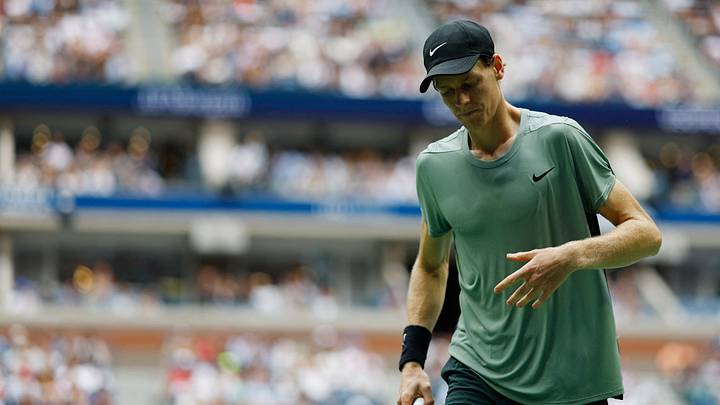
When Carlos Alcaraz reached the third round of the 2026 US Open ranked as world No. 3, he didn’t spend his press conference talking about his forehand. Instead, the Spaniard called the ATP schedule “impossible” and vowed to start skipping tournaments, telling reporters he’d take “long breaks” of a month or two rather than chase every event on the calendar.
With 16 players on this year’s US Open withdrawal list, he isn’t complaining without justification. But is the season genuinely too long, or simply badly managed? Here’s the case for both sides.
The Case for a Shorter Season
We are saddened to see so many withdrawals from the @nbotoronto. Unfortunately, we are not surprised.
— Professional Tennis Players Association (@ptpaplayers) August 10, 2026
Three years ago, the PTPA, in collaboration with its Medical Director Dr. Robby Sikka, launched a comprehensive project to collect and analyze injury data across professional… pic.twitter.com/3b4gx2LMbH
The players pushing for change have data on their side. The PTPA released research last year that drew on more than 30,000 matches over eight years and showed upper body injuries to be significantly more common among professional tennis players today than they were in the late 2010s.
Additionally, the researchers identified predictable injury clusters during tour season around the months of April, August, and October (corresponding to Grand Slams). The report explicitly calls out “event scheduling density” as a “modifiable external condition” contributing to these trends of increased, predictable injuries.
In an official statement posted after a wave of Canadian Open withdrawals, the association put it bluntly: “the evidence is clear: the season is too long, recovery time is shrinking, and injuries are occurring earlier and becoming more severe.”
Complaints From Players
The names backing up the PTPA’s statement read like a top-10 list. Jannik Sinner reluctantly withdrew from this year’s US Open with a knee injury after already skipping Cincinnati, depriving fans of what could have been a top storyline. This marked the first Grand Slam Sinner has missed since 2019.
Taylor Fritz has been one of the schedule’s most consistent critics, and on X he backed up Jack Draper’s complaints by noting that slower balls, courts, and conditions have made the weekly grind even more punishing on players’ bodies. (Draper himself has missed several recent tournaments due to injury).
Facts, also seeing more injuries and burnout now than ever before because balls, courts, conditions have slowed down a lot making the weekly grind even more physically demanding and tough on the body.
— Taylor Fritz (@Taylor_Fritz97) October 18, 2025
Iga Swiatek, Alexander Zverev, Coco Gauff, and Aryna Sabalenka have all voiced versions of the same complaint. Alcaraz himself pointed to the reality of an 11-month grind with only a handful of consecutive days off, and the expansion of Masters 1000 events to 12 days has only tightened the squeeze.
The Case for Keeping the Calendar as Is
The counterargument isn’t that players aren’t tired, but rather that the tools to fix the problem already exist. Australian Open finalist Marcos Baghdatis has argued that players now have the PTPA and real leverage they never had in his era, and should use it instead of complaining publicly.
There’s also a commercial logic that’s hard to ignore. More events mean more prize money and more ranking opportunities, and top players routinely add exhibitions like the Laver Cup on top of their mandatory schedule, hardly the behavior of athletes with nothing left in the tank. New markets keep the sport growing, with a tenth Masters 1000 event set to launch in Saudi Arabia in 2028.
The system may already be self-correcting. ATP chairman Andrea Gaudenzi has proposed cutting some of the tour’s overcrowded ATP 250 events, suggesting the fix might be a smarter structure rather than fewer weeks.
What Is Actually Changing?
Some changes geared toward injury reduction and overall player safety have already occurred. The ATP introduced a new heat rule, which suspends or modifies play in dangerous heat conditions and has been praised by Jessica Pegula for preventing harm to players.
The governing body also expanded video review to more events. Whether reducing the number of 250 tournaments follows remains to be seen, but the “do nothing” era appears to be over.
Is the Tennis Season Too Long?
Even for elite players who follow training and recovery best practices, the professional tennis season is objectively grueling. The more relevant question may be whether the season is too long or poorly scheduled, as it is packed tighter with more events every year rather than stretched out longer.
Ultimately, the tennis calendar won’t start to shrink in length or tournament frequency until the stars who complain about it actually follow through on saying no to marquee events.
 Add us as a preferred source on Google
Craig Lillich is a Senior Content Analyst at Point Curve with more than five years of experience writing and producing digital content. He specializes in motorsports and has contributed content across a variety of publications and subject areas. A former high school tennis player, Craig developed a lifelong appreciation for the sport and remains an avid follower of tennis culture, fashion, and the Grand Slam tournaments, with Wimbledon among his favorites. He is also a passionate sports fan with interests spanning football, baseball, and NASCAR. Outside of work, Craig is a dedicated foodie and wine enthusiast who enjoys exploring the restaurants, cuisines, and culinary experiences of Los Angeles and beyond.