%22%3E%0A%3Cpath%20d%3D%22M-0.00012207%2027.4428L4.82746%2021.6883C7.76264%2023.9283%2011.1226%2024.8552%2014.2702%2024.8552C15.8923%2024.8552%2016.5875%2024.4303%2016.5875%2023.6965V23.6193C16.5875%2022.8469%2015.7378%2022.4221%2012.8413%2021.8428C6.77781%2020.6069%201.46746%2018.869%201.46746%2013.1724V13.0952C1.46746%207.95862%205.48401%204%2012.9185%204C18.1323%204%2021.975%205.23586%2025.1033%207.70759L20.7006%2013.8097C18.1516%2011.9559%2015.1006%2011.1448%2012.6095%2011.1448C11.2578%2011.1448%2010.6399%2011.6083%2010.6399%2012.2648V12.3421C10.6399%2013.0759%2011.3737%2013.5393%2014.2316%2014.08C21.1447%2015.3545%2025.7599%2017.3628%2025.7599%2022.789V22.8662C25.7599%2028.5434%2021.0868%2032%2013.8454%2032C8.36126%2032%203.43712%2030.4552%20-0.00012207%2027.4428Z%22%20fill%3D%22white%22%2F%3E%0A%3Cpath%20d%3D%22M26.9569%2021.0702V20.9929C26.9569%2014.6978%2031.4755%209.9281%2037.79%209.9281C45.2824%209.9281%2048.739%2015.1419%2048.739%2021.5336C48.739%2021.9971%2048.739%2022.5378%2048.7004%2023.0012H35.1638C35.7817%2024.855%2037.2493%2025.8205%2039.1417%2025.8205C40.7252%2025.8205%2042.0383%2025.0867%2043.4286%2023.6578L48.1404%2027.404C46.0548%2030.1074%2043.081%2031.9998%2038.5431%2031.9998C31.63%2031.9998%2026.9762%2027.6357%2026.9762%2021.0895L26.9569%2021.0702ZM40.7638%2019.1391C40.5707%2017.1309%2039.3735%2015.9722%2037.8286%2015.9722C36.2838%2015.9722%2035.3183%2017.2081%2035.0479%2019.1391H40.7638Z%22%20fill%3D%22white%22%2F%3E%0A%3Cpath%20d%3D%22M50.6707%2010.4298H59.4182V14.678C60.6155%2011.8201%2062.5465%209.9663%2066.0224%2010.1208V19.4091H65.0955C61.3879%2019.4091%2059.4182%2021.456%2059.4182%2026.1291V31.4973H50.6707V10.4298Z%22%20fill%3D%22white%22%2F%3E%0A%3Cpath%20d%3D%22M66.2151%2010.4296H75.3875L78.7861%2020.9923L82.2234%2010.4296H91.2799L82.7447%2031.6516H74.7309L66.2151%2010.4296Z%22%20fill%3D%22white%22%2F%3E%0A%3Cpath%20d%3D%22M90.5847%2021.0702V20.9929C90.5847%2014.6978%2095.1033%209.9281%20101.418%209.9281C108.91%209.9281%20112.367%2015.1419%20112.367%2021.5336C112.367%2021.9971%20112.367%2022.5378%20112.328%2023.0012H98.7916C99.4095%2024.855%20100.877%2025.8205%20102.77%2025.8205C104.353%2025.8205%20105.666%2025.0867%20107.056%2023.6578L111.768%2027.404C109.683%2030.1074%20106.709%2031.9998%20102.171%2031.9998C95.2578%2031.9998%2090.604%2027.6357%2090.604%2021.0895L90.5847%2021.0702ZM104.392%2019.1391C104.199%2017.1309%20103.001%2015.9722%20101.456%2015.9722C99.9116%2015.9722%2098.9461%2017.2081%2098.6757%2019.1391H104.392Z%22%20fill%3D%22white%22%2F%3E%0A%3Cpath%20fill-rule%3D%22evenodd%22%20clip-rule%3D%22evenodd%22%20d%3D%22M122.368%204.36764C128.191%20-1.45588%20137.632%20-1.45588%20143.456%204.36764C149.279%2010.1912%20149.279%2019.6324%20143.456%2025.4559L132.912%2036L122.368%2025.4559C116.544%2019.6324%20116.544%2010.1912%20122.368%204.36764ZM125.009%207.55761C124.948%207.86849%20124.916%208.39718%20124.916%209.14566V10.4189C124.916%2011.1832%20124.948%2011.7198%20125.013%2012.0267C125.078%2012.3317%20125.278%2012.6168%20125.617%2012.8762C125.956%2013.1376%20126.403%2013.3316%20126.958%2013.4623C127.512%2013.593%20128.1%2013.6584%20128.837%2013.6584C129.573%2013.6584%20130.217%2013.591%20130.769%2013.4524C131.322%2013.3158%20131.761%2013.1178%20132.086%2012.8604C132.411%2012.6029%20132.605%2012.3178%20132.666%2012.0069C132.728%2011.6961%20132.759%2011.1674%20132.759%2010.4189V9.14566C132.759%208.38134%20132.728%207.84473%20132.662%207.53781C132.597%207.23287%20132.397%206.94971%20132.058%206.68834C131.72%206.42696%20131.272%206.23291%20130.718%206.10223C130.163%205.97154%20129.536%205.90619%20128.839%205.90619C128.102%205.90619%20127.459%205.97352%20126.906%206.11213C126.352%206.24875%20125.914%206.44677%20125.589%206.70418C125.265%206.9616%20125.071%207.24673%20125.009%207.55761ZM130.276%2024.8638C133.876%2024.8638%20135.557%2024.2064%20135.557%2021.862V21.858V21.3155C135.557%2019.6581%20134.516%2018.971%20131.252%2018.3136C130.278%2018.1136%20129.908%2017.9136%20129.908%2017.3136V16.9414C129.908%2016.6543%20130.177%2016.5117%20130.413%2016.5117C130.749%2016.5117%20130.918%2016.7137%20130.918%2016.9414V18.1136H135.391V17.3988C135.391%2015.4563%20134.347%2014.4266%20130.177%2014.4266C127.15%2014.4266%20124.896%2015.3414%20124.896%2017.3711V17.7433C124.896%2019.5155%20125.805%2020.3155%20129.201%2021.0303C129.28%2021.0472%20129.355%2021.063%20129.427%2021.0781C130.329%2021.2674%20130.647%2021.3341%20130.647%2021.9174V22.2897C130.647%2022.6619%20130.546%2022.8045%20130.142%2022.8045C129.67%2022.8045%20129.637%2022.5471%20129.637%2022.262V21.2897H124.894V21.7471C124.894%2024.149%20126.476%2024.8638%20130.276%2024.8638ZM136.424%2024.5569H140.925V14.7355H136.424V24.5569ZM137.955%2013.5019H140.925V6.06064H138.092V9.411L136.193%206.06064H133.359V13.5019H136.193V10.1199L137.955%2013.5019ZM129.269%2012.152C129.204%2012.2688%20129.055%2012.3262%20128.825%2012.3262L128.827%2012.3282C128.604%2012.3282%20128.459%2012.2767%20128.398%2012.1758C128.336%2012.0748%20128.305%2011.8074%20128.305%2011.3758V7.90068C128.305%207.51852%20128.352%207.28684%20128.445%207.20962C128.538%207.13239%20128.675%207.09279%20128.851%207.09279C129.059%207.09279%20129.198%207.14031%20129.265%207.23734C129.332%207.33239%20129.366%207.55416%20129.366%207.90068V11.3203C129.366%2011.7579%20129.334%2012.0352%20129.269%2012.152Z%22%20fill%3D%22white%22%2F%3E%0A%3C%2Fg%3E%0A%3Cdefs%3E%0A%3CclipPath%20id%3D%22clip0_15160_920%22%3E%0A%3Crect%20width%3D%22148%22%20height%3D%2236%22%20fill%3D%22white%22%2F%3E%0A%3C%2FclipPath%3E%0A%3C%2Fdefs%3E%0A%3C%2Fsvg%3E%0A)
Top Players Pause Public Prize Money Dispute Against Grand Slams
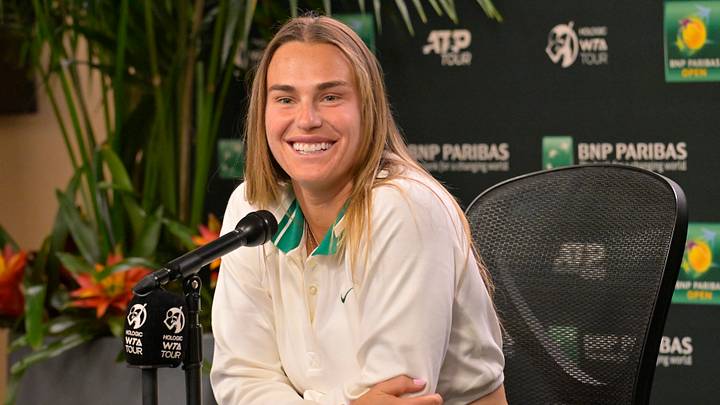
After an 18-month standoff, the ongoing dispute between top players and the Grand Slam tournaments is nearing a conclusion. The players, including world No. 1s Jannik Sinner and Aryna Sabalenka, published a statement calling for player welfare programs, an athlete advisory council, and a share of tournament revenues that more closely match other events.
In August, the Grand Slam tournaments announced the creation of the requested player advisory council, showing that the athletes were beginning to win out. This seems to have succeeded in bringing the players back to the table, as they announced the end of public protests and media restrictions on September 14th.
Reviewing Player Demands
Though the player advisory council is a major victory for the athletes, the dispute has mainly shifted to private negotiations, rather than ending completely. The coalition now has a foundation from which to address their remaining issues: athlete welfare contributions and increased earnings.
In their original letter to Grand Slam administration, players requested that prize winnings be adjusted to 22% of total revenue by 2030, which would align with ATP and WTA 1000 events. Though the 2026 U.S. Open carried the largest prize pool in tennis history, the $108 million figure only represented approximately 18% of operating revenue. Other Grand Slam tournaments often use around 14-16% of total revenue for prize money.
The players’ other demand, athlete welfare programs, remains an increasing concern as on-court conditions change. Jannik Sinner, one of the campaign’s most vocal advocates, experienced a significant heat-related illness at the French and Australian Opens this year, with others including Novak Djokovic, Casper Ruud, and Lorenzo Musetti experiencing similar issues.
Timeline of Protests
The dispute began with a formal proposal submitted by players to Grand Slam organizers on July 31st, 2025. While this initial document primarily concerned prize money, player welfare and the advisory council entered the conversation as negotiations continued throughout the year.
Players began to take direct action in May of 2026, limiting their press conferences to 15 minutes (chosen to represent their 15% share of Grand Slam revenues). Sabalenka prominently cut short one of her early conferences, restating that the campaign was focused on obtaining a fairer share of earnings for players, especially those lower in the rankings.
The 15-minute media restriction remained as the players’ primary mode of engagement for the coming months, with play boycotts being proposed at several points, but never coming to pass. Wimbledon served as a key battleground, with a coordinated refusal to play averted at the last moment by breakthroughs in negotiations. This atmosphere held until the announcement of the advisory council, which led players to suspend public action after the U.S. Open concluded.
Top Players Chime In
Prominent figures across the tennis world had a lot to say about the collective action. Carlos Alcaraz, the No. 2-ranked men’s player, had initially participated in the initiative, but distanced himself before the U.S. Open.
Alcaraz cited his priority for welfare concerns over revenue-sharing demands, mentioning moments of strain like his 3:33 AM quarter-final finish against Ben Shelton. “In the future, I’m going to take some breaks, some long breaks,” Alcaraz said. “Maybe not four months, but one month, two months, missing some tournaments, because it’s impossible to play them all.”
John McEnroe, speaking at the Laver Cup, advocated for more direct action. "The players should be partners in the majors," McEnroe said. "The fact that they're not causes friction — they're getting such a small part of the revenue. The only way to succeed in doing that, in my opinion, is to boycott one or two of these.”
A twelve-player member list for the advisory council was announced in late September, with seats split evenly between men and women. Players and fans alike will be standing by to see if this group can secure the long-awaited change that tennis may need.
 Add us as a preferred source on Google
Connor Yokley is a Content Analyst at Point Curve with a background in writing, digital content, and sports media. He has written for publications including Rookie Road and is passionate about creating engaging, informative content that both analyzes and entertains. Connor holds a degree in Playwriting from The Theatre School at DePaul University and has been writing in a variety of forms from a young age. His creative background brings a strong sense of storytelling and audience engagement to his work in digital content. Outside of work, Connor enjoys watching soccer, attending local theatre productions, and playing games of all kinds. Contact Connor at connoryokleyatwork@gmail.com.