%20%20--%3E%0A%3Csvg%20version%3D%221.1%22%20id%3D%22Layer_1%22%20xmlns%3D%22http%3A%2F%2Fwww.w3.org%2F2000%2Fsvg%22%20xmlns%3Axlink%3D%22http%3A%2F%2Fwww.w3.org%2F1999%2Fxlink%22%20x%3D%220px%22%20y%3D%220px%22%0A%09%20width%3D%2239px%22%20height%3D%2240px%22%20viewBox%3D%220%200%2039%2040%22%20enable-background%3D%22new%200%200%2039%2040%22%20xml%3Aspace%3D%22preserve%22%3E%0A%3Cpath%20fill%3D%22%23FFFFFF%22%20d%3D%22M38.5%2C7H28.2v26h10.3V7z%22%2F%3E%0A%3Cpath%20fill-rule%3D%22evenodd%22%20clip-rule%3D%22evenodd%22%20fill%3D%22%23FFFFFF%22%20d%3D%22M26.1%2C25.5c0%2C5.8-4.1%2C7.5-12.9%2C7.5C3.9%2C33%2C0%2C31.2%2C0%2C25.2v-1.1h11.6%0A%09v2.4c0%2C0.7%2C0.1%2C1.4%2C1.2%2C1.4c1%2C0%2C1.2-0.4%2C1.2-1.3v-0.9c0-1.6-0.9-1.6-3.5-2.2C2.2%2C21.7%2C0%2C19.7%2C0%2C15.3v-0.9C0%2C9.3%2C5.5%2C7%2C12.9%2C7%0A%09c10.2%2C0%2C12.8%2C2.6%2C12.8%2C7.4v1.8h-11v-2.9c0-0.6-0.4-1.1-1.2-1.1c-0.6%2C0-1.2%2C0.4-1.2%2C1.1v0.9c0%2C1.5%2C0.9%2C2%2C3.3%2C2.5%0A%09c8%2C1.6%2C10.5%2C3.3%2C10.5%2C7.5V25.5z%22%2F%3E%0A%3C%2Fsvg%3E%0A)
VAR Debate: Why the Correct Decision Is Not Worth the Loss of Spontaneous Celebrations & Raw Emotion
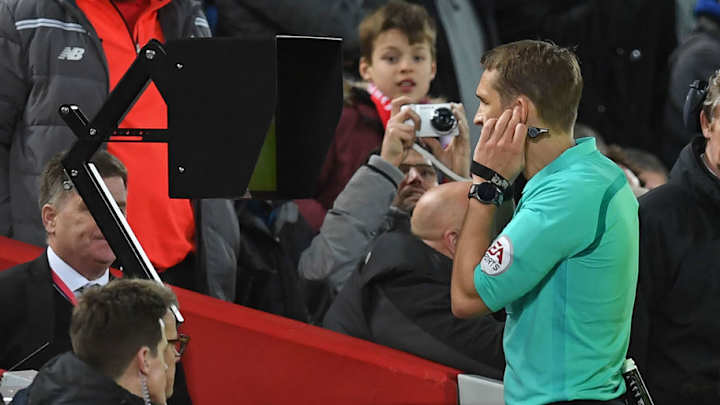
VAR, or video assistant referee for those of you that have been living under a rock for the past month, is a software that has been implemented into the beautiful game in an attempt to reduce ambiguity, increase the accuracy of decision making and, all in all, allow the fans and players to travel home without feeling a sense of injustice.
In that respect, the system works faultlessly. The designated referee for the match will travel over to the sideline, watch the incident deemed too dubious to be left to human judgement, and then make a decision based on the review of numerous replays to which few can argue with.
Referee mistakes have made football the beautiful game it is today. You get some go against you & some go for you. Evens out at the end of the season. This VAR thing will ruin the beatiful game. #VAR #LIVWBA
— Mohamed Wehliye, MBS (@WehliyeMohamed) January 27, 2018
However, what can be argued with is the feeling around the ground before, during and after the video assistant referee is called upon.
Before the referee makes the highly anticipated trudge over to the touchline, the players and fans are left looking around at each other in confusion, with some even crowding round the ref making that incredibly irritating VAR gesture - the player will draw out a square to indicate that VAR should be looked at - to prompt a decision to be made in their favour.
During the review of the situation, arguably the most problematic issue with the whole process, is that the whole stadium is left completely unaware of what is going on for an excruciating amount of time. The decision to award Liverpool a penalty against West Brom last weekend took Craig Pawson roughly four minutes to make.
"The fourth official has indicated that there will be a minimum of 28 minutes of added time." #VAR
— manager change_fan (@UnitedView7) January 27, 2018
While the aforementioned incident ended with Roberto Firmino striking the crossbar instead of the back of the net with his long awaited penalty, the most biggest indictment - and most harrowing for fans - of the use of VAR however, would come at the stroke of half time,
After Craig Dawson had smashed the ball across goal and ultimately into the back of the net via Joel Matip's heel, you would expect the away end to be far more jubilant than it was having just seen their side go 3-1 up at Anfield of all places; but something felt off.
The section of Baggies behind Ben Foster's goal were timid, withholding their natural outpour of emotions as they waited for Craig Pawson's approval of their perfectly valid goal.
Two #VAR suggestions if it’s here to stay:
— Tom McDermott (@MrTomMcDermott) January 27, 2018
1. Crowd need to know what’s going on, so at least one screen needs to be introduced at grounds. Can’t have them sitting around for 4-5 mins while decision made
2. A three strike rule, where manager or captain calls for it
Even after it was in fact deemed a goal, the celebrations from the West Brom players and fans were muted and flat, as the spontaneity of scoring a goal had been overridden by the wariness of looking foolish in case the effort had been ruled out.
VAR, while it does get the decision right eventually, is killing the most important part of football. The sheer emotional release when that ball hits the back of the net, the office debates on Monday morning about whether it was a penalty or not, just the general excitement and entertainment factor feels like it is slipping away.
Football is and always has been a results business, but if those cold hard results are coming at the expense of the fans' natural release of euphoria and ecstasy, something needs to give.
 Add us as a preferred source on Google