
Pressure Builds for WNBA to Make Changes After Comments From Valkyries Coach
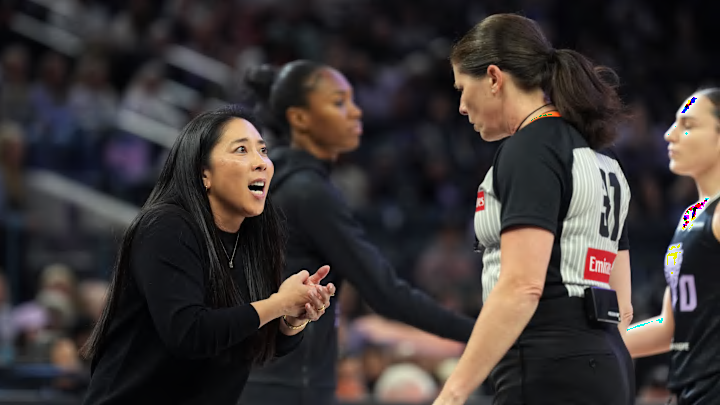
There are a myriad of factors that decide the out come of a basketball game. Health, player performance, fan environment: all of these things combine and contribute to how a game plays out.
There is one more factor that governs how every second of the game is played and can often decide the outcomes: officiating.
Referees are often subjected to scrutiny for their calls and decried by a losing team that feel they were at an unfair disadvantage due to poor officiating. In the WNBA this has been a key problem and there is a growing conversation that the league needs to step in and act in order to rectify poor officiating across the WNBA.
Golden State Valkyries head coach Natalie Nakase has been especially vocal about officials. She often speaks about unfair calls when she sees them in post game conferences, commenting on "home-cooking" by officials when the Valkyries play on the road and has also called for more consistency in officiating.
Was this a foul at the end of the Valkyries, Mercury game? pic.twitter.com/8OdReNxFS6
— Matt Lively (@mattblively) July 15, 2025
In a recent article in the San Francisco Chronicle, author Marisa Ingemi cited both Nakase's past comments and the growing pressure the WNBA is facing to address its officiating issue.
Ingemi highlighted the specific disparity in officiating between the WNBA and the NBA, and the ways the two leagues differ in holding referees accountable.
While the NBA releases a "Last Two Minute Report" which addresses officiating errors that could have affected the outcome of a close game, the WNBA does not. Ingemi wrote that the WNBA cites a lack of resources as to the reason why they don't have an equivalent report, and instead only fines officials for a "misapplication of rules," not outright missed calls.

"Unless the WNBA can offer a more equitable pay structure to draw the best candidates, the league might always be left with those who can’t cut it in the NBA, settling for a weaker officiating pool," Ingemi wrote. "As the WNBA gets more exposure and the league’s general conditions are more widely discussed, shoddier officiating has become one of several emerging issues."
While an inherent subjectivity on what is or isn't a foul or violation can always be subject to human error, it is the duty of the WNBA to protect their sport and provide oversight to correct mistakes. Until that happens on a more regular basis, players and coaches like Nakase will be sure to continue voicing their outrage.
 Add us as a preferred source on Google
Bio: Jack Haslett is a writer and photographer covering Golden State Valkyries basketball for Sports Illustrated. Jack has previously published work with the Sporting Tribune, the Long Beach Current and DIG Magazine, covering sports, community events and news. A graduate from Long Beach State University, Jack has a passion for writing, photography and all things sports.
Follow @jackmagic00