
Arkansas Basketball's Interior Defense Remains a Major Question
In this story:
FAYETTEVILLE, Ark. — Arkansas basketball has plenty of athleticism and offensive potential entering the 2026-27 season.
The Razorbacks' biggest question might be whether their frontcourt can consistently keep opposing big men from taking advantage of the same interior space Arkansas wants to exploit offensively.
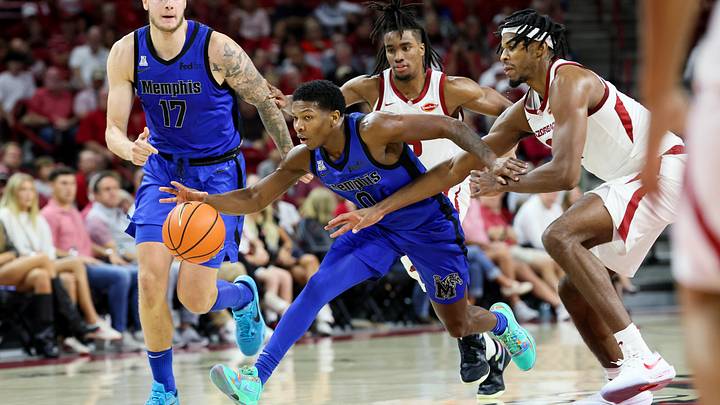
The concern surfaced during Wednesday's 93-81 exhibition victory over Memphis.
Arkansas forced turnovers, ran the floor and produced seven blocked shots as a team. But Memphis center Nemanja Popovic still found ways to score inside, using post-up opportunities and second-chance chances to create problems for the Razorbacks' defense.
Popovic finished with 16 points and six rebounds in 25 minutes, according to the Southwest Times Record's recap of the game. His performance exposed an area that could become increasingly important as Arkansas moves from exhibition competition into a schedule filled with experienced frontcourts.
The Razorbacks won comfortably, but the result did not eliminate questions about their ability to defend the paint.
This Arkansas team legit has so much talent
— Jacob Rhymer (@Rhymetime05) October 29, 2026
Elite athleticism all over the roster. Disruptive on defense & absolutely terrorizing in transition
Had 5 players in double figures tonight - not including 2 five-stars that will make an impact. Cal can easily go 10-deep 🐗 pic.twitter.com/TKmAACClz9
Memphis Found Opportunities Against Arkansas' Big Men
Arkansas' defensive identity under John Calipari often starts with pressure, length and athleticism. The Razorbacks can disrupt passing lanes, challenge shots and turn defensive stops into transition opportunities.
That approach worked against Memphis. Arkansas forced 15 turnovers and scored 26 points off those mistakes, according to the official Arkansas game recap.
The problem was what happened when Memphis could establish its offense in the half court.
Popovic used simple post-ups to score, and the Tigers found opportunities to extend possessions through offensive rebounds. Arkansas sometimes struggled to stop him even when it sent additional defenders toward the ball.
That is a different challenge from defending a guard in space. A post defender must establish position before the catch, maintain leverage without fouling and prevent the offensive player from getting close enough to finish comfortably. Help defense must arrive at the right time without leaving another opponent open.
When those details break down, even a defense with impressive athleticism can surrender efficient shots.
Arkansas' victory over Memphis does not mean its defensive system is fundamentally flawed. It does mean the coaching staff has a specific area to evaluate before the games begin to count.
Arkansas up to 26 points off 14 turnovers
— Gavin (@BuriedTreys) October 29, 2026
I would highly, highly advise taking care of the ball against this unit
Frontcourt Remains Work In Progress
Arkansas' interior rotation features a mixture of experience and youth.
Cooper Bowser, a transfer from Furman, brings college experience and a rebounding presence. Miikka Muurinen offers size and mobility, while Maper Maker and Caleb Ourigou give the Razorbacks additional young frontcourt options.
The group has shown flashes of potential, but none should be assumed to be a finished defensive product.
Bowser recorded 10 rebounds against Gonzaga before adding eight rebounds and three blocks against Memphis. Muurinen recorded a double-double against Memphis, finishing with 10 points and 12 rebounds.
Those numbers demonstrate that Arkansas has players capable of contributing around the basket. The next step is ensuring that their production translates into consistent team defense.
Rebounding is especially important. A defender can force a difficult miss and still fail to complete the possession if the opponent retrieves the ball. Offensive rebounds create second chances, increase the number of shots a defense must contest and can lead to fouls when defenders scramble to recover.
Arkansas cannot rely on shot-blocking alone to protect its interior. It needs its big men and perimeter players to box out, secure rebounds and finish defensive possessions.
Gonzaga Provided A Warning
The Memphis game was not the first exhibition in which Arkansas faced a challenge around the basket.
In its 76-72 victory over Gonzaga on Oct. 24, Arkansas was outrebounded 52-47. Gonzaga also held a 36-22 advantage in points in the paint and scored 17 second-chance points, according to Gonzaga's official box score.
Arkansas still found a way to win, but the numbers illustrate why interior defense deserves attention beyond one opponent.
Defense to offense 🙂↕️ pic.twitter.com/8w73s8revG
— Arkansas Men’s Basketball 🐗 (@RazorbackMBB) August 3, 2026
Gonzaga's size created difficult matchups, while Memphis used its center to generate post scoring and extend possessions. The approaches were different, but both games gave Arkansas useful evidence about what can happen when opponents find opportunities near the basket.
The Razorbacks do not need to dominate every rebounding category to be successful. They do need to limit the possessions that allow opposing frontcourts to compensate for poor shooting or stalled perimeter offense.
That becomes more difficult against teams with multiple big men who can score, rebound and draw fouls.
Arkansas Needs More Than Highlight Blocks
The seven blocks against Memphis were an encouraging statistic, but they do not tell the entire defensive story.
Shot-blocking is valuable when it changes an opponent's decision or prevents a basket. It becomes less meaningful if the offense retrieves the ball or consistently finds other ways to score inside.
Arkansas must balance its aggressive approach with sound positioning. Big men need to contest shots without abandoning rebounding responsibilities, while guards must help when appropriate and recover to their assignments.
4️⃣ Hogs in double figures tonight!
— Arkansas Men’s Basketball 🐗 (@RazorbackMBB) October 29, 2026
Billy: 17 PTS | 3 AST | 7-7 FG
Jordan: 17 PTS | 3 REB | 2 AST
Jeremiah: 11 PTS | 3 AST
Miikka: 10 PTS | 12 REB | 2 AST pic.twitter.com/5P8QknXdOh
The Razorbacks also need to make opponents work before they reach the rim. Better ball pressure and communication can make it harder for opposing guards to deliver comfortable entry passes to the post.
That combination would allow Arkansas to use its athleticism without relying on last-second blocks to rescue possessions.
Answers To Questions Become More Important In SEC Play
Arkansas' exhibition schedule offered an early look at its strengths, but the regular season will provide a more demanding test.
The Razorbacks have time to develop their young frontcourt and establish clearer defensive roles. Bowser's experience should help, while Muurinen, Maker and Ourigou have opportunities to grow as they adjust to college competition.
FIRST-HALF DUNK PARTY. 🆙🕺 pic.twitter.com/jlYK0bz0Fo
— Arkansas Men’s Basketball 🐗 (@RazorbackMBB) October 29, 2026
The key will be whether the group improves in the details that do not always show up in highlight packages: positioning, communication, physicality and defensive rebounding.
Arkansas has already shown that it can create offense around the rim. If the Razorbacks want to compete with the strongest teams on their schedule, they must show they can make that area of the floor just as difficult for opponents.
The Memphis exhibition ended with a victory. The interior-defense questions, however, are still waiting for answers.
Sign up to our free newsletter, and follow us on Facebook, X, Instagram and subscribe to our YouTube channel for the latest news and reactions to Razorback athletics.
 Add us as a preferred source on Google
