
Oklahoma State AD Chad Weiberg Releases Letter Concerning NIL
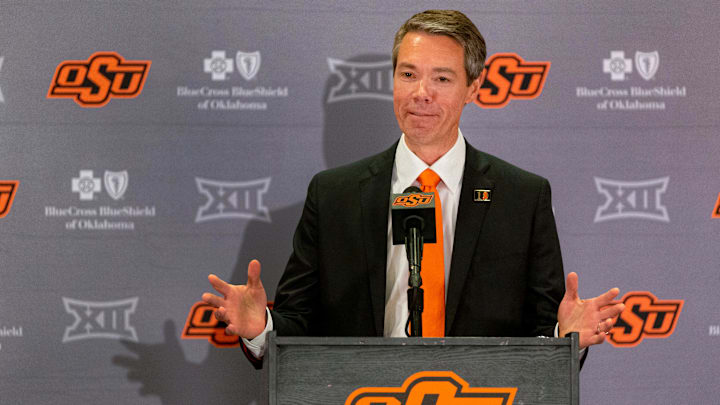
Oklahoma State athletic director and vice president of athletic programs Chad Weiberg released a letter on Friday, essentially reaching out for help concerning the current NIL issue in Stillwater. In the letter, Weiberg had this to say.
“This message is not intended as a call to arms, but as confirmation of permission for all of us who love Oklahoma State to take full control of our destiny. We have accomplished much thanks to the hard and dedicated work of so many. However, it is accurate to believe that our best days still lie ahead, but only if we come together and seize this incredible opportunity.”
“Oklahoma State remains determined to compete for championships in the Big 12 Conference and at the highest levels of college athletics. To do so, we will need to have access to an additional $20.5 Million annually.”
One of the key aspects of Weiberg’s letter focused on the current state of revenue sharing in Oklahoma.
OSU Athletics and #OKState AD Chad Weiberg just sent out an email, essentially highlighting the need for NIL and support. Here’s an excerpt.https://t.co/EOgd1diYpI pic.twitter.com/mBPk8j5O6P
— McClain (@McclainBaxley) January 17, 2025
“Our world has changed. Recently, you may have heard about the settlement of the House lawsuit, which introduces a revenue-sharing model for college athletics. The settlement is very different from NIL (Name, Image and Likeness) but both dramatically affect OSU Athletics,” said Weiberg.
He mentioned two bullet points on why revenue sharing would benefit Oklahoma State athletics.
1. The House settlement means that OSU will be able to share revenue directly with student-athletes in exchange for the use of their NIL. While a significant enhancement for many of our student-athletes, this groundbreaking change to our model presents significant financial challenges. Unlike NIL, revenue sharing comes directly from the revenue streams that fund our entire athletic department – including scholarships, team travel, sports medicine, nutrition, coaching and staff salaries and other critical operations.
2. The revenue share cap, as defined by the House settlement, is 22 percent of the average defined revenues of the conferences that are party to the settlement (Big 12, SEC, ACC and Big Ten). The cap is estimated to be $20.5 million for the 2025-2026 year and will increase annually. The cap is permissive in the sense that OSU is not compelled to meet the estimated total but cannot exceed it. To remain competitive, it will be in OSU’s best interest to share the full amount as allowed by the House settlement.
He closed out the letter with a part of the Cowboy Code. “We end the day knowing we gave it everything we had.
Want to join the discussion? Like Oklahoma State Cowboys on SI on Facebook and follow us on Twitter to stay up to date on all the latest Cowboys news. You can also meet the team behind the coverage.
 Add us as a preferred source on Google
Taylor Skieens has been an avid sports journalist with the McCurtain Gazette in Idabel, Oklahoma for seven years. He holds the title of Sports Editor for one of the oldest remaining print publications in the state of Oklahoma. Taylor grew up in the small lumber town of Wright City Oklahoma where he played baseball and basketball for the Lumberjax.