
Projecting Vanderbilt Baseball’s 2027 Lineup and Rotation after Fall Ball
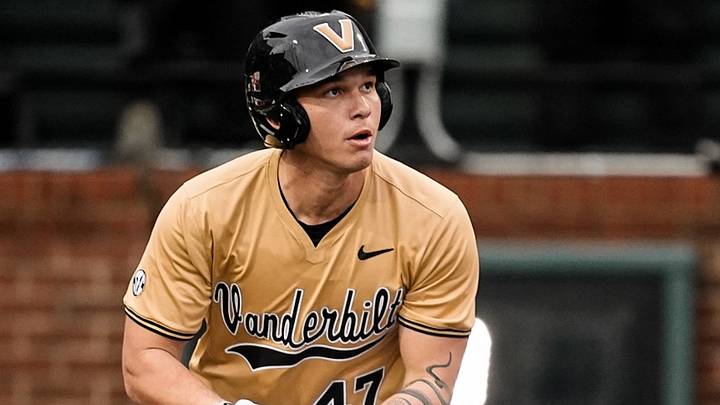
After missing a regional for the first time in two decades, Vanderbilt Baseball enters 2027 with more to prove than it has in years. Whether out of necessity or outside pressure to adapt to college baseball’s ever-shifting landscape, Tim Corbin and his staff put together a strong offseason, landing a handful of impact players from both the transfer portal and the high school ranks.
Eighteen fall exhibition games offered a pretty clear picture of how this roster will shake out come spring, and the offense outlook is evident: this lineup is going to get on base, run, and hit for power. Vanderbilt lost sluggers Braden Holcomb and Colin Barczi, along with steady bats Logan Johnstone and Mike Mancini, but it has the personnel to replace them and may even come out with more firepower than before.
The status of the pitching staff is more murky, and while it appears clearly improved from a year ago, its depth is shaky. With Austin Nye, England Bryan, and Matthew Shorey each recovering from elbow surgery, Vanderbilt’s season may come down to whether its arms can throw enough strikes and miss enough bats to compete with the SEC’s best.
Here’s my first shot at projecting Vanderbilt’s 2027 lineup and rotation:
Catcher: Matt Conte
Conte appeared in 59 of 60 games for Wake Forest last season and brings a veteran presence behind the plate. Though he didn’t light up the stat sheet on offense this fall, he understands the strike zone well, has sneaky pop in his bat, and has a track record of hitting Power 5 pitching. He also seems to have earned the trust of both Vanderbilt’s coaches and pitching staff, and he’s a solid receiver with a capable arm. Sophomore Korbin Reynolds will push for time behind the plate, but I think Conte’s steadiness on both sides makes him the everyday backstop to start the season.
1B: Tommy Goodin
Goodin has his flaws, namely some whiff tendencies and a susceptibility to breaking balls, but his raw pull-side power made him a serious weapon in the middle of Vanderbilt’s lineup last season. Entering his junior season, Goodin’s got a firm grip on the first base position and should see time there and at DH. Some kind of strong-side platoon with freshman Kaleb Traylor — who had a noteworthy fall in the batter’s box —could make sense, but expect Goodin to be hitting in the heart of the order once SEC play rolls around.
2B: Gunner Skelton
Here’s where things start to get interesting. Second base is the first truly contested spot on the diamond, and Skelton is my pick to lead the pack. The true freshman got off to a late start this fall but turned it on at the plate over the final few weeks. Coming off a strong summer in the Appalachian League, he’s probably the most polished hitter in the Commodores’ freshman class, with surprising power for his size and the ability to tap into it in games. The Tennessee native played mostly shortstop in high school and over the summer, but he shouldn’t have any trouble sliding over to second, where he profiles as at least an average defender.
SS: Ryker Waite
Some arm soreness late in the fall bumped Waite over to second for the David Williams Fall Classic, but he’s still penciled in as Corbin’s everyday shortstop in his draft year. An ironman at the position, Waite keeps refining his already-advanced plate approach and on-base skill set. There are still questions about whether his arm will play at shortstop at the next level, but his hands are excellent and the job is undoubtedly his. Freshman Jackson Melconian had a strong fall camp, especially with the glove, and could see time if Waite goes down at any point.
3B: Brodie Johnston
Johnston missed all of fall ball with a broken bone in his finger, but he’s expected back in time for the season’s start. The right-handed slugger made big strides last year with his swing decisions and overall approach, and if he stays healthy and keeps producing at the plate while playing all-conference defense, he could play his way into the first round of the MLB draft next summer. Should Johnston miss time, Traylor, Blaize Ward, and James Tronstein are next in line.
LF: James Tronstein
Tronstein has stood out all fall for his athleticism and versatility at the plate and in the field. While he’s shown some swing-and-miss tendencies against spin, the Californian can beat you with both speed and power, and he feels like the type of player who’ll find his way into Corbin’s lineup one way or another. If Rustan Rigdon were to move back to the infield, Tronstein could slide over to center, or the freshman could move onto the dirt himself.
CF: Rustan Rigdon
Rigdon had a nice fall camp, showing off added strength and a better look in the batter’s box. A plus defender both in center field and at second base, Rigdon may be most valuable for his glove. I think he ultimately ends up back in center field, where he took over midway through last season, but if Colin Brightwell finds his way into the lineup, Rigdon could also shift back to the infield, where he spent most of his freshman season.
RF: Bud Coombs
Coombs is about as tooled up as they come, with his lower-half strength standing out immediately. The former two-sport athlete’s power, arm strength, and speed make him a perfect fit for right field, where he’s expected to play every day while hitting in the middle of the order. A hamstring issue slowed him early in the fall, but he looked to have his burst back over the past couple of weeks. If he makes more contact, he could be the most dangerous bat in the lineup come springtime.
DH: Blaize Ward
Corbin praised Ward’s defensive growth since coming over from Missouri, where he was a below average defender, but I think he still ends up as the regular DH if everyone’s healthy. Ward had perhaps the best offensive fall on the roster, displaying excellent control of the strike zone and gap-to-gap power. He’ll be in the lineup one way or another, but I like Skelton’s glove at second more than Ward’s, which is why I have it shaking out this way.
SP1: Connor Fennell
Fennell was taken by the Chicago White Sox in the 20th round of the Draft but chose to come back to Vanderbilt for his senior year. After an up-and-down 2026, he’ll almost certainly slide back into the Friday night role, this time looking to be more consistent than he was a year ago. That’s no easy task in the SEC, but Fennell’s strike-throwing and deception give him a solid foundation to work from. He also spent time at Cressey Sports Performance this summer, where he cleaned up his lower half and worked on adding velocity and sharpening his glove-side pitches. His fastball sat around 90 mph throughout the fall. That’s an improvement from last season, but it still doesn’t leave him much margin for error with his command. I’m skeptical he’ll add much more velo, and his breaking balls continue to look well below average. In other words, Vanderbilt knows the pitcher Fennell is at this point, and he’ll need to execute better than most to thrive on Friday nights.
SP2: Shane Brinham
A low-slot lefty with a good feel for the strike zone, Brinham struck out nearly a batter an inning for Michigan last season before hitting the portal. Excluding Nye, who isn’t expected to be ready for the start of the season, I see Brinham as the second-best starter on the roster. His stuff is subpar in the aggregate, but his pitchability from the left side and command of his baby sweeper give him the ability to consistently get outs. Vanderbilt will need him to step up and seize control of the Saturday role if this pitching staff is going to succeed.
SP3: Aiden Stillman
I almost put USC transfer Gavin Lauridsen here but instead opted for Stillman, a left-handed flamethrower with maybe the best fastball on Vanderbilt’s entire pitching staff. After a disappointing, injury-plagued freshman season, Stillman came out firing this fall. His stuff was as impressive as anyone’s, with his fastball routinely reaching the upper 90s and his two-plane sweeper missing bats at a wicked clip. The Floridian clearly has the ability to thrive in a weekend role, but the question remains: will he throw enough strikes? I’m taking a bet here that he will.
Midweek Starter: Joseph Contreras
This spot could’ve gone a number of different ways too, but I think the son of former MLB All-Star Jose Contreras ends up as the midweek starter. The freshman already has a starter’s arsenal. His fastballs don’t miss many bats, but his two-seamer consistently generates weak contact on the ground, and both his changeup and cutter flashed plus this fall. Of all the freshman pitchers, he’s the one I trust most to throw strikes, and his knack for getting quick outs on the ground makes him a natural fit for a starting spot.
Closer: Wyatt Nadeau
Nadeau was pushed into a starting role last season, but he looks poised to move to the back of Vanderbilt’s bullpen this year, where he has the potential to be one of the most effective closers in the SEC. He’s got high-90s velocity and a wipeout slider, and working in short spurts would let him fully unleash that repertoire. For that to happen, though, an already thin rotation will need to stay healthy and effective.
Follow us on Twitter/X, Facebook, YouTube, Instagram,and TikTok for the latest news.
 Add us as a preferred source on Google

Dylan Tovitz is a sophomore at Vanderbilt University, originally from Livingston, New Jersey. In addition to writing for Vanderbilt on SI, he serves as a deputy sports editor for the Vanderbilt Hustler and co-produces and hosts ‘Dores Unlocked, a weekly video show about Commodore sports. Outside the newsroom, he is a campus tour guide and an avid New York sports fan with a particular passion for baseball. He also enjoys listening to country and classic rock music and staying active through tennis and baseball.
Follow dtovitz