
Hughes: Same Old, Same Old for Virginia Tech Football
In this story:
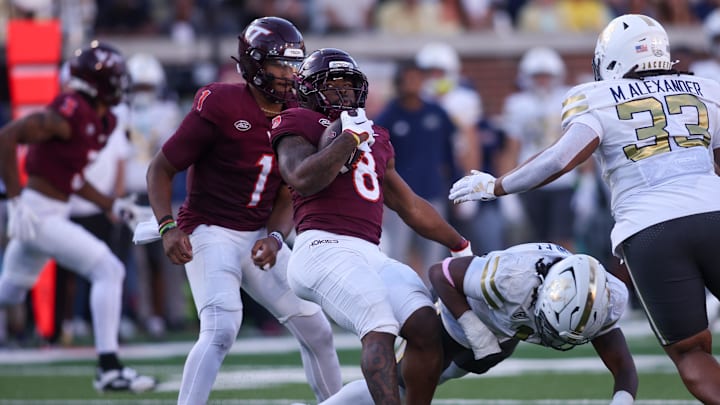
That game unfolded almost exactly as most fans and analysts had predicted. From the opening kickoff, it was clear that Virginia Tech football faced an uphill climb against No. 13 Georgia Tech.
The Hokies (2-5, 1-2 ACC) never managed to seize control, and despite brief flashes of promise, they spent much of the afternoon chasing a Yellow Jackets (6-0, 2-0) team that dictated the tempo from start to finish. The matchup was defined more by the steady notion that one side simply had more answers — more depth, more explosiveness, and more ways to win. And that side evidently wasn't Virginia Tech.
FINAL.
— Virginia Tech Football (@HokiesFB) October 11, 2025
🦃 20
🐝 35#ThisIsHome
At this point in the season, Virginia Tech’s outlook has grown increasingly narrow. The Hokies are staring down a potential 2–10 finish at worst and, realistically, a 3–9 campaign if they can find a way past Cal. The Golden Bears (4–2, 1–1) represent the most winnable matchup left on the schedule, but even that will require cleaner execution and a more consistent offensive rhythm than Tech has shown in recent weeks. According to ESPN’s Football Power Index, the Hokies hold less than a 35 percent chance of winning any of their other four remaining games.
Barring an unexpected surge, the closing stretch of the season isn’t likely to offer many surprises in the standings. Instead, its value may come in smaller, more individual forms: a young player earning a starting spot, a veteran stabilizing a position group, or a glimpse of the foundation that whoever takes over for interim head coach Philip Montgomery will hope to build upon. For a team still searching for traction, these final weeks will be less about chasing bowl eligibility and more about identifying who can help turn this rebuild into something sustainable.
Simply put, the most promising aspect of this season lies in what it can reveal about the future. Wins and losses may no longer carry much weight in the standings, but the final stretch still holds value in helping Virginia Tech chart its next steps. That extends beyond the field: from the ongoing search for stability within the coaching staff to identifying which players could become long-term cornerstones of the program. Every snap, every drive and every late-season adjustment possesses a potential to contribute to a larger picture of what Hokie football might look like in the coming years.
Since the blowout defeat to Old Dominion, the season has largely followed the script many expected. Virginia Tech has struggled to keep pace with better-equipped opponents, showing flashes of competitiveness without the consistency to sustain it. The lone outlier came in the tight victory over NC State, a result that wasn’t impossible to imagine, but certainly not one many had penciled in. That game offered a brief reminder of what this team is capable of when everything clicks, even if such moments have been rare.
The record from this season may not appear like progress, but the lessons from a year like this can quietly shape the foundation for what’s next. When Old Dominion marched down the field and punched in its first touchdown in Week 3, the air in the media room seemed to disappeared. Conversations quieted, glances shifted toward the floor and an unspoken realization settled in: this wasn’t going to be a rebound. Instead, it was the collapse that warranted a change at head whistle.
Friends and several classmates to me had stated in the leadup that they thought that this would be the get-right game. Old Dominion was supposed to be the opponent that restored confidence, the reset button for a team still trying to find its footing. Instead, the opposite happened. The Monarchs exposed just how fragile the foundation had become, and that afternoon turned into something closer to a breaking point.
In hindsight, that matchup wasn’t just another early-season stumble; it was the game that broke the camel’s back. And in this metaphor, the camel was Brent Pry’s tenure. Every week leading up to that moment had added another straw: offensive inconsistency, defensive lapses and missed opportunities. However, Old Dominion’s early touchdown felt like the one that finally sent the whole thing collapsing under its own weight. The hope is that it warrants change in the future. So far, that change appears to be coming in the form of the athletic department's budget increase. How effective that is? It goes back to a message that I've been talking about for a while, one that echoes across other aspects of the current program: Wait. And. See.
In the meantime, the same old program seems destined to stumble through the final stretch, likely dropping four of its last five games. It’s a familiar script — slow starts, flashes of promise and just enough frustration to make you wonder how things keep circling back to the same place. The patterns feel repetitive, almost predictable, as if the Hokies are trapped in a loop they can’t quite escape. But even in a season that’s offered little in the way of immediate reward, the promise of a better future is still there and still something worth holding onto.
More Virginia Tech Football News:
 Add us as a preferred source on Google
Hughes serves as Virginia Tech On SI's lead editor, a position that he has held since July 2025. Hughes is a junior at Virginia Tech majoring in sports media and analytics. He also serves as the open-wheel correspondent for the motorsports outlet Steering Wheel Nation, where he has written on Formula 1, the NTT IndyCar Series, the NASCAR Cup Series and the NASCAR CRAFTSMAN Truck Series. Hughes has previously authored bylines in 3304 Sports, Virginia Tech's multimedia student journalism outlet.
Follow thomashughes_05