%22%3E%0A%3Cpath%20d%3D%22M0%204.9397H7.3484V12.6932H14.0649V4.9397H21.4133V26.912H14.0649V19.037H7.3484V26.912H0V4.9397Z%22%20fill%3D%22white%22%2F%3E%0A%3Cpath%20d%3D%22M23.6572%204H31.0299V8.55326H23.6572V4ZM23.7788%209.77664H30.9003V26.9121H23.7788V9.77664Z%22%20fill%3D%22white%22%2F%3E%0A%3Cpath%20d%3D%22M32.7241%2029.861L34.9197%2025.5589C36.8317%2026.5635%2038.7519%2027.1955%2041.1014%2027.1955C43.7669%2027.1955%2045.1848%2025.8101%2045.1848%2023.4281V22.9258C44.2125%2024.0276%2042.6084%2025.2834%2040.2264%2025.2834C35.8028%2025.2834%2032.6025%2022.1399%2032.6025%2017.4084V17.3436C32.6025%2012.5392%2035.8676%209.37134%2039.8213%209.37134C42.3329%209.37134%2043.8074%2010.3112%2045.0632%2011.5994V9.77643H52.1848V22.5855C52.1848%2025.7533%2051.5285%2027.9246%2049.9568%2029.4883C48.4174%2031.0277%2046.0679%2031.9999%2042.2357%2031.9999C38.4035%2031.9999%2035.4868%2031.2464%2032.7241%2029.8691V29.861ZM45.2172%2017.3679V17.3031C45.2172%2015.8285%2044.091%2014.6376%2042.3572%2014.6376C40.6234%2014.6376%2039.4972%2015.8609%2039.4972%2017.3679V17.4327C39.4972%2018.9073%2040.6234%2020.0658%2042.3572%2020.0658C44.091%2020.0658%2045.2172%2018.8748%2045.2172%2017.3679Z%22%20fill%3D%22white%22%2F%3E%0A%3Cpath%20d%3D%22M54.3145%204H61.436V12.0695C62.5379%2010.6597%2064.2636%209.37155%2066.6779%209.37155C70.2914%209.37155%2072.5437%2011.7535%2072.5437%2015.6181V26.9202H65.4221V17.9109C65.4221%2016.4364%2064.5471%2015.5857%2063.4777%2015.5857C62.4082%2015.5857%2061.436%2016.4364%2061.436%2017.9109V26.9202H54.3145V4Z%22%20fill%3D%22white%22%2F%3E%0A%3Cpath%20d%3D%22M80.8983%2023.6146L84.8196%2018.9398C87.2016%2020.7627%2089.9319%2021.5162%2092.5083%2021.5162C93.8289%2021.5162%2094.388%2021.1678%2094.388%2020.5764V20.5116C94.388%2019.8796%2093.6993%2019.5393%2091.3417%2019.0694C86.4157%2018.0648%2082.0812%2016.6551%2082.0812%2012.0046V11.9398C82.0812%207.76732%2085.3463%204.53467%2091.4065%204.53467C95.6437%204.53467%2098.7792%205.5393%20101.323%207.54857L97.7421%2012.5069C95.6681%2011%2093.1889%2010.3437%2091.1472%2010.3437C90.0454%2010.3437%2089.543%2010.7245%2089.543%2011.2511V11.3159C89.543%2011.9155%2090.1426%2012.2882%2092.4597%2012.7257C98.0743%2013.7627%20101.842%2015.3912%20101.842%2019.8148V19.8796C101.842%2024.4977%2098.0419%2027.3172%2092.1437%2027.3172C87.6877%2027.3172%2083.6692%2026.0614%2080.874%2023.6146H80.8983Z%22%20fill%3D%22white%22%2F%3E%0A%3Cpath%20d%3D%22M102.838%2018.4374V18.3726C102.838%2013.5682%20106.605%209.39575%20112.187%209.39575C115.955%209.39575%20118.62%2011.3402%20119.941%2014.1354L114.829%2017.0196C114.229%2015.9178%20113.476%2015.2939%20112.317%2015.2939C110.81%2015.2939%20109.684%2016.6145%20109.684%2018.3078V18.3726C109.684%2020.1631%20110.81%2021.4513%20112.228%2021.4513C113.484%2021.4513%20114.205%2020.8194%20114.893%2019.7256L120.071%2022.6747C118.531%2025.5347%20115.931%2027.3495%20111.847%2027.3495C106.638%2027.3495%20102.838%2023.2338%20102.838%2018.4374Z%22%20fill%3D%22white%22%2F%3E%0A%3Cpath%20d%3D%22M121.164%204H128.286V12.0695C129.387%2010.6597%20131.113%209.37155%20133.528%209.37155C137.141%209.37155%20139.393%2011.7535%20139.393%2015.6181V26.9202H132.272V17.9109C132.272%2016.4364%20131.397%2015.5857%20130.327%2015.5857C129.258%2015.5857%20128.286%2016.4364%20128.286%2017.9109V26.9202H121.164V4Z%22%20fill%3D%22white%22%2F%3E%0A%3Cpath%20d%3D%22M140.867%2018.405V18.3402C140.867%2013.5033%20144.886%209.36328%20150.533%209.36328C156.18%209.36328%20160.142%2013.4466%20160.142%2018.2753V18.3402C160.142%2023.177%20156.123%2027.317%20150.476%2027.317C144.829%2027.317%20140.867%2023.2337%20140.867%2018.405ZM153.295%2018.405V18.3402C153.295%2016.6469%20152.04%2015.2939%20150.468%2015.2939C148.896%2015.2939%20147.705%2016.6469%20147.705%2018.2753V18.3402C147.705%2020.0335%20148.961%2021.3865%20150.533%2021.3865C152.104%2021.3865%20153.295%2020.0335%20153.295%2018.405Z%22%20fill%3D%22white%22%2F%3E%0A%3Cpath%20d%3D%22M161.203%2018.405V18.3402C161.203%2013.5033%20165.222%209.36328%20170.869%209.36328C176.516%209.36328%20180.477%2013.4466%20180.477%2018.2753V18.3402C180.477%2023.177%20176.459%2027.317%20170.812%2027.317C165.165%2027.317%20161.203%2023.2337%20161.203%2018.405ZM173.631%2018.405V18.3402C173.631%2016.6469%20172.376%2015.2939%20170.804%2015.2939C169.232%2015.2939%20168.041%2016.6469%20168.041%2018.2753V18.3402C168.041%2020.0335%20169.297%2021.3865%20170.869%2021.3865C172.44%2021.3865%20173.631%2020.0335%20173.631%2018.405Z%22%20fill%3D%22white%22%2F%3E%0A%3Cpath%20d%3D%22M182.139%204H189.26V26.9121H182.139V4Z%22%20fill%3D%22white%22%2F%3E%0A%3Cpath%20fill-rule%3D%22evenodd%22%20clip-rule%3D%22evenodd%22%20d%3D%22M199.368%204.36764C205.191%20-1.45588%20214.632%20-1.45588%20220.456%204.36764C226.279%2010.1912%20226.279%2019.6324%20220.456%2025.4559L209.912%2036L199.368%2025.4559C193.544%2019.6324%20193.544%2010.1912%20199.368%204.36764ZM202.009%207.55761C201.948%207.86849%20201.916%208.39718%20201.916%209.14566V10.4189C201.916%2011.1832%20201.948%2011.7198%20202.013%2012.0267C202.078%2012.3317%20202.278%2012.6168%20202.617%2012.8762C202.956%2013.1376%20203.403%2013.3316%20203.958%2013.4623C204.512%2013.593%20205.1%2013.6583%20205.837%2013.6583C206.573%2013.6583%20207.217%2013.591%20207.769%2013.4524C208.322%2013.3158%20208.761%2013.1178%20209.086%2012.8604C209.411%2012.6029%20209.605%2012.3178%20209.666%2012.0069C209.728%2011.6961%20209.759%2011.1674%20209.759%2010.4189V9.14566C209.759%208.38134%20209.728%207.84473%20209.662%207.53781C209.597%207.23287%20209.397%206.94972%20209.058%206.68834C208.72%206.42696%20208.272%206.23291%20207.718%206.10223C207.163%205.97154%20206.536%205.90619%20205.839%205.90619C205.102%205.90619%20204.459%205.97352%20203.906%206.11213C203.352%206.24875%20202.914%206.44677%20202.589%206.70418C202.265%206.9616%20202.071%207.24673%20202.009%207.55761ZM207.276%2024.8638C210.876%2024.8638%20212.557%2024.2064%20212.557%2021.862V21.858V21.3155C212.557%2019.6581%20211.516%2018.971%20208.252%2018.3136C207.278%2018.1136%20206.908%2017.9136%20206.908%2017.3136V16.9414C206.908%2016.6543%20207.177%2016.5117%20207.413%2016.5117C207.749%2016.5117%20207.918%2016.7137%20207.918%2016.9414V18.1136H212.391V17.3988C212.391%2015.4563%20211.347%2014.4266%20207.177%2014.4266C204.15%2014.4266%20201.896%2015.3414%20201.896%2017.3711V17.7433C201.896%2019.5155%20202.805%2020.3155%20206.201%2021.0303C206.28%2021.0472%20206.355%2021.063%20206.427%2021.0781C207.329%2021.2674%20207.647%2021.3341%20207.647%2021.9174V22.2897C207.647%2022.6619%20207.546%2022.8045%20207.142%2022.8045C206.67%2022.8045%20206.637%2022.5471%20206.637%2022.262V21.2897H201.894V21.7471C201.894%2024.149%20203.476%2024.8638%20207.276%2024.8638ZM213.424%2024.5569H217.925V14.7355H213.424V24.5569ZM214.955%2013.5019H217.925V6.06064H215.092V9.411L213.193%206.06064H210.359V13.5019H213.193V10.1199L214.955%2013.5019ZM206.269%2012.152C206.204%2012.2688%20206.055%2012.3262%20205.825%2012.3262L205.827%2012.3282C205.604%2012.3282%20205.459%2012.2767%20205.398%2012.1757C205.336%2012.0748%20205.305%2011.8074%20205.305%2011.3758V7.90068C205.305%207.51852%20205.352%207.28684%20205.445%207.20962C205.538%207.13239%20205.675%207.09279%20205.851%207.09279C206.059%207.09279%20206.198%207.14031%20206.265%207.23734C206.332%207.33239%20206.366%207.55416%20206.366%207.90068V11.3203C206.366%2011.7579%20206.334%2012.0352%20206.269%2012.152Z%22%20fill%3D%22white%22%2F%3E%0A%3C%2Fg%3E%0A%3Cdefs%3E%0A%3CclipPath%20id%3D%22clip0_15247_3714%22%3E%0A%3Crect%20width%3D%22225%22%20height%3D%2236%22%20fill%3D%22white%22%2F%3E%0A%3C%2FclipPath%3E%0A%3C%2Fdefs%3E%0A%3C%2Fsvg%3E%0A)
How the Transfer Portal Is Quietly Crushing High School Recruiting
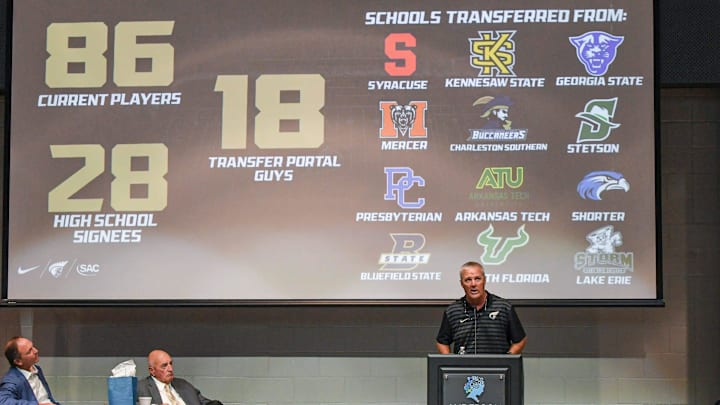
Most stories you hear about the transfer portal focus on who’s going where — which quarterback flipped to a rival school, which cornerback found a better offer, who’s chasing immediate playing time. What doesn’t get nearly enough attention is the silent shift behind those headlines: the portal isn’t just rearranging college rosters. It’s slowly dismantling the traditional foundation of high school recruiting — and hardly anyone outside a few evaluation rooms seems to notice.
The Portal Changed Recruiting Forever — And Not in Favor of High School Players
I know recruiting from all sides. I was the nationally ranked high-school quarterback turning heads at camps. I sat on coaches’ staffs at Power 4 programs — at Virginia, Virginia Tech, and Miami — reviewing film, evaluating traits, and making cold, calculated recruiting decisions. Later, I entered the NFL front office as a scout, doing the same work for potential draft picks, parsing film, dissecting plays under pressure, and grading what I believed could translate to the next level. Over that time, I’ve watched one of the biggest paragon shifts in the sport’s history unfold — quietly, insidiously, and with devastating consequences for aspiring high school athletes.
Because of the portal, coaches now look at rosters differently. Instead of projecting a 17- or 18-year-old high school kid’s potential — his frame, his work ethic, his heart — they look for players who are ready now. Proven bodies who have already been tested. With a few clicks, a coach can fill a need with a guy who already knows the college game, rather than waiting two or three years for a high-school player to grow into it. That convenience and certainty change everything.
When staff rooms start viewing rosters like shifting business assets, instead of long-term projects, high school recruiting becomes an afterthought. It happens behind closed doors — but the fallout hits hard.
The Fallout: Fewer High-School Chances, More Portal Priority
Because of that shift, the traditional recruiting class is shrinking. Once upon a time a staff might sign 20–25 high-school recruits, now many bring in fewer, reserving more openings for transfers. The kids who would’ve gotten developmental scholarships — late bloomers, overlooked two- or three-star types, players from smaller towns — those opportunities are gone, or at least far rarer. For them, the margin for error just got a lot smaller.
In recruiting meetings today, I’ve heard it said plainly: “Why gamble on a high-school kid when you can plug a gap with a proven college player?” It’s not about potential anymore. It’s about readiness. And unfortunately, that shift disproportionately hurts those recruits who rely on upside, work ethic and improvement — because upside doesn’t pay off immediately.
I’ve seen high-upside players get passed over. I’ve seen talent with heart, size, and an untapped ceiling sit idle — while older transfer players get the nod. That’s not subjective. I was in those rooms when those decisions were made.
The Daily Reality: 300 DMs vs. One Proven Portal Player
When I coached at the college level, I would open my phone every morning to 300 messages on average from high school prospects. Film clips. Combine numbers. Season stats. “Coach, please take a look.” “Coach, I just need a chance.” Every kid was trying to prove something — toughness, upside, raw ability, hunger. And none of it was wrong. They should fight. They should advocate for themselves.
But here’s the truth nobody on the outside sees: almost every high school message was an attempt to prove what a portal prospect has already proven.
A transfer player doesn’t have to convince you he can handle college speed — he’s already played in it. He doesn’t need to explain his work ethic — you can call the strength coach who trained him. He doesn’t need to speculate on how he’ll respond to coaching, pressure, structure, or adversity — his position coach already knows. The portal kid has a résumé. The high school kid has a projection.
That difference is the hidden force powering the portal era. Not highlight tapes. Not stars. Not social media. And right now, proof is valued more than potential — which means high school athletes are fighting uphill before the evaluation even begins.
Why Coaches Can’t Afford to Get It Wrong
There’s another piece most people never realize: the pressure on coaches to get every recruit right. At the college level, a recruiting miss isn’t harmless. It’s a mark against you, a setback for your roster, and a reason for the athletic director and boosters to question whether you’re building the program correctly.
Stack too many misses, and you don’t just lose games. You lose your job.
Because of that, the portal feels safer. If a transfer doesn’t pan out, you can replace him quickly. If a high school kid doesn’t develop, that mistake lingers for years. It clogs your depth chart, stalls your position room, and becomes a recruiting scar your staff wears until that player leaves or graduates.
That’s why, behind closed doors, many staffs lean toward players with college experience. The risk is lower, the timeline is faster, and the accountability is easier to manage.

What Coaches Are — and Are Not — Looking For Anymore
Back when I recruited from high school, coaches bought into development. They were willing to coach, grind, and mold players. But now, with constantly shifting rosters, NIL pressure, shorter leashes, and bigger stakes — many coaches don’t have time for that kind of patience.
Today, the first question isn’t “What could he be in two years?” It’s “What can he do this fall?” Coaches want players whose bodies, technique, and football IQ already match college level. They want minimal risk. They want plug-and-play. That often means high school players get passed over before the evaluation even begins.
In a lot of cases, spotlight season — junior-to-senior camps, spring showcases, highlight reels — isn’t enough. Coaches want demonstrated performance under real college-style pressure. If you don’t yet have that, you’re at a disadvantage before you even step foot on campus.
The Unseen Casualties: Dreams Deferred, Players Overlooked
This isn’t just about fewer scholarships or smaller recruiting classes. It’s about the soul of high school football. It’s about kids who played their hearts out all season, who lifted in garages in the offseason and studied playbooks at night. It’s about late-bloomers, hard workers, and kids from smaller communities believing they had a fair shot. For them, the portal’s rise changes everything.
I talk to parents and coaches on X (formerly known as Twitter) every day who still don’t understand how drastically the landscape has shifted— they ask, “Why didn’t he get an offer? He’s good.” And I tell them: “He wasn’t bad. He wasn’t even labelled a project. He was just a prospect playing against portal odds.” Many of those kids will never get that second look. And if they do, it’s usually because of a connection, a last-minute slot opening — not because of their film or character.
What High-School Athletes Need to Know If They Want to Survive This Era
The landscape changed. Not because players lost their talent or their heart — but because the business shifted. So if you’re a high school athlete chasing the next level in 2026 and beyond, here’s the truth: you can’t just rely on athleticism, star camps, or social media hype. You need to show college readiness — or as close as you can get.
That means being physically mature earlier. It means being fundamentally sound — footwork, balance, awareness, readiness. It means showing mental toughness, coachability and a strong football IQ. It means flashing consistency under pressure, flashing leadership, showing you can adjust, learn and win. And most of all, it means understanding that you’re not just competing with kids in your class — you’re competing with 21–23-year-old college players who already know the game.
If you accept that, and if you work for it, you can still carve your way forward. But the path is narrower, steeper, and less forgiving than ever.
The Portal Isn’t the Enemy — But High School Players Are Paying the Price.
This isn’t a “blame the portal” hit piece. The portal does provide opportunities. It gives kids a second chance, allows mobility for players, and helps coaches rebuild on the fly. But it also quietly — maybe unintentionally — undercuts the pathway that once made high school recruitment a showcase for potential and dreams.
The game changed. The foundation shifted. If we don’t talk about it, the next generation of high school players may not even realize how much harder getting noticed just got.
 Add us as a preferred source on Google
Tommy Reamon Jr. was a nationally ranked high school quarterback from Virginia who earned a full scholarship to Old Dominion University. He has coached at the college level with stops at the University of Virginia, Virginia Tech, and the University of Miami. Reamon also brings NFL scouting experience from his time with the New Orleans Saints, Pittsburgh Steelers, and as an intern with the Buffalo Bills at the NFL Combine. He most recently served as the Director of Scouting under former NFL quarterback and FOX analyst Michael Vick at Norfolk State University. His work in player evaluation extends into media as well—Reamon is the Director of Sports Analytics for SportsPlug757 and the Director of Talent Acquisition for NFL quarterback Tyrod Taylor’s Quarterback Academy. Beyond football, he is also the founder of the community apparel brand City On My Chest.
Follow CoachReamon