
Red Wings’ Vladimir Konstantinov Was on Verge of Becoming Hockey's Best Defenseman
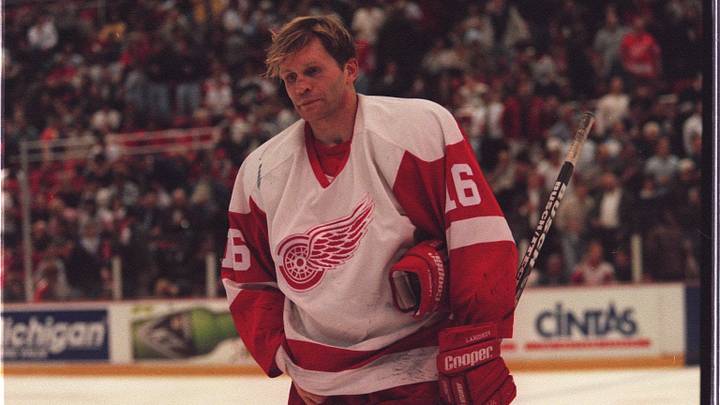
In this story:
Vladimir Konstantinov never needed to score 20 goals or dominate a highlight reel to make opposing forwards miserable.
The Detroit Red Wings defenseman preferred a more punishing approach. He could disrupt an offensive rush with a perfectly timed hit, frustrate an elite scorer through relentless coverage and turn a routine shift into an exhausting confrontation.
By the spring of 1997, Konstantinov had become one of hockey's premier defensemen.
Unfortunately, his career ended just as he was approaching its pinnacle, leaving an intriguing question: How much greater could he have become?
From Soviet Standout to Detroit's Defensive Force
The Red Wings selected Konstantinov in the 11th round of the 1989 NHL Draft, 221st overall. According to Michael Whitaker of The Hockey News, getting Konstantinov out of the Soviet Union was akin to a James Bond movie. The Red Wings employed the services of Keith Gave, a longtime Red Wings journalist who was working for The Detroit Free Press at the time.
"I spent six years in the spy business in West Berlin, working a mile from Checkpoint Charlie, the tip of the spear of the Cold War, and I'd never been given a good cloak and dagger assignment, and I was being offered one, I thought there was a way we might be able to do this," Gave said.
Traveling to Helsinki under the cover of his journalistic credentials, Gave slipped letters outlining the Red Wings' interest into team media guides and delivered them to Konstantinov and Sergei Fedorov, both who had been drafted by the Red Wings in the summer of 1989.
Two years later, Konstantinov reached Detroit after an elaborate operation involving falsified medical documents that secured his release from the Soviet military.
As Gave later detailed in his book The Russian Five, the journey that brought Konstantinov to Hockeytown involved considerably more than a routine player acquisition.
Once in Detroit, Konstantinov quickly earned a reputation for aggressive, uncompromising defense. Nicknamed the "Vladinator," he relished physical confrontations, particularly against imposing opponents such as Philadelphia Flyers center Eric Lindros.
His impact extended far beyond intimidation.
During the 1995-96 season, Konstantinov finished with an NHL-leading plus-60 rating, the league's highest figure since Wayne Gretzky posted plus-70 in 1986-87. He also contributed 14 goals and 34 points.

A Norris Trophy Was Within Reach
Konstantinov's final NHL season offered compelling evidence that his reputation was still growing. In 1996-97, he scored five goals and had 33 assists for 38 points in 77 games while finishing plus-38.
His defensive excellence earned him runner-up honors in Norris Trophy voting behind Brian Leetch. Some observers considered Konstantinov a leading candidate to win the award the following season.
Instead, tragedy intervened.
Six days after the Red Wings defeated the Flyers to win their first Stanley Cup in 42 years, Konstantinov suffered severe brain injuries in a limousine accident following a team golf outing. His playing career was over at 30.
Across six NHL seasons, he finished with 47 goals, 128 assists and 175 points in 446 games. Those numbers reveal only part of his contribution.
Konstantinov combined the physical edge of a traditional defensive specialist with the skating and instincts necessary to confront hockey's most gifted forwards. His career may have ended far too soon, but his place in Red Wings history was already secure.
 Add us as a preferred source on Google

Jason Fink is an NHL writer and lifelong hockey fan who fell in love with the game when he watched Wayne Gretzky’s Edmonton Oilers defeat the Philadelphia Flyers in the 1987 Stanley Cup Final. When he’s not writing, Jason enjoys spending time with his wife Michelle and their son Theo and daughter Stella. Whether he’s following the latest NHL news or cheering from the rink, his passion for the sport has been a constant throughout his life.