
Triston Casas Could Boost Counting Stats and Fantasy Value in a Potential Mets Trade
In this story:
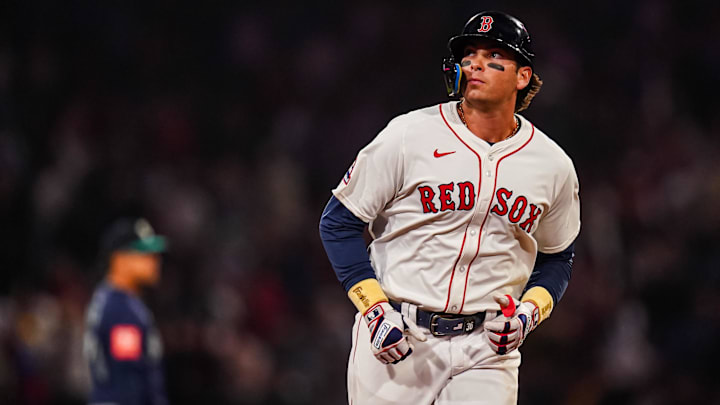
Triston Casas is one of baseball’s most intriguing young left-handed bats, combining power, plate discipline, and on-base skills in a corner-infield package. Even after a rough, injury-shortened 2025, he still profiles as a middle-of-the-order presence capable of 25–30 home runs per season with strong run-production upside.
A team acquiring Casas would immediately add a controllable, high-upside bat to a lineup in need of consistent run scoring, especially at a premium position like first base.
With years of team control remaining and the ability to anchor a middle-of-the-order spot, Casas could be the centerpiece of a lineup for the next decade.
Here’s what it would take for the Mets to acquire him.
New York Mets - Boston Red Sox MLB Mock Trade Details & Fantasy Baseball Impact
Mets Acquire:
1B Triston Casas
Red Sox Acquire:
RHP Christian Scott
C Kevin Parada
Fantasy Impact
Triston Casas > Mets
Triston Casas would give the New York Mets a left-handed power bat with strong on-base skills, even after a tough 2025. In 29 games, he hit .182 with 3 HR, 11 RBI, and a .580 OPS before his season was cut short by injury. Despite the poor surface stats, his plate discipline and track record suggest bounce-back potential, and a move to the Mets could help stabilize his role and boost his counting stats if he hits in the middle of the order.
Christian Scott > Red Sox

Christian Scott heading to the Boston Red Sox would be a longer-term upside play. He did not pitch in 2025 while recovering from Tommy John surgery, so there are no major league stats for the season. His last MLB action (2024) showed promise with a mid-4s ERA and solid strikeout ability, and Boston would likely view him as a 2026 contributor with mid-rotation upside if he returns to form.
Kevin Parada > Red Sox
Kevin Parada gives Boston a bat-first catching prospect coming off a solid but uneven 2025 across AA and AAA. He played 108 games, hitting .245 with 11 HR, 57 RBI, and a .726 OPS, showing decent power but struggling after a promotion to AAA. The Red Sox would likely bet on his offensive upside at a premium position, hoping he can refine his contact skills and develop into a regular starting catcher.
Why The Red Sox Make The Trade

The Boston Red Sox would make this deal because it lets them turn one volatile asset into two controllable upside pieces while addressing multiple organizational needs at once.
Triston Casas, despite his talent, comes with real uncertainty right now—he struggled in 2025 (.182 AVG, .580 OPS in limited time) and is coming off a major injury. Rather than betting entirely on a rebound, Boston could cash him in during a “buy-low but still valuable” window and redistribute that value across the roster.
Adding Christian Scott gives them a near-MLB starter with mid-rotation upside. Even with the Tommy John recovery, pitchers like Scott are extremely valuable—Boston has been actively trying to build sustainable rotation depth, and he fits that timeline as a controllable arm who could contribute for years.
Meanwhile, Kevin Parada fills a long-term need at catcher, especially with his offensive upside. Catchers who can hit are hard to find, and Parada’s 2025 production (.245, 11 HR, 57 RBI) shows enough to project him as a potential everyday player if he refines his approach.
Why The Mets Make The Trade

The New York Mets would make this deal because it lets them convert prospect depth into a proven, controllable middle-of-the-order bat, which is something they’ve lacked in recent seasons.
Triston Casas gives the Mets a true first-base solution with upside, even after his rough 2025. The key is that his underlying profile, elite plate discipline, and 25–30 HR power still project well. For a Mets team trying to contend, betting on a rebound is more valuable than waiting on prospects to develop.
Moving Christian Scott makes sense because of injury uncertainty and pitching depth volatility. He didn’t pitch in 2025, and while he has mid-rotation upside, the Mets can’t fully rely on his timeline. Pitching prospects also carry high risk, making him a logical trade piece.
Dealing Kevin Parada is more about organizational redundancy and timeline. Catching prospects often take longer to develop, and Parada hasn’t fully broken out. The Mets may prefer to allocate resources toward immediate MLB production rather than wait on his bat to translate.
More Fantasy Sports On SI News
 Add us as a preferred source on Google
Ryan Shea is a seasoned sports enthusiast with a sharp eye for strategy and a deep love for the game—no matter the sport. Whether he’s analyzing roster moves or spotting trends before they hit the headlines, Ryan brings a unique mix of research, instinct, and insider perspective to his writing. With over a decade of experience dominating fantasy leagues, he knows what it takes to build championship-caliber lineups. A diehard fan of all things New York, Ryan proudly reps the Jets, Yankees, Knicks, and Rangers—win or lose.