
College Fantasy Football Week 5 Matchup Analysis: Green Lights & Danger Zones
In this story:
Matchup context becomes the ultimate tiebreaker in college fantasy football as conference play ramps up. Analyzing defensive personnel metrics, target share trends, and defensive EPA (Expected Points Added) reveals which high-volume stars have favorable matchups and which fantasy pillars carry hidden bust potential for Week 5.
Best Matchups to Target: Green Light
Ohio State WR Jeremiah Smith vs. Opposing Big Ten Secondary
Matchup Context: High-volume alpha target vs. single-coverage heavy secondary.

Smith is coming off a monster 12-catch, 217-yard, 4-TD outing. He is commanding a 38% target share on 3rd down and leads the nation in red-zone target percentage (42% of team attempts). Expect the Buckeyes to continually isolate Smith against single coverage. Iowa traditionally plays a disciplined zone coverage designed to prevent explosive plays over the top. Expect Iowa to keep safety help bracketed over Smith. At 6'3" and 220 pounds, Smith possesses a significant frame advantage over Iowa's defensive backs in tight window throws, back-shoulder routes, and red-zone targets.
Florida RB Jaden Baugh vs. Vulnerable Front Seven
Matchup Context: Heavy-volume lead back vs. a defense struggling against physical power-gap schemes.
Following his 142-yard, 3 TD performance against Ole Miss, Baugh holds a 72% share of high-value touches (inside the 10-yard line and 3rd-and-short snaps). With Florida using efficient play-action to keep secondaries back, Baugh gets high touch volume in light box looks. Missouri's defensive front relies heavily on linebackers like Robert Woodyard Jr. and defensive end Daeden Hopkins. Baugh's heavy volume load (averaging 20+ carries per game) will be central to Florida's ground control strategy on the road at Faurot Field.
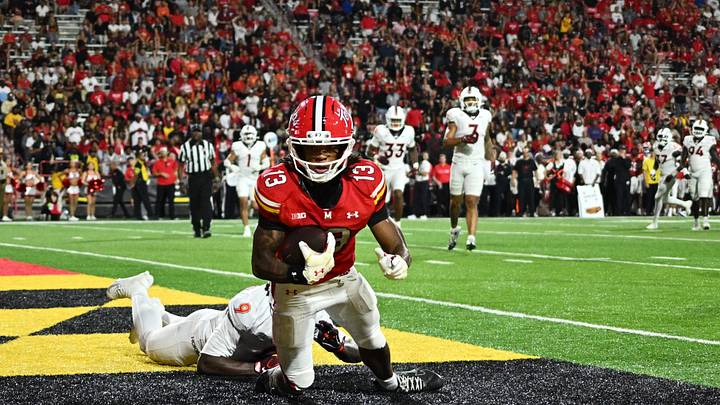
Maryland WR Chris Durr Jr. vs. Soft Slot Defense
Matchup Context: Slot target machine facing a defense vulnerable over the middle.
Durr Jr. commands consecutive 10-reception performances. His 31.5% target share out of the slot gives him a near-unbeatable floor in PPR and CFF formats, making him a premier WR2/FLEX option with a high floor. Nebraska's defense relies on disciplined coverage and physical secondary play
Several high-profile players present significant risk heading into Week 5. They warrant a Red Light/Bench tag in college fantasy football due to usage trends, matchup dynamics, and injury concerns.
Arch Manning, QB, Texas vs. Defensive Scheme Structured to Produce Negative Plays
Matchup Context: High-volume passing attack in SEC play

Texas enters this matchup off a physical SEC battle with Tennessee. Manning has shown high-end playmaking and late-game poise this season, most notably leading a fourth-quarter comeback over Ohio State. Protection against elite pass rushes remains a critical focal point, as he was sacked six times against Tennessee's aggressive front. Brent Venebles' defense historically prioritizes disguising coverages and bringing pressure up the A-gap to force Manning into quick, uncomfortable decisions.
Worst Matchups to Avoid: Red Light
Oklahoma QB John Mateer vs. Elite Pass Rush Front
Matchup Context: Dual-threat QB coming off a turnover heavy performance, facing another disruptive pass rush.

Mateer struggled under pressure against Georgia (41-13 loss) with multiple giveaways. When pressured, his turnover-worthy play rate jumps significantly, and his rushing floor evaporates under disciplined edge containment. Mateer experienced a complete breakdown against Georgia's pressure (4 turnovers). Facing Colin Simmons and a Texas defense that held Tennessee to 4-of-16 on 3rd down, Mateer carries a huge turnover risk that caps his dual-threat ceiling.
Louisville Skill-Position Players vs. Aggressive Man Defense
Matchup Context: Rotating offense vs. a top-tier press-man secondary

Louisville suffered a 30-27 loss to Wake Forest due to a lack of a clear alpha target and a messy backfield committee. Against a secondary that suffocates quick-rhythm throws, this offense lacks the volume density to make any individual receiver or running back more than a low-upside FLEX gamble.
 Add us as a preferred source on Google
Daniel Outerbridge covers the NBA, NFL, WNBA, and MLB with an emphasis on the numbers behind the game. His work breaks down player performance, team strategy, and emerging statistical trends to provide actionable insights for fans and fantasy players. Outerbridge has written for a myriad of other outlets including Anubis Sports and FanSided.