
Building Collectors: Inside The National's Youth Education Program
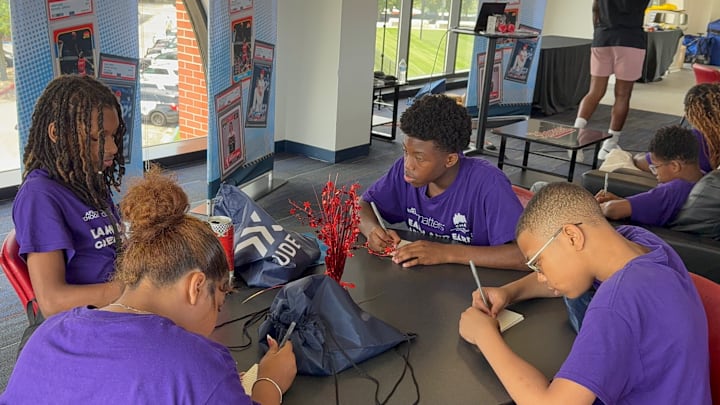
In a hobby increasingly driven by data, comps and content cycles, Samuel Evans (@thesprtzcardcoltr) is building something that starts with a different question: What does collecting mean to a kid before it becomes a business?
Evans, a Philadelphia-area principal, educator, and lifelong collector, is the force behind the Youth Collector Clubs Initiative, a program that uses trading cards as a framework for financial literacy, entrepreneurship, negotiation and community building. What began as a proof of concept in Chicago in 2025 is quickly becoming one of the hobby’s most important long-term growth plays.
Evans' vision is rooted in personal experience. Growing up in North Philadelphia, Evans built his early collecting life without card shops, shows or price guides. To him, the hobby meant neighborhood trades, shared stories and a connection to the players on the cardboard.
When he returned to the hobby during the pandemic, he found a space transformed by monetization and social media. Young collectors were too often in the hobby only for the money, missing so much of the joy collectibles can bring.
Evans didn’t see a problem with the business instinct. He saw a missing first chapter.
A Curriculum Built on Cards and Life Skills
The Youth Collector Clubs Initiative is designed to restore that balance. Kids learn how to understand value, analyze market data and run a table—but also how to build a personal collection, study hobby history and experience the social side that keeps collectors engaged for decades.
Its pillars mirror real-world development, from entrepreneurship and industry awareness to creative design and long-term hobby sustainability including who will run it, market it and shape it in the future.

“I believe the next 150 years of the hobby will be magical; not because of record-breaking sales or polarizing cardboard moments that stir temporary emotion, but because of something far more enduring,” Evans told Collecting onSI. “The true magic will be found in the moments when the next generation of collectors discover, learn and experience the hobby through a purposeful blueprint designed to expand and diversify our community, strengthen nostalgia, elevate equity and access, cultivate future hobby leaders and keep ethics and integrity at the forefront.”
The early Chicago pilot, created with Curtis Granderson’s Chicago Baseball and Educational Academy, showed how powerful that model can be. Students moved from opening packs and trading to discussing supply and demand, reading sales data and exploring how collecting connects to careers in media, branding and product development.
It’s education disguised as something fun; but in reality, it takes little disguise.
A National Platform for a Local Mission
The program’s reach is now expanding through the partnership between The National Sports Collectors Convention and the Sports Cards Nonsense (SCN) Media Network, which is positioning SCN as the year-round storytelling engine for the hobby’s biggest event.
Evans recently appeared on The Gordy Bonker Show, an SCN Media Network podcast. You can check out the in-depth interview at the clip below (starting at 9:13).
By amplifying the Youth Collector Clubs Initiative across its podcasts, newsletters, social platforms and Collectibles on SI, SCN is turning a local educational model into a national conversation. The goal is to shift attention from transactions to the people who will define the hobby’s future.
Collecting as Identity and Storytelling
Evans doesn’t just teach the philosophy—he lives it. His personal collection reflects deep ties to Philadelphia and the history of the game, built around a top-10 chase that includes Wilt Chamberlain, Julius Erving, Moses Malone and Jackie Robinson, alongside modern icons like Michael Jordan, Kobe Bryant and Ken Griffey Jr., with Hank Aaron and Bill Russell rookies still on the horizon.

Just as telling: he regularly gives cards away, especially to students. Not as a loss, but as a gateway. For Evans, the real currency of the hobby is connection: the conversations at shows, the trades and the memories tied to specific cards. He calls it the “hobby experience.”
Scaling Access for the Next Generation
“That blueprint is the Youth Collector Clubs curriculum,” Evans said. “This program is not simply about collecting cards—it’s about building character, community and continuity within the hobby.”

The long-term plan is to expand through after-school programs and community partnerships, reaching young collectors who might never otherwise walk into a card shop or attend a major show.
In a market that often measures success by record sales and price charts, Youth Collector Clubs is focused on a different metric: Whether the next generation learns to love the cards first.
 Add us as a preferred source on Google
Lucas Mast is a writer based in California’s Bay Area, where he’s a season ticket holder for St. Mary’s basketball and a die-hard Stanford athletics fan. A lifelong collector of sneakers, sports cards, and pop culture, he also advises companies shaping the future of the hobby and sports. He’s driven by a curiosity about why people collect—and what those items reveal about the moments and memories that matter most.
Follow sneakrz