
Why Stallone, Ford & Arnold Still Rule 1980s Action Movie Collectibles
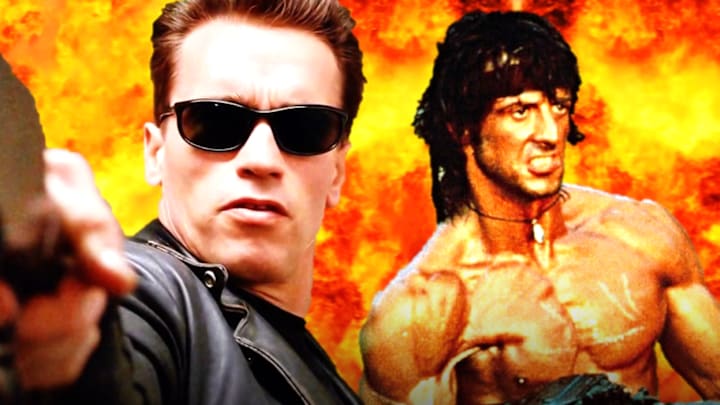
The 1980s didn’t just change the box office—they created the modern idea of the movie star as a franchise. It was the decade when actors became intellectual property, when a name above the title could open a film globally, and when characters moved seamlessly from the screen into toy aisles, trading cards, posters, and home video shelves.
For collectors, the era produced a different kind of rookie card: the first appearance, the first franchise, the first cultural moment. At the center of it all stood a trio of leading men whose films defined the decade’s financial and pop-culture landscape.
RELATED: You Didn’t Just Watch These 80s Cartoons—You Can Collect the Cards
Harrison Ford: The Franchise Adventurer
No actor owned more of the early 80s box office than Harrison Ford, who moved between galaxies and archaeological digs with effortless authority. The Empire Strikes Back, Raiders of the Lost Ark, Return of the Jedi, and Indiana Jones and the Temple of Doom weren’t just hits— they were pillars of the modern blockbuster economy.

What made Ford different was credibility. While he was anchoring two of the biggest adventure franchises ever created, he was also earning an Oscar nomination for Witness and taking creative risks in The Mosquito Coast. That combination of blockbuster dominance and prestige gave his memorabilia unusual depth, connecting space opera, pulp adventure, and serious cinema in one collecting lane.

Sylvester Stallone: The Global Underdog Turned Superhuman
If Ford represented the franchise hero, Sylvester Stallone embodied the 80s action myth. Rocky III and Rocky IV turned a scrappy underdog into a global symbol of Cold War-era triumph, while First Blood and Rambo: First Blood Part II transformed a haunted Vietnam veteran into a one-man army who could carry the international box office.

By the middle of the decade, Stallone wasn’t just starring in hits—he was directing them and becoming one of the highest-paid actors in Hollywood. His films created some of the most recognizable training montages, fight imagery, and military iconography of the era, the kind of visuals that translated perfectly into mass-produced collectibles and still define 80s nostalgia.

Arnold Schwarzenegger: The Blueprint for the Modern Action Star
Arnold Schwarzenegger didn’t just become a star—he created a template. Conan the Barbarian introduced the physical presence. The Terminator introduced the mythology. Predator and Commando confirmed that a new kind of action hero had arrived, one built as much on silhouette and one-liners as on plot.

By the end of the decade, the future “Governator” wasn’t just a box-office draw; he was a brand. The T-800, in particular, became one of the most recognizable characters in film history, a crossover figure who lived equally in cinema, toys, video games, and trading cards.

Why the 80s Still Matter to Collectors
These actors didn’t just headline hits. They created characters and imagery that moved across formats including theatrical posters, VHS boxes, action figures, trading cards, and licensed merchandise that introduced a generation to collecting through the movie theater.
Their careers mark the moment when Hollywood and the hobby began speaking the same language: franchises, first appearances, global audiences, and characters that never really leave the screen.
The box office made them stars. The collectibles made them permanent. Even in their late 70s—and in Ford’s case, early 80s—they remain popular and relevant today.
 Add us as a preferred source on Google
Lucas Mast is a writer based in California’s Bay Area, where he’s a season ticket holder for St. Mary’s basketball and a die-hard Stanford athletics fan. A lifelong collector of sneakers, sports cards, and pop culture, he also advises companies shaping the future of the hobby and sports. He’s driven by a curiosity about why people collect—and what those items reveal about the moments and memories that matter most.
Follow sneakrz