
Pete Rose and Shoeless Joe Jackson Baseball Cards Still a Gamble
In this story:
A Historic Announcement
It was a day many fans believe came far too late. It was a day many fans thought would never come at all. Either way, that day has come, and Commissioner Rob Manfred has lifted the lifetime bans of Pete Rose, Shoeless Joe Jackson, and several other of the sport's personas non grata. The big news for collectors, not to mention fans of baseball history in general, is that these players are now officially eligible for the Hall of Fame.

Under normal circumstances, collectors know that election to the Hall of Fame tends to provide a healthy boost to card values. At the same time, these are hardly normal circumstances. The result is that collectors hoping to benefit from a Hall of Fame bounce will need to consider two questions at once.
- Will either of these players make the Hall of Fame?
- If they do make the Hall, will their card values increase?
Will Rose or Jackson Make the Hall?
While the most significant barrier on the road to Cooperstown has been cleared, the chances of either Rose or Jackson making it all the way to the famous plaque gallery feels like a longshot. That's not to say it can't happen, but here's what it would take.
Barring some ad hoc process created specifically for these players, something the Hall of Fame's chairman of the board does not appear to be considering, the soonest Rose and Jackson would even be considered would be December 2027 when the Hall's Classic Baseball Era Committee convenes for a vote. If history serves as a guide, this committee will consider eight or so candidates whose greatest contributions to the game came before 1980. In other words, they will be looking at a century or more of baseball.

This not only includes all-time greats like Tommy John, Luis Tiant, and Steve Garvey but also covers Negro League greats like John Beckwith, Rap Dixon, and Vic Harris. Though the casual baseball fan--and even many die-hards--would wonder why on Earth anyone would put those players on the ballot over a man with a .356 lifetime average (Jackson) and a man with 4,256 major league hits (Rose), the Hall has always appeared to take its character clause seriously, even as its ranks include many players modern fans and historians might recognize as racists, rogues, or rule-benders.

So yes, even getting on the ballot remains a giant hurdle. These era committee ballots do not work the same way as the standard Baseball Writers' ballot where players with requisite major league tenure automatically make the ballot five years after retirement. Players for special era committee ballots need to be selected, and who does the selecting? The Hall itself.
But okay, let's now assume Rose and/or Jackson cracks the ballot. What now? The final hurdle for election would be receiving the votes of 12 of 16 voters. As high a bar as 75% normally sounds, it's even tougher here for two reasons. Unlike the Writers' ballot where each voter can select up to ten candidates, the era committee voters can only choose three. Even voters who might want Rose or Jackson will be forced to exclude them if there are other candidates they want more.

And now for the second reason. Where it's easy to find friends, fans, or social media influencers that are staunch supporters of Rose and Jackson, these aren't the people voting. The electorate is instead hand-picked by the Hall, generally including a mix of executives, former players, and historians. To the extent the Hall cares about its own character clause, it's hard to imagine appointing a committee that stands ready to disregard it.
It's hard to take all of this into account and nonetheless imagine a path to Cooperstown for Jackson or Rose any time soon. Pete Rose once famously said he'd walk through hell in a gasoline suit to play baseball. Perhaps. But enshrinement for Jackson and Rose may only come once hell freezes over.
Would Enshrinement Produce a Hall of Fame Bump?
The short answer here is yes, probably. However, it's a bit more complicated than for typical Cooperstown hopefuls like Freddie Freeman and Jacob deGrom. Let's start with Shoeless Joe Jackson. Even before the Manfred announcement, Jackson's cards were already extremely expensive. Though the pricing of baseball cards is an inexact science, there are likely three reasons why Jackson's cards generally cost even more than Honus Wagner, Ty Cobb, and Babe Ruth, other things being equal.
- There were relatively few sets during his playing career that included Jackson.
- Books and movies, most notably "Field of Dreams," have turned Jackson into a mythical figure.
- Jackson's omission from the Hall of Fame only adds to his notoriety.

Interestingly, induction would mean that third reason would no longer apply. Regardless, as thin as supply for Jackson cards is, any downward impact on pricing would be counteracted in spades by the number of Hall of Fame collectors suddenly needing one of the precious few playing era Jackson cards out there.
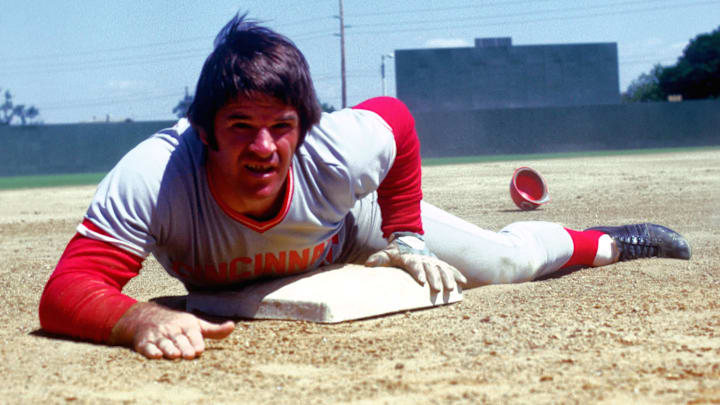
As for Rose, his cards, and in particular his rookie card, have actually done quite well, even while on Baseball's naughty list. Whether it's his cult status in Cincy or his "Hit King" status in the MLB record book, his early cardboard is absolutely priced already at a Hall of Fame level. Still, once again, expect a rush of collectors who up to now have been able to avoid the 1963 Topps "floating heads" rookie all of a sudden having to add it to their want list if Rose makes the Hall.

The good news then for holders of Jackson and Rose cardboard is yes, if they make the Hall, their top cards will almost certainly go up. The bad news is neither one of these disgraced superstars appears headed for Cooperstown in the near future.
 Add us as a preferred source on Google
Jason A. Schwartz is a collectibles expert whose work can be found regularly at SABR Baseball Cards, Hobby News Daily, and 1939Bruins.com. His collection of Hank Aaron baseball cards and memorabilia is currently on exhibit at the Atlanta History Center, and his collectibles-themed artwork is on display at the Honus Wagner Museum and PNC Park.