
Razorback Stadium's Empty Seats Raise Questions About Arkansas Football, Fan Support
In this story:
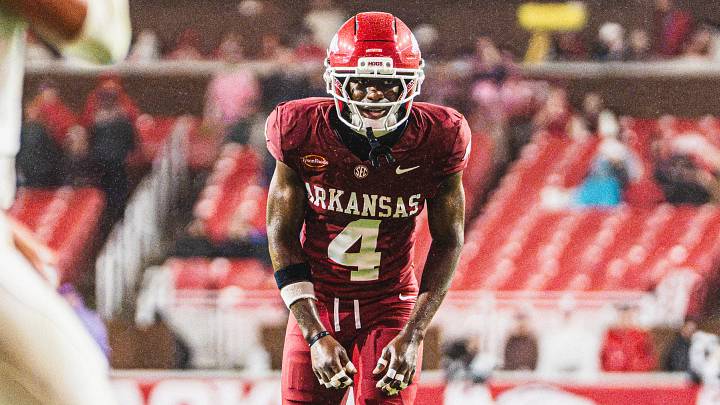
FAYETTEVILLE, Ark. — Donald W. Reynolds Razorback Stadium has heard some of the loudest moments in Arkansas football history. On Saturday night, it was difficult to find that same energy.
Arkansas' 34-10 loss to No. 23 Missouri in the Battle Line Rivalry unfolded in front of a noticeably sparse crowd in Fayetteville. The university's reported attendance was below 65,000, a figure that stood out in a stadium capable of holding approximately 76,000 fans.
The matchup had several ingredients that traditionally bring Razorback supporters into the stands: a Saturday night kickoff, a ranked opponent, a rivalry game and an opportunity for Arkansas to build on its recent victory over Vanderbilt.
Tonight's attendance at Donald W. Reynolds Razorback Stadium for this year's edition of the Battle Line Rivalry between @RazorbackFB and Missouri: 65,117. pic.twitter.com/42nrI57nDR
— Razorback Communications (@RazorbackComms) November 1, 2026
Instead, the atmosphere reflected a program struggling to give its supporters much reason for excitement.
The attendance figure alone does not tell the entire story. College football attendance announcements can reflect tickets distributed rather than the number of people who physically enter a stadium. However, the visibly empty sections offered a separate indication that the crowd was not what Arkansas would hope for during a major home game.
For a program that has spent considerable time and resources trying to strengthen its football operation, the relationship between the product on the field and the people paying to watch it deserves attention.
Razorback Stadium Has Shown What It Can Sound Like
The atmosphere at Razorback Stadium has not always been quiet.
In October 2016, Arkansas Athletics published measurements of crowd noise during the Razorbacks' home games against Alabama and Ole Miss. The results showed what the stadium could produce when fans were fully engaged.
During the Alabama game, the university recorded a peak of 115 decibels as Arkansas ran through the A and the student section unfurled its tifo. The game averaged 93 decibels throughout four quarters, according to the official Arkansas Athletics report.
One week later, the stadium got even louder.
During Arkansas' victory over Ole Miss, the crowd reached 117 decibels following a late defensive stop that secured the win. The university also recorded an average of 95 decibels throughout the game, with crowd noise exceeding 100 decibels 55 times.
10 years ago today #22 Arkansas beat #12 Ole Miss, 34-30, in front of a rabid Razorback Stadium. pic.twitter.com/lub8Egn0iR
— WarMachine2013 (@WarMachine2013) October 15, 2026
On third downs, the average reached 102.2 decibels.
Those numbers came from games nearly a decade ago, but they illustrate the atmosphere Razorback Stadium can create when the team gives fans something to rally behind.
The contrast with Saturday night was noticeable. Rather than a packed stadium responding to every major play, empty sections were visible throughout the venue as Missouri took control.
The stadium has not lost its ability to be loud. The question is what will bring that environment back consistently.
Ticket Market Tells Different Part of the Story
The attendance conversation becomes more interesting when ticket prices enter the picture.
Secondary-market listings for the Missouri game showed tickets available for as little as $14 on the day of the matchup, according to SeatData's ticket price tracking. Other listings on Tickets.com showed upper-level seats around $35, with some lower-level options listed around $28 per ticket.
Those figures represent resale listings, not the original prices set by Arkansas. They also do not necessarily reflect what every fan paid.
Still, they show that the secondary market had tickets available at relatively low prices despite the matchup involving a ranked SEC opponent.
That raises a question for the athletic department: If tickets are available at those prices and the stadium still appears noticeably underfilled, what is keeping supporters away?
The answer is unlikely to be one single issue. Team performance, travel, weather, scheduling and individual financial circumstances all influence whether fans attend games.
However, affordability and the perceived value of attending a game are part of the discussion.
The Razorback Foundation's official ticket and parking policies outline how annual donations determine season-ticket eligibility, seating and parking opportunities. The foundation also requires members to maintain or exceed their previous year's annual fund contribution to retain season tickets and parking.
For some longtime supporters, the financial commitment has become a larger issue. A February report from Best of Arkansas Sports detailed complaints from season-ticket holders who faced higher required donations to keep their existing seats.
One supporter described being told he would need to increase his annual donation from $3,000 to $10,000 to retain his seats.
The athletic department has to find ways to generate revenue in an increasingly expensive college sports environment. But asking supporters to make a larger financial commitment also creates an expectation that the experience and product will justify that investment.
Athletic Department Wants More Investment From Fanbase
Arkansas has made its financial ambitions clear.
In August, the Razorback Foundation announced that its ALL IN Fund had generated nearly $25 million in contributions and increased its fundraising goal from $30 million to $50 million. The initiative is designed to provide additional resources for Silverfield's football program.
According to the university's announcement, contributions to the fund are intended to help Arkansas recruit, retain and develop players.
Those resources are important in the current college football landscape. Programs across the country are competing for players, coaches and funding, and Arkansas cannot expect to remain competitive without investing in its football operation.
However, the athletic department's responsibility extends beyond raising money.
Athletic Director Hunter Yurachek and the department have to balance the financial needs of the program with the expectations of the people who support it. Ticket holders and donors are being asked to contribute to the future of Arkansas athletics. They also want to see a product that makes those commitments worthwhile.
The issue is not whether Arkansas should invest in football. It is whether the department is giving its supporters enough reason to continue investing in the program.
A stadium with empty seats is not simply an atmosphere problem. It can also become a warning sign about the relationship between a university's athletic department and its fan base.
On-Field Product Dictates What Stadium Looks LIke
Arkansas entered Saturday's game at 3-4 overall and 1-3 in SEC play following its victory over Vanderbilt. The Razorbacks had an opportunity to reach .500 and give fans another reason to believe the program was moving forward.
Instead, Missouri handed Arkansas a 34-10 loss.
The Razorbacks committed four turnovers, allowing Missouri to score 24 points off those mistakes. Arkansas managed just 59 rushing yards, while Missouri finished with 211. The Tigers controlled the game after halftime and left Fayetteville with their fifth consecutive victory in the Battle Line Rivalry.
The performance did little to encourage supporters who have watched Arkansas struggle through another difficult season.
First-year head coach Ryan Silverfield still has time to build the program, but the results will ultimately influence how fans respond. The athletic department can promote homecoming activities, invest in facilities, create fundraising campaigns and offer premium game-day experiences. None of those efforts can replace a competitive football team.
Arkansas has experienced what happens when the team and its supporters are connected. The 2016 games against Alabama and Ole Miss demonstrated how loud Razorback Stadium can become when the crowd has something to believe in.

That environment is still possible.
But the responsibility cannot fall entirely on fans to create it. Supporters are being asked to spend their time and money on Arkansas football. The program has to give them a reason to keep doing so.
Saturday's crowd, combined with the performance on the field, raised questions that Arkansas' athletic leadership should take seriously.
The Razorbacks will travel to Auburn on Nov. 7. The next opportunity to rebuild momentum will come on the field, but rebuilding the atmosphere in Fayetteville may require the program to earn back some of the enthusiasm that once made Razorback Stadium one of the most intimidating environments in college football.
Sign up to our free newsletter, and follow us on Facebook, X (Twitter) and subscribe to our YouTube channel for the latest news.
 Add us as a preferred source on Google
