
Kenny Smith's Double Knee Replacement: Dr. Jason Snibbe on Surgery, Recovery, and Lessons for HBCU Athletics
In this story:
HOUSTON -- Kenny Smith returned to "Inside the NBA" only 35 days after having both knees replaced. But the surgeon who did the operation says Smith’s impressive comeback actually started years before he went into surgery.
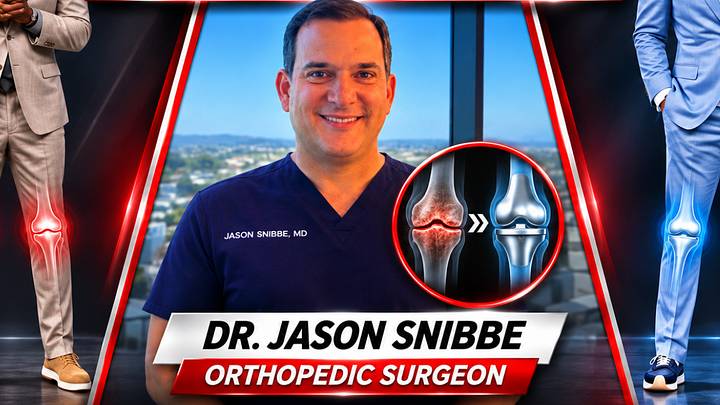
Dr. Jason Snibbe, a board-certified orthopedic surgeon in Los Angeles, replaced both knees of the two-time NBA champion during the offseason. Smith announced the surgery on the show's Oct. 21 season premiere on ESPN, showing his newly straightened legs after years of jokes about his knock-kneed look.
"No longer am I shaped like the letter K, like my name," Smith said during the broadcast.
Snibbe, who consults for the Los Angeles Lakers, Sparks, and Kings and previously served as a team doctor for the Clippers, discussed the procedure in an exclusive interview with the HBCU Legends Podcast.
The conversation covered more than just Smith’s recovery. Snibbe also shared tips on injury prevention, strength training, nutrition, and how HBCU athletic programs can improve sports medicine education, even with smaller budgets.

Why Kenny Smith Needed Both Knees Replaced
Smith played in the NBA for 10 seasons and won championships with the Houston Rockets in 1994 and 1995. Years of basketball and ongoing knee alignment issues eventually caught up with him.
His knees turned inward, a condition known as knock-knees. This look often became the subject of jokes from "Inside the NBA" co-hosts Charles Barkley and Shaquille O'Neal.
But Snibbe said the issue was much more serious than just how Smith looked.
"When you're really knock-kneed, the significance of that is that it puts a lot of stress on your medial collateral ligament, the ligament on the inside of your knees," Snibbe said.
Snibbe said that if Smith had continued for another five or six years, the stress could have left his medial collateral ligament "almost destroyed."
Smith’s knee pain also got much worse in the six to eight months before his surgery.
Snibbe decided it was better to replace both knees at once, instead of doing two separate surgeries, because Smith’s alignment problems were so severe.
"If you make one knee straight and the other one's crooked, you're kind of off-kilter, so you can barely get around," Snibbe explained.
The surgeon pointed out that Smith’s good overall health made it possible to do both procedures at the same time. Patients with other health risks might need to have the surgeries separately.
How Kenny Smith Returned in Just 35 Days
The timing of Smith's surgery presented another challenge.
Smith got married over the summer, and Snibbe said the surgery took place about three to four weeks after the wedding.
After that, Smith had a tight deadline to get back to Atlanta for the new season of "Inside the NBA."
Snibbe said the first stage of recovery after a knee replacement usually takes four to six weeks, but rehab and gains in strength and mobility continue after that.
Smith had about 35 days to get ready to return to TV.
He worked with a physical therapist and a sports massage therapist nearly every day.
Snibbe also credited four elements of his surgical approach:
- Robotic-assisted alignment: Technology helps position the replacement components and restore leg alignment.
- Muscle-sparing technique: Snibbe said he performs the procedure without cutting muscle.
- No tourniquet: His technique avoids a tourniquet, which he believes helps reduce muscle trauma.
- Cementless implants: The implants are designed to allow bone to grow into their surfaces for long-term fixation.
"His bone is going to grow into the metal," Snibbe said. "It's going to become part of him."
These techniques are part of Snibbe’s approach, but they aren’t right for every patient.
But he thinks another factor was just as important: Smith’s preparation.
Even though he had knee pain for years, Smith kept riding a stationary bike, worked with a trainer, and stayed strong.
"He's an extremely disciplined man," Snibbe said. "No matter how much pain you have, the more you try your best to keep your muscles strong, the better you'll do after the surgery."

Walking Within Hours of Knee Replacement Surgery
One of Snibbe's primary rehabilitation goals is getting patients moving as soon as medically appropriate.
He said his joint replacement patients typically begin walking within hours of surgery.
He prefers a rehab plan where patients walk several times a day—often seven or eight short sessions—with icing and rest in between.
Early movement, combined with other prescribed preventive measures, can promote circulation, reduce muscle loss, and lower the risk of blood clots.
It also helps patients feel more confident using their new joints.
"Your hip and knee are solid. They're very, very strong. You can't mess it up," Snibbe said he tells patients.
While he says this to reassure patients, joint replacements still need careful rehab, precautions, and monitoring for complications after surgery.
Smith’s quick return to TV showed great early progress, but his knees weren’t fully healed after just 35 days.

'I Treat the Way You Feel': When Is Surgery Necessary?
Snibbe made it clear that knee or hip pain doesn’t always mean you need surgery.
He starts with a physical exam and orders imaging like X-rays or, if needed, an MRI.
Depending on what he finds, treatment might include physical therapy, strength training, injections, or other nonsurgical options.
"I don't treat your X-ray, I don't treat your MRI, I treat the way you feel," Snibbe said.
A patient might have an imaging scan that shows arthritis or a meniscus tear but not feel pain or have any real limitations.
Snibbe said he looks at how an injury or condition affects a patient’s daily life, movement, and overall quality of life.
He often talks about treatment options over two or three visits, sometimes with family members there.
His main point is that deciding on surgery should be based on symptoms, physical limits, and personal goals—not just what shows up on scans.

Three Lessons for Young Athletes
In the HBCU Legends interview, Snibbe shared three top priorities for high school and college athletes who want to avoid injuries and stay mobile long-term.
1. Flexibility and mobility
Snibbe suggested spending 20 to 30 minutes each day on stretching and mobility exercises.
He also recommended using heat, like heating pads or saunas, when it makes sense, to help muscles relax and get ready for activity.
2. Functional strength training
Instead of focusing only on lifting heavy weights, Snibbe encouraged balanced strength programs that use lighter weights, resistance bands, kettlebells, and full-body movements.
The goal is to build strength while keeping good mobility and movement quality.
3. Adequate recovery
Snibbe warned that athletes who train and compete constantly without enough rest are more likely to get overuse injuries.
"You can't recover if you're running and playing all the time," Snibbe said.
He also talked about how important it is to check knee injuries carefully.
For athletes with ACL tears and ongoing instability, he said it’s important to consider surgery to protect the meniscus and other parts of the knee. But the right treatment depends on the injury and the athlete’s situation.
Snibbe usually tries to save the meniscus whenever he can, especially in patients 35 and older.
"If your meniscus is torn, I will try everything in my power not to take it out," he said.
Saving healthy meniscus tissue can help keep the knee working well and prevent more joint damage.
What HBCU Athletic Programs Can Learn
One of the most significant discussions during the interview centered on how HBCU athletic departments with smaller sports medicine budgets can improve injury prevention.
HBCU Legends asked Snibbe what programs HBCU athletic departments could implement without the extensive medical resources available to NBA organizations.
His first recommendation was education.
He suggested inviting orthopedic surgeons, physical therapists, and sports medicine experts who work with pro teams to visit HBCU campuses.
These professionals could give educational sessions for athletic trainers, team doctors, strength coaches, and student-athletes.
Snibbe also recommended thorough entrance physicals that check flexibility and movement patterns.
For example, if an athlete has limited hip flexibility, they could start a targeted mobility program before doing hard training.
Athletic trainers and strength coaches could then track the athlete’s progress and adjust exercises as needed.
"These are amazing schools, amazing people, amazing athletes," Snibbe said. "Educating them on the newer ways would be very important."
Snibbe said he’d like to take part in this kind of program and thinks other sports medicine professionals would also want to share their expertise.
His suggestions fit with concerns Alabama A&M head football coach Sam Shade shared in earlier talks with HBCU Legends.
Shade credited his strength and conditioning staff's offseason work with helping the Bulldogs limit late-season injuries.
For HBCU programs, Snibbe’s idea gives them a way to grow sports medicine education through professional partnerships without spending a lot on new facilities.
Nutrition and Hydration Without an NBA Budget
Snibbe said working with pro basketball players showed him how important nutrition is for athletic performance and recovery.
When he was with the Clippers, he remembered seeing NBA players bring bags of fast food onto team flights.
He recommends a balanced, protein-focused diet that includes foods known for being anti-inflammatory.
Dr. Snibbe stressed that eating well doesn’t have to mean spending a lot on groceries. His suggestions included:
- Affordable protein: Prepare baked or grilled chicken in bulk for several days.
- Better breakfast options: Choose yogurt or cottage cheese instead of relying heavily on processed cereals.
- Plant-based nutrition: Incorporate beans, vegetables, and other nutrient-rich foods.
- Hydration: Drink enough water, and use electrolyte replacements when needed for your activity level and health.
- Consistency: Keep up healthy eating habits all season, not just once in a while.
Snibbe also remembered talking with NBA veteran Chris Paul, who stressed the importance of discipline with nutrition, workouts, and alcohol throughout his career.
For patients having surgery, Snibbe uses a specific nutrition plan.
He said he recommends starting amino acid supplements about a week before surgery and continuing for six weeks after to help keep muscle.
He also has patients eat more carbs the night before surgery as part of his prep plan.
Smith followed that protocol, Snibbe said.
"We're looking at surgery almost like an athletic event," Snibbe explained.
The surgeon's protocol is individualized and should not be interpreted as a universal recommendation for patients or athletes.
What About Peptides?
Snibbe also addressed growing interest in peptides for recovery and injury treatment.
He warned that many peptide treatments are still experimental and lack sufficient long-term safety data.
He said more research is needed before he can confidently recommend using them.
For college athletes, there’s also the issue of following NCAA, conference, and anti-doping rules.
Why Patients Should Bring an Advocate
Snibbe thinks fear and uncertainty often stop people from getting medical help.
He encourages anyone with ongoing joint pain to see a doctor before it seriously limits their movement.
He also suggests bringing a spouse, family member, or trusted friend to medical appointments.
An advocate can help patients ask questions, understand treatment options, and remember instructions.
Snibbe suggested recording medical visits if the doctor agrees.
He also connects new patients with former patients, including Smith, who are willing to share their experiences.
"When I'm your doctor, it's not a transaction," Snibbe said. "I'm your doctor forever."
About Dr. Jason Snibbe
Dr. Jason Snibbe is a board-certified orthopedic surgeon and founding and managing partner of DOCS Spine and Orthopedics in Los Angeles.
His practice focuses on joint replacement, sports medicine, and minimally invasive orthopedic procedures.
He operates at Cedars-Sinai Medical Center and has worked with several professional sports organizations.
Snibbe said an analysis of federal Medicare data involving hip replacement procedures at Cedars-Sinai, covering approximately 2007 through 2015, identified him as having the hospital's lowest complication rate among the surgeons evaluated.
His organization is also developing a new orthopedic surgical hospital in Los Angeles.
According to Snibbe, the project involves approximately 40 surgeons, encompasses 70,000 square feet, and is scheduled to open in spring 2027.
The facility is expected to emphasize robotic-assisted surgery and specialized orthopedic care.
For Snibbe, though, Smith’s return to TV highlights a bigger message: get your body ready before surgery and make rehab a priority.
He hopes this message also reaches HBCU athletic departments, where better education, preventive screening, and improved training can really make a difference.
Disclaimer: This article is for informational purposes only and does not constitute medical advice. Recovery timelines, surgical procedures, rehabilitation protocols, and nutritional recommendations vary by patient. Individuals experiencing joint pain or considering surgery should consult a qualified healthcare professional.
Kyle T. Mosley is the Managing Editor of HBCU Legends on SI. Quotes from Dr. Jason Snibbe are drawn from Mosley's interview with him for the HBCU Legends Podcast.
 Add us as a preferred source on Google

I am Kyle T. Mosley, the Founder, Managing Editor, and Chief Reporter for the HBCU Legends. Former founder and publisher of the Saints News Network, and Pelicans Scoop on SI since October 2019. Morehouse Alum, McDonogh #35 Roneagles (NOLA), Drum Major of the Tenacious Four. My Father, Mother, Grandmother, Aunts and Uncles were HBCU graduates! Host of "Blow the Whistle" HBCU Legends, "The Quad" with Coach Steward, and "Bayou Blitz" Podcasts. Radio/Media Appearances: WWL AM/FM Radio in New Orleans (Mike Detillier/Bobby Hebert), KCOH AM 1230 in Houston (Ralph Cooper), WBOK AM in New Orleans (Reggie Flood/Ro Brown), and 103.7FM "The Game" (Jordy Hultberg/Clint Domingue), College Kickoff Unlimited (Emory Hunt), Jeff Lightsly Show, and Offscript TV on YouTube. Television Appearance: Fox26 in Houston on The Isiah Carey Factor, College Kickoff Unlimited (Emory Hunt). My Notable Interviews: Byron Allen (Media Mogul), Deion Sanders (Collegiate Head Coach), Drew Brees (Former NFL QB), Mark Ingram (NFL RB), Terron Armstead (NFL OL), Jameis Winston (NFL QB), Cam Newton (NFL QB), Cam Jordan (NFL), Demario Davis (NFL), Allan Houston (NBA All-Star), Deuce McAllister (Former NFL RB), Chennis Berry (Collegiate Head Coach), Johnny Jones (Collegiate Head Coach), Tomekia Reed (Women's Basketball Coach), Chennis Berry (South Carolina State - HBCU Champions), Tremaine Jackson (Collegiate Head Coach), Curtis Symonds (President - HBCU GO), Jay Walker (ESPN), Tiffany Greene (ESPN), Taylor Rooks (NBA Reporter), Swin Cash (Former VP of Basketball - New Orleans Pelicans), Demario and Tamala Davis (NFL Player), Jerry Rice (Hall of Famer), Doug Williams (HBCU & NFL Legend), Emmitt Smith (Hall of Famer), James "Shack" Harris (HBCU & NFL Legend), Cris Carter (Hall of Famer), Solomon Wilcots (SiriusXM NFL Host), Steve Wyche (NFL Network), Jim Trotter (NFL Network), Travis Williams (Founder of HBCU All-Stars, LLC), Malcolm Jenkins (NFL Player), Willie Roaf (NFL Hall of Fame), Jim Everett (Former NFL Player), Quinn Early (Former NFL Player), Dr. Reef (NFL Players' Trainer Specialist), Nataria Holloway (VP of the NFL). I am building a new team of journalists, podcasters, videographers, and interns. For media requests, interviews, or interest in joining HBCU Legends, please contact me at kmosley@hbcusi.com. Follow me:
Follow KyleTMosley