
State Has Reason to be 'Terrified' of NCAA's New Independent Infractions Process
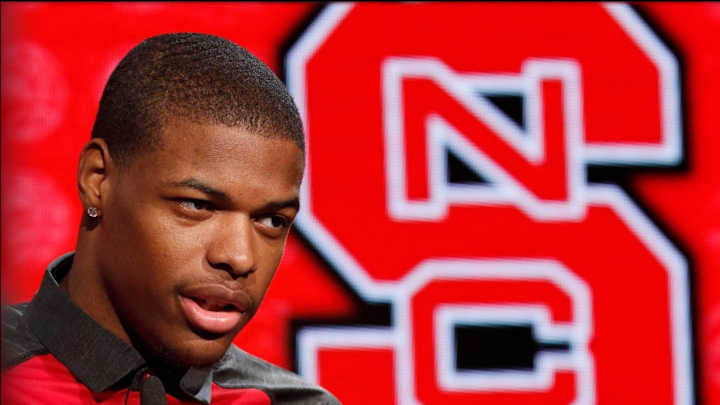
When NC State agreed last month to have its case involving the recruitment of former basketball star Dennis Smith Jr. decided by the new Independent Accountability Resolution Process rather than the NCAA's Committee on Infractions, it did so "reluctantly."
Thanks to Gregg Doyel of the Indianapolis Star, we now have a better understanding of why chancellor Randy Woodson and the rest of State's administration is so apprehensive about the new system.
The headline says it all:"NCAA's new independent infractions structure is complicated and terrifying."
One reason, according to Doyel's reporting, is that the process is far more complicated than many have been led to believe.
It's not just a situation in which the NCAA lays out its case, State presents its defense and a 15-member review board comprised of members not affiliated with any NCAA school or the organization’s enforcement staff decides what, if any, sanctions should be imposed.
Instead, a five-person Independent Accountability Oversight Committee appoints one or more independent investigators to "find and present the allegations" to the full IARP. And as Doyel -- who used to cover the ACC for the Charlotte Observer and other publications in North Carolina -- explains, the investigators aren't the type to play around.
"(They) come from one of three firms: Freeh Group International Solutions, run by former FBI director Louis Freeh; a Manhattan outfit called Kroll, once referred to in The New York Times as “Wall Street’s private eye;” and Berryman Prime LLC, founded by former U.S. Department of Treasury Special Agent Steven Berryman, who worked in the IRS Criminal Investigation Division.
"You want those folks searching your closets?
"Violations can be found at three different stops along the way, if the case is referred to the independent structure after starting in the established peer-review process, which includes the Notice of Allegations. That’s violation discovery No. 1. Once the case is referred into the IARP, investigators can find their own allegations. That’s No. 2. And then, once the case is presented to the IRP – the jury, basically – that five-person panel “may issue notice of additional allegations.”
"It’s not exactly triple jeopardy, but it’s triply terrifying: NCAA investigators can find what they find in the Notice of Allegations, and then the former head of the FBI is going to have a look. Just to make sure.
"And then, should a school be found in violation of NCAA rules by the IRP, it faces a tougher list of penalties in the new IARP structure than the peer model, though the enhanced penalties now apply to the peer model too."
What's worse, decisions issued through the IARP are final and are not subject to appeal or further review, even though State -- in its formal response to the NCAA -- stated that it “does not concede its substantive right to appeal."
The IARP was established in 2018 on the recommendation of a committee chaired by former U.S. Secretary of State Condaleeza Rice in order to handle complex cases.
State's case is the first to be addressed by the NCAA related to a federal corruption and fraud trial in New York involving Adidas operatives accused of funneling money to Smith and other top college recruits in exchange for attending schools affiliated with the shoe company.
State received an NCAA Notice of Allegations last July accusing then-coach Mark Gottfried and his program of two major violations in connection with the recruitment of Smith. The 2017 ACC Rookie of the Year, who played only one season for the Wolfpack, is alleged to have received $40,000 from former Adidas consultant Thomas “T.J.” Gassnola.
Former Wolfpack assistant Orlando Early was accused by the NCAA of being the middleman in the payment to Smith. Gottfried, who is now the coach at Cal State Northridge, was charged with a “failure to monitor” Early’s actions in Smith’s recruitment.
The case was originally scheduled to be heard by the NCAA's Committee on Infractions at some point this year, but was put into limbo when the governing body for college athletics suspended all its activity in March because of the coronavirus crisis.
As of now, there is no firm timetable for when a hearing might occur or a ruling will follow.
And that's actually the good news, such that it is, for State.
According to Doyel's story, the Wolfpack's case is not yet in the hands of the IARP -- even though both the school, though "reluctantly," and the NCAA have both agreed to the process. It turns out that the aforementioned five-member oversight committee must also agree to take on the case.
To this point, the only case it has formally accepted is the one involving Memphis and basketball star James Wiseman.
Whether State has to face the NCAA Committee on Infractions or the IARP, there's a good chance that its case will end up in court -- the kind with a judge and jury, rather than two baskets and a crowd in the stands.
And that means it won't be coming to a resolution anytime soon.
 Add us as a preferred source on Google