
Undrafted Wolfpack Players Have Options to Weigh
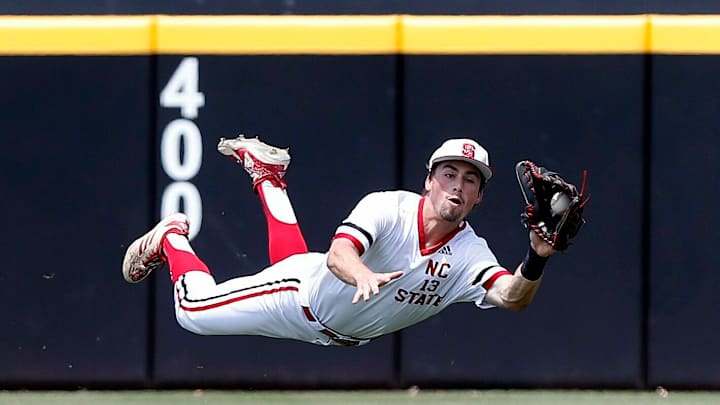
Tyler McDonough was ranked by MLB.com as the 150th ranked prospect available in this year's Major League Baseball draft.
Under normal circumstances, that would have landed him somewhere in the middle of the fifth round.
This year's draft, however, was anything but normal.
Shortened from the traditional 40 rounds to just five as a cost-cutting measure during the current coronavirus shutdown, the abbreviated nature of the event caused teams to change their strategies when it came to selecting prospects.
Factors such as signability became much more of a concern.
That's likely what kept McDonough from hearing his name called on Thursday.
The versatile Ohio native, who has played both infield and outfield for the Wolfpack after being recruited as a catcher, was eligible for the draft because he has already reached his 21st birthday. But because he is still only a sophomore with two more seasons of college eligibility remaining, he has the leverage to dictate the terms of any contract negotiation.
Rather than taking the risk of having him go back to school and losing out on one of their precious few picks, teams simply took a pass on those like him to make a "safer" pick.
The question now is whether McDonough actually decides to strengthen his future draft status by returning in 2021 or does he sign as an undrafted free agent for much less than he might have otherwise have gotten in an effort to get his professional career started?
It's a decision with which several of his teammates will also be faced over the next few days. It's a group that includes infielder/outfielder Devonte Brown, first baseman Austin Murr and outfielders Jonny Butler and Terrell Tatum, along with pitchers David Harrison, Kent Klyman, Reid Johnston and Dalton Feeney.
“No one knows what’s going to happen," State coach Elliott Avent said before the draft. “I try not to ask our players too many questions that I know they don’t have answers to. ... “It’s a decision they’ll have to base on where they’re at in their life."
Under the rules of this year's shortened draft, teams are able to sign as many eligible undrafted free agents as they'd like to fill out their organizations. The caveat is that they are only able to offer a maximum signing bonus of $20,000 per player.
To put that into perspective, Baseball America notes that the bonus for sixth round picks last year was between $237,000 and $301,600, and the last player selected in the 10th round got $142,000.
Teams are also prohibited from having any contact with undrafted players until 8 a.m. Sunday to give them and their families a few days to assess their options.
"A lot of really good players didn't get drafted," said San Francisco Giants general manager Farhan Zaidi, whose team took two Wolfpack players -- catcher Patrick Bailey and pitcher Nick Swiney -- in the first two rounds. "That's why I think there's value in the quiet period, because they can kind of think through whether they want to make themselves available to even consider signing with a team."
All players affected by the shortened 2020 season have been granted an extra year of eligibility by the NCAA.
It should be noted, however, that while the NCAA has lifted the 35-man roster limit for Division I baseball programs next season while while also waiving the 25-percent scholarship minimum, it stop short of increasing the number of scholarships programs can offer their players.
With less money to spread among more players, it could end up costing prospects more to stay in school than accepting less money to turn pro. This is especially true for those that have already finished their undergraduate degrees.
"The good news, I think for those players, is that they have options," Zaidi said. "It's a different kind of financial option, but it's still an option to enter pro ball if they're interested and if they're interested, they get to choose what team they're going to go to. These guys, for the most part, are going to have another year of college eligibility and a lot of them are part of great college programs. The dynamic is different.""
You can follow us for future coverage by clicking "Follow" on the top righthand corner of the page. Also be sure to like us on Facebook & Twitter:
Facebook -- ACC Insider
Twitter -- @WolfpackMaven and Brett Friedlander at @BFriedACC
 Add us as a preferred source on Google