
Tim Corbin’s Case for College Baseball
The elephant in the room hovering over every serious conversation about baseball is the looming expiration of Major League Baseball’s collective bargaining agreement, set to expire after the 2026 season. The league narrowly avoided disaster in 2022 when owners and the Players’ Union struck a last-minute deal that prevented a shortened season. Still, few would argue it solved the sport’s underlying problems. Instead, it merely delayed them.
As baseball once again inches closer to another labor crossroads, its future feels increasingly uncertain. At the center of this tension is the owners’ renewed pursuit of a salary cap, a system the union has long resisted despite every other major sport having a cap in place. Recent mega contracts — like the Los Angeles Dodgers signing Kyle Tucker and Shohei Ohtani and the New York Mets signing Juan Soto and Bo Bichette — have only amplified the concerns of small market owners. The Athletic’s Evan Drellich reported Tuesday that it’s a “100 percent certainty” owners will push for a cap after the Tucker signing.
A salary cap would almost certainly be paired with a salary floor, forcing small-market teams to invest more aggressively in their rosters. But while salary talks have dominated early discussions, the ripple effects of a new CBA extend far beyond major league payrolls and could reshape the relationship between college and professional baseball for the foreseeable future.
One increasingly common assumption among college coaches is that the MLB draft could shrink to as few as 10 rounds under the next labor agreement, according to Jacob Rudner of Baseball America. That possibility stems from the owners’ ongoing desire to slash lower levels of minor leagues, where profits are limited. With fewer affiliates to assign players to, organizations would have less room to absorb large draft classes. A version of this shift already occurred after the pandemic, when the draft length was cut in half from 40 rounds down to 20. Now, it appears another cut may be inevitable.
That change could have huge implications for college baseball. Fewer drafted players would mean more elite talent arriving — and staying — on college campuses, effectively positioning programs as a developmental bridge between high school and professional baseball.
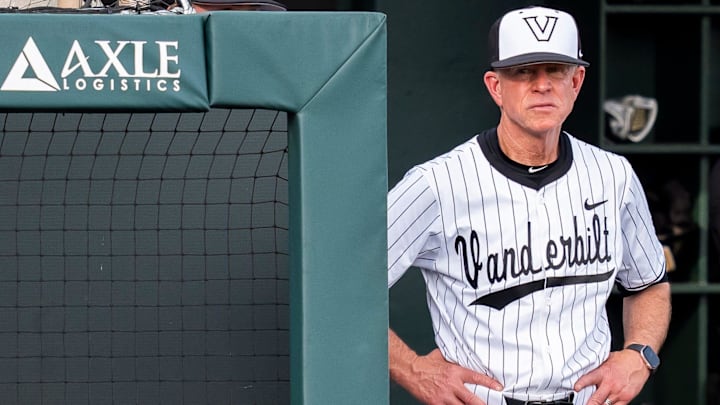
Few coaches have been more vocal about the value of collegiate baseball than Tim Corbin. The longtime head coach at Vanderbilt acknowledges his bias towards the collegiate environment, but firmly remains an outspoken supporter of its importance in an athlete’s development.
“I believe in education,” Corbin said Thursday. “I believe in the environment. And I’m not talking about Vanderbilt [specifically]. I feel like at 18 and 19, there’s certain consistencies that exist inside of a college environment that enhances the growth of athletic performance, and I'm a big believer in it.”
That environment has evolved rapidly in recent years, with many high-major college programs now operating with technology on par with — and in some cases exceeding — what’s available at lower-level minor league affiliates. Marquee Sports Network Analyst Lance Brozdowski recently coined the trend “development offloading,” with professional organizations becoming increasingly reliant on colleges to handle the early stages of a player’s development.
Recent results show it’s working. Rudner’s article highlights that from 2023-2025, 84 players made their major league debuts within two years of their draft season. In the eight seasons prior combined, only 87 players accomplished the same feat, a clear sign that college-developed players are reaching the majors faster than ever.
“The college game is all about winning,” Corbin said. “But the reality is, you have to develop in order to win. So winning is the outcome, but the process is development and I’m all about that.”
Vanderbilt fans understand the other side of the equation better than most. The Commodores routinely see their elite high school recruits bypass campus for professional contracts. In 2025, Vanderbilt’s top three commits in Seth Hernandez, Slater de Brun, and Sean Gamble were all selected in the draft’s first round and signed with their respective teams.
Overslot Baseball’s Joe Doyle went a step further than Rudner or Brozdowski, proposing Wednesday that high schoolers could eventually be removed from draft eligibility altogether, a change that would revolutionize amateur baseball.
“I want to get the 18-year-old,” Corbin said. “We’ve lost players this past year — Slater de Brun, Sean Gamble — and they’ve made that choice. Do I think they’d be better off [at Vanderbilt]? That’s their decision. But for me, I already know. I know what’s best for a young man and I feel very strongly about that.”
Corbin often refers to himself as a teacher rather than a coach, and he sees that role as essential at this stage of development. What once required a trade-off of education and personal growth for professional opportunity and financial flexibility, now no longer does. NIL deals — though typically smaller in baseball than in football or basketball — provide financial relief, while programs’ use of high-speed cameras and tracking technology like Trackman provide players all the information and tools they need to develop their game.
Regardless of the ultimate outcomes of the next labor agreement, college baseball isn’t going anywhere. For Tim Corbin and Vanderbilt Baseball, that reality only reinforces a belief he’s held for decades.
“I haven’t at any point wanted to make a move [to the pros],” Corbin said. “And that’s because I believe in this environment.”
 Add us as a preferred source on Google
Dylan Tovitz is a sophomore at Vanderbilt University, originally from Livingston, New Jersey. In addition to writing for Vanderbilt on SI, he serves as a deputy sports editor for the Vanderbilt Hustler and co-produces and hosts ‘Dores Unlocked, a weekly video show about Commodore sports. Outside the newsroom, he is a campus tour guide and an avid New York sports fan with a particular passion for baseball. He also enjoys listening to country and classic rock music and staying active through tennis and baseball.
Follow dtovitz