
Grading Virginia Tech Men's Basketball's 2026 Offseason
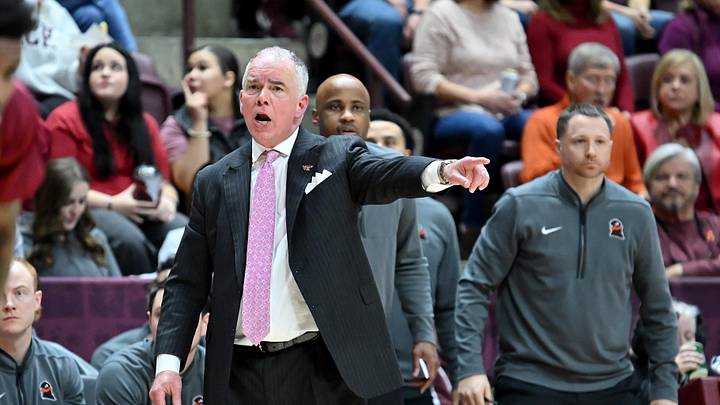
The numbers were right there. Virginia Tech lost seven ACC games by 10 or fewer points in 2025-26, including four by just one score. The Hokies built something, then watched it come apart in the margins, over and over, until a 95-89 overtime loss to Wake Forest in the first round of the ACC Tournament ended their NCAA Tournament hopes.
What followed was predictable and painful. Izaiah Pasha, Neoklis Avdalas, Christian Gurdak, Jaden Schutt, Antonio Dorn and Brett Freeman all entered the transfer portal. Tobi Lawal graduated. By the time the dust settled, Pasha landed at Duquesne, Avdalas at North Carolina and Schutt at Kansas State, with Gurdak heading to Rutgers and Dorn to Wake Forest.
Then, Virginia Tech head coach Mike Young got to work.
The foundation came first, and it was the most important move of the spring. Ben Hammond, who led the Hokies in ACC scoring at 14.9 points per game while ranking second in the league in steals at 2.0 per game, is back. So is Amani Hansberry, who averaged 14.3 points, 7.4 rebounds and 1.5 steals per game, and Tyler Johnson, who shot 53% from the field and 41.5% from three before a lower-body injury cut his season to 17 games. Retaining that trio gives Young something last year's rebuild never had at this stage: proven production already on the roster.
From there, Young added five transfers. Oklahoma forward Kuol Atak brings a 41.3% mark from three-point range and the kind of floor spacing the offense requires. Isaiah Elohim started all 33 games at Florida Atlantic, averaging 12.4 points and 4.2 rebounds while shooting 46.5% from the field, and arrives as the most impactful newcomer of the cycle. Jaylen Curry, who averaged 10.1 points and 3.5 assists at Oklahoma State, adds depth and defensive instincts to a backcourt that needed both. Miles Heide, a 6-foot-9 senior from San Diego State, fills the center void Gurdak left behind with his reliable interior presence. Elon's Ned Hull rounds out the class as a depth shooter.
Offseason grade: B. This was never going to match last year's haul in splash or volume, and it did not need to. Virginia Tech sits in a more stable position than it did at this point a year ago, with a core of returners that should prevent the team from revisiting the troughs of 2024-25. The frontcourt remains thin behind Hansberry and Heide, and landing one more interior piece would push this class meaningfully higher. But Young did what he needed to do: he kept the pieces that mattered and found real contributors to replace the ones he lost. For a program still searching for its first NCAA Tournament bid since 2022, that is a reasonable foundation to build on.
 Add us as a preferred source on Google
James Duncan serves as a staff writer for Virginia Tech On SI, covering football, men’s and women’s basketball and recruiting. He is a 2026 Virginia Tech graduate, having majored in Sports Media and Analytics with a minor in Professional and Technical Writing. Duncan previously covered the Washington Commanders as a reporter for The Lead, where he reported on the team throughout an offseason.