%22%3E%0A%3Cpath%20d%3D%22M0%204.9397H7.3484V12.6932H14.0649V4.9397H21.4133V26.912H14.0649V19.037H7.3484V26.912H0V4.9397Z%22%20fill%3D%22white%22%2F%3E%0A%3Cpath%20d%3D%22M23.6572%204H31.0299V8.55326H23.6572V4ZM23.7788%209.77664H30.9003V26.9121H23.7788V9.77664Z%22%20fill%3D%22white%22%2F%3E%0A%3Cpath%20d%3D%22M32.7241%2029.861L34.9197%2025.5589C36.8317%2026.5635%2038.7519%2027.1955%2041.1014%2027.1955C43.7669%2027.1955%2045.1848%2025.8101%2045.1848%2023.4281V22.9258C44.2125%2024.0276%2042.6084%2025.2834%2040.2264%2025.2834C35.8028%2025.2834%2032.6025%2022.1399%2032.6025%2017.4084V17.3436C32.6025%2012.5392%2035.8676%209.37134%2039.8213%209.37134C42.3329%209.37134%2043.8074%2010.3112%2045.0632%2011.5994V9.77643H52.1848V22.5855C52.1848%2025.7533%2051.5285%2027.9246%2049.9568%2029.4883C48.4174%2031.0277%2046.0679%2031.9999%2042.2357%2031.9999C38.4035%2031.9999%2035.4868%2031.2464%2032.7241%2029.8691V29.861ZM45.2172%2017.3679V17.3031C45.2172%2015.8285%2044.091%2014.6376%2042.3572%2014.6376C40.6234%2014.6376%2039.4972%2015.8609%2039.4972%2017.3679V17.4327C39.4972%2018.9073%2040.6234%2020.0658%2042.3572%2020.0658C44.091%2020.0658%2045.2172%2018.8748%2045.2172%2017.3679Z%22%20fill%3D%22white%22%2F%3E%0A%3Cpath%20d%3D%22M54.3145%204H61.436V12.0695C62.5379%2010.6597%2064.2636%209.37155%2066.6779%209.37155C70.2914%209.37155%2072.5437%2011.7535%2072.5437%2015.6181V26.9202H65.4221V17.9109C65.4221%2016.4364%2064.5471%2015.5857%2063.4777%2015.5857C62.4082%2015.5857%2061.436%2016.4364%2061.436%2017.9109V26.9202H54.3145V4Z%22%20fill%3D%22white%22%2F%3E%0A%3Cpath%20d%3D%22M80.8983%2023.6146L84.8196%2018.9398C87.2016%2020.7627%2089.9319%2021.5162%2092.5083%2021.5162C93.8289%2021.5162%2094.388%2021.1678%2094.388%2020.5764V20.5116C94.388%2019.8796%2093.6993%2019.5393%2091.3417%2019.0694C86.4157%2018.0648%2082.0812%2016.6551%2082.0812%2012.0046V11.9398C82.0812%207.76732%2085.3463%204.53467%2091.4065%204.53467C95.6437%204.53467%2098.7792%205.5393%20101.323%207.54857L97.7421%2012.5069C95.6681%2011%2093.1889%2010.3437%2091.1472%2010.3437C90.0454%2010.3437%2089.543%2010.7245%2089.543%2011.2511V11.3159C89.543%2011.9155%2090.1426%2012.2882%2092.4597%2012.7257C98.0743%2013.7627%20101.842%2015.3912%20101.842%2019.8148V19.8796C101.842%2024.4977%2098.0419%2027.3172%2092.1437%2027.3172C87.6877%2027.3172%2083.6692%2026.0614%2080.874%2023.6146H80.8983Z%22%20fill%3D%22white%22%2F%3E%0A%3Cpath%20d%3D%22M102.838%2018.4374V18.3726C102.838%2013.5682%20106.605%209.39575%20112.187%209.39575C115.955%209.39575%20118.62%2011.3402%20119.941%2014.1354L114.829%2017.0196C114.229%2015.9178%20113.476%2015.2939%20112.317%2015.2939C110.81%2015.2939%20109.684%2016.6145%20109.684%2018.3078V18.3726C109.684%2020.1631%20110.81%2021.4513%20112.228%2021.4513C113.484%2021.4513%20114.205%2020.8194%20114.893%2019.7256L120.071%2022.6747C118.531%2025.5347%20115.931%2027.3495%20111.847%2027.3495C106.638%2027.3495%20102.838%2023.2338%20102.838%2018.4374Z%22%20fill%3D%22white%22%2F%3E%0A%3Cpath%20d%3D%22M121.164%204H128.286V12.0695C129.387%2010.6597%20131.113%209.37155%20133.528%209.37155C137.141%209.37155%20139.393%2011.7535%20139.393%2015.6181V26.9202H132.272V17.9109C132.272%2016.4364%20131.397%2015.5857%20130.327%2015.5857C129.258%2015.5857%20128.286%2016.4364%20128.286%2017.9109V26.9202H121.164V4Z%22%20fill%3D%22white%22%2F%3E%0A%3Cpath%20d%3D%22M140.867%2018.405V18.3402C140.867%2013.5033%20144.886%209.36328%20150.533%209.36328C156.18%209.36328%20160.142%2013.4466%20160.142%2018.2753V18.3402C160.142%2023.177%20156.123%2027.317%20150.476%2027.317C144.829%2027.317%20140.867%2023.2337%20140.867%2018.405ZM153.295%2018.405V18.3402C153.295%2016.6469%20152.04%2015.2939%20150.468%2015.2939C148.896%2015.2939%20147.705%2016.6469%20147.705%2018.2753V18.3402C147.705%2020.0335%20148.961%2021.3865%20150.533%2021.3865C152.104%2021.3865%20153.295%2020.0335%20153.295%2018.405Z%22%20fill%3D%22white%22%2F%3E%0A%3Cpath%20d%3D%22M161.203%2018.405V18.3402C161.203%2013.5033%20165.222%209.36328%20170.869%209.36328C176.516%209.36328%20180.477%2013.4466%20180.477%2018.2753V18.3402C180.477%2023.177%20176.459%2027.317%20170.812%2027.317C165.165%2027.317%20161.203%2023.2337%20161.203%2018.405ZM173.631%2018.405V18.3402C173.631%2016.6469%20172.376%2015.2939%20170.804%2015.2939C169.232%2015.2939%20168.041%2016.6469%20168.041%2018.2753V18.3402C168.041%2020.0335%20169.297%2021.3865%20170.869%2021.3865C172.44%2021.3865%20173.631%2020.0335%20173.631%2018.405Z%22%20fill%3D%22white%22%2F%3E%0A%3Cpath%20d%3D%22M182.139%204H189.26V26.9121H182.139V4Z%22%20fill%3D%22white%22%2F%3E%0A%3Cpath%20fill-rule%3D%22evenodd%22%20clip-rule%3D%22evenodd%22%20d%3D%22M199.368%204.36764C205.191%20-1.45588%20214.632%20-1.45588%20220.456%204.36764C226.279%2010.1912%20226.279%2019.6324%20220.456%2025.4559L209.912%2036L199.368%2025.4559C193.544%2019.6324%20193.544%2010.1912%20199.368%204.36764ZM202.009%207.55761C201.948%207.86849%20201.916%208.39718%20201.916%209.14566V10.4189C201.916%2011.1832%20201.948%2011.7198%20202.013%2012.0267C202.078%2012.3317%20202.278%2012.6168%20202.617%2012.8762C202.956%2013.1376%20203.403%2013.3316%20203.958%2013.4623C204.512%2013.593%20205.1%2013.6583%20205.837%2013.6583C206.573%2013.6583%20207.217%2013.591%20207.769%2013.4524C208.322%2013.3158%20208.761%2013.1178%20209.086%2012.8604C209.411%2012.6029%20209.605%2012.3178%20209.666%2012.0069C209.728%2011.6961%20209.759%2011.1674%20209.759%2010.4189V9.14566C209.759%208.38134%20209.728%207.84473%20209.662%207.53781C209.597%207.23287%20209.397%206.94972%20209.058%206.68834C208.72%206.42696%20208.272%206.23291%20207.718%206.10223C207.163%205.97154%20206.536%205.90619%20205.839%205.90619C205.102%205.90619%20204.459%205.97352%20203.906%206.11213C203.352%206.24875%20202.914%206.44677%20202.589%206.70418C202.265%206.9616%20202.071%207.24673%20202.009%207.55761ZM207.276%2024.8638C210.876%2024.8638%20212.557%2024.2064%20212.557%2021.862V21.858V21.3155C212.557%2019.6581%20211.516%2018.971%20208.252%2018.3136C207.278%2018.1136%20206.908%2017.9136%20206.908%2017.3136V16.9414C206.908%2016.6543%20207.177%2016.5117%20207.413%2016.5117C207.749%2016.5117%20207.918%2016.7137%20207.918%2016.9414V18.1136H212.391V17.3988C212.391%2015.4563%20211.347%2014.4266%20207.177%2014.4266C204.15%2014.4266%20201.896%2015.3414%20201.896%2017.3711V17.7433C201.896%2019.5155%20202.805%2020.3155%20206.201%2021.0303C206.28%2021.0472%20206.355%2021.063%20206.427%2021.0781C207.329%2021.2674%20207.647%2021.3341%20207.647%2021.9174V22.2897C207.647%2022.6619%20207.546%2022.8045%20207.142%2022.8045C206.67%2022.8045%20206.637%2022.5471%20206.637%2022.262V21.2897H201.894V21.7471C201.894%2024.149%20203.476%2024.8638%20207.276%2024.8638ZM213.424%2024.5569H217.925V14.7355H213.424V24.5569ZM214.955%2013.5019H217.925V6.06064H215.092V9.411L213.193%206.06064H210.359V13.5019H213.193V10.1199L214.955%2013.5019ZM206.269%2012.152C206.204%2012.2688%20206.055%2012.3262%20205.825%2012.3262L205.827%2012.3282C205.604%2012.3282%20205.459%2012.2767%20205.398%2012.1757C205.336%2012.0748%20205.305%2011.8074%20205.305%2011.3758V7.90068C205.305%207.51852%20205.352%207.28684%20205.445%207.20962C205.538%207.13239%20205.675%207.09279%20205.851%207.09279C206.059%207.09279%20206.198%207.14031%20206.265%207.23734C206.332%207.33239%20206.366%207.55416%20206.366%207.90068V11.3203C206.366%2011.7579%20206.334%2012.0352%20206.269%2012.152Z%22%20fill%3D%22white%22%2F%3E%0A%3C%2Fg%3E%0A%3Cdefs%3E%0A%3CclipPath%20id%3D%22clip0_15247_3714%22%3E%0A%3Crect%20width%3D%22225%22%20height%3D%2236%22%20fill%3D%22white%22%2F%3E%0A%3C%2FclipPath%3E%0A%3C%2Fdefs%3E%0A%3C%2Fsvg%3E%0A)
Why Two Former Elite Basketball Recruits Are Still Fighting the NCAA for Eligibility
This is the next installment of our continuing series on Northern Virginia’s Gillion Academy, which is among the country’s premiere national high school basketball programs in only its first year of existence.
Earlier pieces in the series included a feature on "Gentle Giant" Marcis Ponder, a profile on Mississippi State commit Willie Burnett III, a story on sophomore guard Aaron Bryant, a look Inside Gillion’s Grind Session Run and how Brionne Gillion’s entrepreneurial drive and family roots helped build one of Florida’s most influential high school basketball platforms.
From Team Breakdown to Business Expansion
When he began scouring the Dominican Republic for talented players, Brionne Gillion quickly discovered an unexpected business opportunity.
One of Team Breakdown’s permanent budgetary items was an allocation for game uniforms and practice gear. He and his brothers had long insisted on the highest quality fabrics for their branded apparel. They invested heavily in fielding squads that not only dominated, but looked good doing it.
During his travels, Brionne met someone who owned a fabric and textile factory. After crunching the numbers, he found that he could purchase Breakdown’s same quality uniforms, jackets, polo shirts, sweatsuits and other team swag on the island at a fraction of the cost they were spending stateside.
“I wound up partnering with him and that’s how I got into the athletic apparel business,” said Brionne. “Within a year and a half, we were selling football and basketball uniforms up and down the eastern seaboard to high schools and club teams from Baltimore to Miami.”
And with Brionne’s infusion of hustle, they soon reached capacity and moved the company’s base of operations from its previous home in Santiago de los Caballeros, a center for the island’s production and export of rum, cigars and textiles in the fertile terrain of the Cibao Valley.
The enterprise relocated to a larger factory three hours southeast in the industrial district of San Pedro de Marcoris – better known for producing baseball legends like Sammy Sosa, Alfonso Soriano and Fernando Tatis Jr. – while growing from 20 employees to over 200.
As his portfolio expanded, so did his net worth. But the daily routine of running a factory bored him.
Building a Brand in the Dominican Republic
On weekends, he’d take long drives to Playa Sosua, a stunning, tourist-friendly, crescent-shaped cove on the island’s northern coast with powdery white sand beaches and a pulsating club and entertainment scene.
While visiting the area, Brionne sensed other profitable prospects that could provide an outlet from the mundane daily routine of running a factory.
He conceived of an event called the Dominican Beach Fest, reaching into his network of popular NFL and NBA players to help promote a weekend-long party aimed at young black professionals and college kids with disposable income.
100 local rooms were rented for that initial Friday through Sunday. On ensuing weekends, that number quickly ballooned to 400.
When he learned that The Victorian House, one of the main hotels that accommodated his guests, would soon be closing, he approached its ownership about renting the property.
“I didn’t know anything about the hotel business, but I knew firsthand about the thousands of people that travel to Howard University Homecomings, the CIAA Basketball Tournament, Atlanta’s Freaknic, the Black Biker weekend in Myrtle Beach and others,” said Brionne. “So I started doing the Dominican Beach Fest regularly. It was all about the party. I started an entire movement that later came to be known as the ‘Passport Bros.’”
He leased the Victorian for three years, then spent $2 million in 2016 to purchase and renovate his own property a quarter of a mile down the road that he named Ahnvee Resort.

“This year, it was appraised at $14 million,” said Brionne, who also invested in restaurants and nightlife ventures.
While continuing to expand his holdings in the Dominican Republic, he remained connected to his brothers, and was an integral component in Team Breakdown’s success over the years, providing an infusion of elite players, capital, advice, visionary thinking and a blueprint for future moves.
“Any really good Dominican player, we had an in on,” said Kenny Gillion. “The Dominican national team currently has four players that played with Breakdown.”
The Gillion Brothers’ Growing Basketball Influence
During Brionne’s time in the Caribbean, his brothers were building their own stellar reputations in the fields of education and high school coaching.
Gerald Gillion became the head coach of Northeast High School in Oakland Park, Florida in 2008, a program that had gone 10-87 during the previous four seasons. He proceeded to lead them to 20 wins and a district title in his first year.
In 2013, he was hired as the Director of Basketball Operations at Florida International University and then joined head coach Orlando Antigua’s staff at the University of South Florida a year later.
At South Florida, Gerald became close with another assistant, legendary New York City, college basketball and NBA point guard Rod Strickland, who’d previously worked alongside Antigua when both were assistants under John Calipari at the University of Kentucky.
“Gerald was the youngest guy on staff, but he had a lot of knowledge around the college and AAU space,” said Strickland, the current head coach at Long Island University. “He was smart and knew what he was doing. I don’t lock into people easily, but I locked into him immediately. I started to meet his brothers and wound up having my sons Ty and Terrell play for them with Team Breakdown.”
“As I got to know Kenny, Brionne, Darrance and Zach, their dynamic was pretty powerful,” Strickland continued. “Watching them coach my sons, I could see how passionate and knowledgeable they were. They were bright and had this exceptional positive energy. I respected them from a basketball perspective and also had the utmost respect for them as people.”
Gerald stepped back from the college ranks to return to Northeast High School as a teacher and coach in 2017, with brothers Zach and Darrance, both educators and school administrators, assisting him.
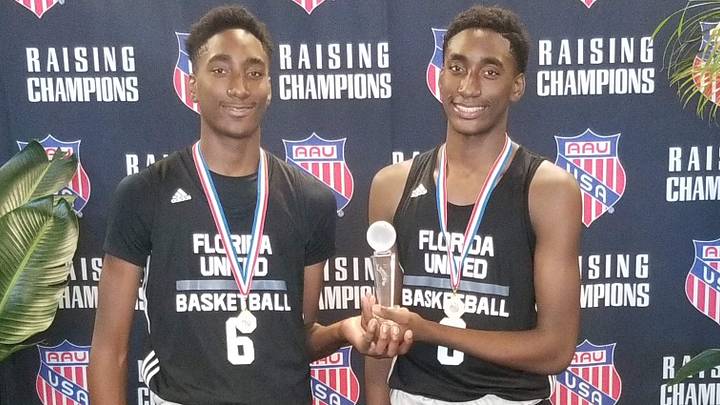
It was there, at Northeast High, where the Gillion Brothers would begin working with two of the hottest young prospects in the state of Florida, Ryan and Matthew Bewley, more popularly known as the Bewley twins.
Enter the Bewley Twins
Growing up, Ryan and Matthew didn’t need to look far for role models that channeled ambition and discipline. Their parents were both Jamaican immigrants who’d relocated to Florida after getting their first taste of America as teenagers in New York City, Brooklyn and The Bronx respectively.
Their mom, Marlene, specialized in post-partum nursing at Boca Regional Hospital while their father, Prince, worked in construction.
“The boys were rambunctious and energetic from day one, so we put them in karate to channel that energy when they were in the third grade,” said Marlene. “By the time they got to the fifth grade, they were 6 feet tall.”
A ruthless competitiveness was evident from the moment the family installed a hoop in their front yard.
“They broke every rim and backboard we put out there,” said Prince. “That’s when we took them to the local recreation center.”
Shortly thereafter, the phone calls started multiplying, as did the number of strangers that approached about the boys joining numerous AAU teams.
Ryan’s passion for the game surfaced right away.
“Every Wednesday, after family bible study, we’d watch the Miami Heat games,” said Ryan. “I was just starting to learn about the game, but watching those teams with LeBron, Chris Bosh, D Wade, Shane Battier and Michael Beasely, I felt like I was watching something special.”
His brother wasn’t as enthusiastic early on.
“I didn’t like basketball at first,” said Matthew. “I wanted to play football. I was tall, really fast and thought I could have been an excellent wide receiver.”
Their dad was a former football player at Mt. San Jacinto College in California and entertained thoughts, when the boys were little, of them following in his athletic footsteps.
“But they were so tall and lanky and couldn’t put on any weight,” said Prince. “The pediatricians were saying that they were going to be at least 6-foot-9. They were skinny and kept growing. I was afraid they’d get broken up. There aren’t any skinny 6-foot-9 guys in the NFL.”
How the Gillion Brothers Shaped Their Development
As 6-foot-5 eighth graders, the Bewleys got their first exposure to the Gillion Brothers when they participated in their Battle of the Rankings camp early in 2019. By March they were traveling with Team Breakdown and received their first scholarship offers to Iowa State.
“That’s when we sent them to Northeast High School for their freshman year to play for Gerald, Zach and Darrance,” said Marlene. “They were not only coaches, they were also passionate educators. That was important to me. And with their dad and I both working full-time jobs, they provided everything we needed year-round - from high school and AAU basketball to top-level training, individual and team workouts, and mentoring.”
When the COVID-19 pandemic hit as they approached their sophomore year, most prep sports in Florida came to a standstill.
An exception was West Oaks Academy, the private school in Orlando coached by Kenny Gillion, who was also a faculty member in the school’s history department.
West Oaks played a national schedule on the elite Grind Session circuit and was renowned for its development of elite talent.
“The Gillions are similar to our parents in that they pushed us without making it feel like they were pushing us,” said Matthew. “They challenged and supported us and were always honest. The interesting thing about them is that they all have different personalities. Kenny is different from Darrance, who’s different from Brionne and Gerald. But they all mesh together into this dynamic force. They were great for Ryan and me.”
While others showered the Bewleys with praise centering on how good they were, the Gillions focused on what they needed to work on to improve their deficiencies. High expectations were placed on what they could achieve. They made it clear that if the Bewley twins were willing to put in the necessary work, it would be a long-term process. And they promised to be there, right along with them, every step of the way.
“The Gillions had a vision about our potential and were going to put things in place to make sure that we would be successful,” said Ryan.
Shining on the Grind Session’s national stage at West Oaks against some of the top competition in the country, ESPN ranked Matthew as the top overall power forward prospect in the Class of 2023.
Ryan, a versatile, mobile wing who was adept facing the basket with a soft shooting touch, was also slotted among the nation’s best.
Midway through their sophomore campaign at West Oaks, the twins held offers from the University of Florida, Miami, Alabama, Florida State, Illinois, DePaul, South Florida and Virginia Tech, among others.
That’s when Overtime Elite came calling.
Overtime Elite Changes the Landscape
Overtime Elite (OTE) was founded in 2021 by Overtime, a digital sports media company whose hoops content and highlight clips generated millions of social media views.
OTE was positioned as a direct alternative to both the NBA G League and college basketball, allowing the most talented players to be compensated while still in high school.
Their concept was to recruit elite prospects, pay and develop them in a professional environment, and package them as content for Overtime's massive social media platform while preparing them for the NBA draft. They aimed to attract the best high school players by exploiting the fact that the NCAA had previously not allowed players to receive salaries and any NIL compensation.
Operating out of a state-of-the-art facility in Atlanta, the OTE staff was led by their director of basketball development Kevin Ollie, who’d previously led his alma mater UCONN to an NCAA championship as their head coach in 2014. Top-notch sports science, nutrition, and a rigorous academic curriculum that awarded an accredited diploma were also offered under the umbrella.
In its inaugural 2021–22 season, when the Bewleys signed, every player received healthcare and a base salary of at least $100,000 per year, plus bonuses, apparel royalties, group licensing income and equity in Overtime itself.
“OTE had everything we wanted, from academics to nutrition to high-level training,” said Matthew. “They were recruiting the best players that we’d have a chance to compete with every day.”
On May 21, 2021, Matthew and Ryan signed their contracts with OTE. But the transition wasn’t easy.
“I was homesick,” said Ryan. “Covid was still going in. And we were missing our dad’s jerk chicken with rice and peas.”
But from a basketball perspective, the experience exceeded their expectations.
“All of the coaches had been in the NBA at some level,” said Matthew. “We were playing with and against other OTE guys like Rob Dillingham and the Thompson twins, Amen and Ausar. We were also competing against some of the top prep teams and players in the country like Bronnie James and the Boozer twins.”
Amen and Ausar Thompson became the poster boys for OTE when they catapulted straight into the 2023 NBA Draft lottery headlined by French prodigy Victor Wembanyama, the top overall pick by the San Antonio Spurs. Amen was selected fourth by the Houston Rockets, with Ausar taken next by the Detroit Pistons with the fifth pick.
But they were outliers. No other OTE players were ready for that significant jump.
“After our second year at Overtime Elite, our thought was that we wanted to play college basketball,” said Matthew.
After all, their OTE teammate Rob Dillingham had signed with the University of Kentucky, where he’d eventually spend one season before being taken with the eighth overall pick in the 2024 NBA Draft. Another player, Kanaan Carlyle, was off to Stanford. He later transferred to Indiana and will be a senior at Florida Atlantic next season.
But there was one significant difference in the contracts signed by the Bewleys and by players like Dillingham and Carlyle, who joined the OTE program a year after the initial group that launched it.
The NCAA Eligibility Fight
The NCAA instituted an interim NIL policy to address players being allowed to financially benefit from their name, image and likeness on July 1, 2021. That was weeks before the Bewleys began their formal OTE participation in September of 2021.
A year after the Bewleys came to OTE, Dillingham arrived. And the language of his contract had been altered, along with every player who has played there since.
Dillingham’s contract included a NIL agreement under a revised scholarship model. Those updated agreements covered the same ground that Matthew and Ryan’s did under the contractual topics of Reality Content, Player Attributes and Group Licensing Structures.
In short, while the NCAA was in the process of figuring out how to classify its new NIL model as OTE initially sought to exploit that loophole, the Bewleys and other players who came in that first season, that weren’t ready to jump directly to the NBA, believe the rules changed around them.
That became evident when Dillingham and others were cleared by the NCAA because their deals were labeled as “scholarships” rather than a salary, despite the fact that their NIL rights were monetized through the same channels.
The Bewleys and players that came later like Dillingham both signed NIL licensing agreements with the same entity, OTE LLC, for the same media platforms, covering the same categories of Player Brand Materials. The Group Licensing Agreement that governed their group merchandising was the exact same document.
An Amazon Prime documentary was produced and packaged that featured all of them. The Sponsorship and Endorsement Policy restricted and permitted the same categories for all of them. The only difference in NIL activity was the label OTE attached to the cash component. The NCAA's published bylaws do not mention this label distinction anywhere.
Had the Bewleys signed their OTE paperwork a year later, they’d be playing Division I college basketball right now.
“We went through the NCAA to get cleared and they denied me and Ryan,” said Matthew. “We were confused because Dillingham went to Kentucky and other guys were being allowed to go to college.”
Chicago State and the Search for Stability
Their confusion back then was understandable. While the NCAA dragged out their process, the Bewleys enrolled at Chicago State, where Gerald Gillion had recently been named head coach. Zach Gillion was also on his brother’s staff as an assistant.
The Bewleys assumed it was only a matter of time before they gained their eligibility.
“Some people asked, given the number of large profile of schools and major college programs that had extended scholarship offers, why we chose Chicago State,” said Marlene. “With all that was going on, it came down to being with family. We consider the Gillions family. And we didn’t have to worry about our boys’ best interests being taken into consideration, especially with all of the uncertainty surrounding the situation with the NCAA.”

Ryan and Matthew enrolled in classes, practiced and participated in on-campus team activities. But they weren’t allowed to travel or play in any games because the NCAA deemed them athletically ineligible.
“Our parents always stressed that education comes first, so we were taking classes and accumulating credits,” said Ryan. “Even though we weren’t allowed to play, we stayed there two semesters holding out hope that the process would eventually work itself out.”
After sitting out a full year, their parents decided to bring them back to Florida.
“There was a physical toll from the boys not being able to compete, which was detrimental to their development,” said Marlene. “And there was a psychological toll as well.”
So the Bewleys went the JUCO route and enrolled at Daytona State Community College, a program led by one of their former Team Breakdown coaches which was not under the purview of the NCAA.
There they could train, practice and compete for the team while still fighting to figure out how they could eventually gain what their attorneys argue is fair and equitable, their NCAA athletic eligibility.
For the last two seasons, they've starred at the junior college level as the NCAA’s NIL landscape continues to evolve. The Bewleys have seen numerous players who have been drafted by the NBA, who’ve played as professionals both overseas and in the NBA G League, being granted opportunities to play Division I basketball.
Just last week, LSU agreed to a $5 million deal with 25-year-old former NBA Draft pick Yam Madar. In addition, former Overtime Elite guard TJ Clark, a 6-foot-3, 22-year-old who has played in the G League and as a pro in Mexico with Rayos de Hermosillo, recently decommitted from Ole Miss and has re-opened his college recruitment.
Madar, a 6-foot-3 Israeli point guard, has been playing professionally in Serbia, Turkey, Germany and Israel since 2018, most recently with Hapoel Tel Aviv.
With the landscape, rules, regulations and NCAA bylaws seemingly changing by the day, the Bewleys are left wondering why so many former pros are being granted college eligibility while theirs has been denied.
The fact that the NCAA continues to assert that they lost their eligibility when they signed deals that weren’t characterized as scholarships appears increasingly inconsistent in the current NIL landscape.
“The Gillions approached us recently asking if we’d like to take another crack at this again, because a lot has changed,” said Marlene.
The Bewleys were recently granted a temporary restraining order against the NCAA in federal court, which will allow them to enroll in classes and participate in team activities while the legal proceedings play out.
They’re operating on a sense of faith in the unseen that a judge will ultimately rule in their favor, allowing them to finally play Division I college basketball.
Why the Bewleys Chose LIU
So where did they decide to enroll?
Long Island University in Brooklyn, New York.
The parallels of their parents beginning their own American dreams in New York City years ago are poetical. But poetry aside, LIU had an advantage that others didn’t.
As Detective Lester Freamon said in his classic line from the remarkable HBO series The Wire, “All the pieces matter.”
When Rod Strickland became LIU’s head coach three years ago, he brought Gerald Gillion, whom he’d worked with at the University of South Florida, along as one of his top assistants.
When Gerald left to become an assistant at Florida State after the 2024-2025 season under their new head coach Luke Loucks, a former Team Breakdown player, he refused to leave Strickland empty-handed.

He called Brionne, who was on a sabbatical of sorts as the Ahnvee Resort in the Dominican Republic was undergoing a major renovation.
“Bri, I want to go with Luke back to Tallahassee, but Rod and I have something special going on here,” Gerald told his big brother. “Come here for a year or two while the hotel is being renovated and help him out.”
The timing worked out for Brionne.
“The renovations to the resort were a slow roll, and I was considering selling it and cashing out,” said Brionne. “Coming to LIU to work with Rod gave me the time that I needed to think.”
Strickland was also appreciative of the move, saying, “Gerald and I were tight, but when he left to go to Florida State, I knew I had another Gillion coming in, a solid brother who would always speak his mind, who’s locked in and passionate about helping kids. Any Gillion brother you get is going to be exactly that.”
The Bewleys, despite the twists and turns, believe things happen for a reason. They’re grounded in faith and the uniqueness of their journey.
“Through all of this, we’re firm believers in the process that we’ve had to go through,” said Ryan. “In the Bible, Job had many things taken away from him. But when he got them back they multiplied. This experience has allowed us to build ourselves mentally into new, better men.”
“The person who loves walking walks farther than the person that simply loves the destination,” added Matthew. “To many, our path hasn’t been ideal. People often ask why when they look at our decisions to go to Chicago State, junior college and now LIU. We’re loyal. We believe no matter what, we’re putting ourselves in position to be successful. And we trust in family.”
Another Gillion Project Takes Shape
While Gerald was helping head coach Rod Strickland build the foundation at LIU, and when Brionne later took his brother’s place to help the program earn its first NCAA Tournament berth in 2026 for the first time in eight years, another Gillion basketball venture was beginning to take shape.
Darrance Gillion had relocated to Northern Virginia a few years prior when his wife, an attorney with the U.S. Coast Guard, accepted an assignment on Capitol Hill.
A teacher in both public and private school settings, Darrance had a vision for a different type of private school, one that would encompass advanced academics combined with an elite, national level prep basketball program.
But in order to bring that idea to fruition, he would need the help and support of his brothers.
To be continued…
 Add us as a preferred source on Google
Alejandro Danois is a freelance sports writer, documentary film producer and the author of the critically acclaimed book The Boys of Dunbar: A Story of Love, Hope and Basketball. His feature stories have been published by The New York Times, ESPN, Bleacher Report, The Baltimore Sun, Ebony Magazine, The Los Angeles Times, Sporting News and SLAM Magazine, The Baltimore Banner and the Naismith Memorial Basketball Hall of Fame, among others. He began writing for High School On SI in 2024.
Follow alidanois