%22%3E%0A%3Cpath%20d%3D%22M0%205.37646H8.15061L17.4195%2016.8819V5.37646H26.0647V31.4412H18.3227L8.64523%2019.4196V31.4412H0V5.37646Z%22%20fill%3D%22white%22%2F%3E%0A%3Cpath%20d%3D%22M29.2041%205.37649H43.8064C47.4193%205.37649%2049.6989%206.1937%2051.2258%207.72059C52.1505%208.64533%2052.8172%2010.0002%2052.8172%2011.7851V11.8497C52.8172%2014.9465%2050.9462%2016.8389%2048.172%2017.8067C51.5269%2018.7744%2053.6774%2020.5594%2053.6774%2024.1293V24.1938C53.6774%2028.3659%2050.258%2031.4197%2043.6558%2031.4197H29.2041V5.35498V5.37649ZM44.258%2013.7637C44.258%2012.6024%2043.3333%2011.9787%2041.4623%2011.9787H37.6988V15.6346H41.5053C43.3763%2015.6346%2044.258%2015.011%2044.258%2013.8497V13.7852V13.7637ZM42.0859%2020.9895H37.6988V24.8605H42.0644C43.9569%2024.8605%2044.9247%2024.0863%2044.9247%2022.968V22.9035C44.9247%2021.7852%2043.9999%2021.011%2042.0859%2021.011V20.9895Z%22%20fill%3D%22white%22%2F%3E%0A%3Cpath%20d%3D%22M64.8174%205.18286H73.4627L84.452%2031.4411H74.9896L73.6132%2027.9357H64.4949L63.1615%2031.4411H53.8496L64.8389%205.18286H64.8174ZM71.4412%2021.7636L69.054%2015.441L66.6669%2021.7636H71.4412Z%22%20fill%3D%22white%22%2F%3E%0A%3Cpath%20d%3D%22M95.2695%205.37646H105.248C115.592%205.37646%20120.775%2010.4733%20120.775%2018.1938V18.2583C120.775%2025.9788%20115.485%2031.4412%20104.947%2031.4412H95.2695V5.37646ZM104.001%2012.9679V23.8497H105.463C109.442%2023.8497%20112.022%2022.2153%20112.022%2018.4518V18.3873C112.022%2014.6239%20109.463%2012.9894%20105.463%2012.9894H104.001V12.9679Z%22%20fill%3D%22white%22%2F%3E%0A%3Cpath%20d%3D%22M123.098%2011.1182H131.549V15.2258C132.711%2012.4731%20134.56%2010.6881%20137.915%2010.8387V19.8065H137.012C133.442%2019.8065%20131.528%2021.785%20131.528%2026.2797V31.4625H123.076V11.1182H123.098Z%22%20fill%3D%22white%22%2F%3E%0A%3Cpath%20d%3D%22M137.808%2025.6772V25.6127C137.808%2021.5482%20140.818%2019.2901%20145.55%2019.2901C147.27%2019.2901%20149.464%2019.6557%20150.345%2020.0428V19.6987C150.345%2017.8277%20149.184%2016.7524%20146.582%2016.7524C144.496%2016.7524%20142.754%2017.204%20140.969%2017.9137L139.485%2012.3008C141.829%2011.3975%20144.517%2010.8169%20148.044%2010.8169C152.173%2010.8169%20154.862%2011.6771%20156.646%2013.4621C158.173%2014.989%20158.776%2016.9675%20158.776%2019.9137V31.5052H150.324V29.4622C148.904%2030.9891%20147.012%2031.9999%20144.474%2031.9999C140.56%2031.9999%20137.808%2029.7633%20137.808%2025.7417V25.6772ZM150.431%2023.9138V23.0536C149.937%2022.86%20149.206%2022.7095%20148.496%2022.7095C146.818%2022.7095%20145.894%2023.7202%20145.894%2024.9891V25.0536C145.894%2026.2364%20146.754%2027.0321%20147.829%2027.0321C149.313%2027.0321%20150.431%2025.8493%20150.431%2023.9138Z%22%20fill%3D%22white%22%2F%3E%0A%3Cpath%20d%3D%22M162.883%2017.6345H160.496V11.1183H162.883C162.926%208.96778%20163.442%207.20433%20164.711%205.9355C166.088%204.55915%20167.872%204%20170.668%204C173.163%204%20174.69%204.21506%20175.851%204.55914V9.84951C175.034%209.65596%20174.217%209.54843%20173.141%209.54843C171.83%209.54843%20171.163%2010.0646%20171.163%2011.1829V11.3334H175.851V17.6345H171.335V31.4411H162.883V17.6345Z%22%20fill%3D%22white%22%2F%3E%0A%3Cpath%20d%3D%22M178.883%2024.6238V17.613H176.496V11.0968H178.883V6H187.335V11.0968H192.023V17.613H187.335V22.7528C187.335%2024.2797%20188.045%2024.8389%20189.378%2024.8389C190.152%2024.8389%20191.055%2024.6238%20191.937%2024.2152V30.7314C190.604%2031.4411%20188.582%2031.8927%20186.539%2031.8927C181.55%2031.8927%20178.862%2029.5916%20178.862%2024.6238H178.883Z%22%20fill%3D%22white%22%2F%3E%0A%3Cpath%20fill-rule%3D%22evenodd%22%20clip-rule%3D%22evenodd%22%20d%3D%22M201.368%204.36764C207.191%20-1.45588%20216.632%20-1.45588%20222.456%204.36764C228.279%2010.1912%20228.279%2019.6324%20222.456%2025.4559L211.912%2036L201.368%2025.4559C195.544%2019.6324%20195.544%2010.1912%20201.368%204.36764ZM204.009%207.55761C203.948%207.86849%20203.916%208.39718%20203.916%209.14566V10.4189C203.916%2011.1832%20203.948%2011.7198%20204.013%2012.0267C204.078%2012.3317%20204.278%2012.6168%20204.617%2012.8762C204.956%2013.1376%20205.403%2013.3316%20205.958%2013.4623C206.512%2013.593%20207.1%2013.6583%20207.837%2013.6583C208.573%2013.6583%20209.217%2013.591%20209.769%2013.4524C210.322%2013.3158%20210.761%2013.1178%20211.086%2012.8604C211.411%2012.6029%20211.605%2012.3178%20211.666%2012.0069C211.728%2011.6961%20211.759%2011.1674%20211.759%2010.4189V9.14566C211.759%208.38134%20211.728%207.84473%20211.662%207.53781C211.597%207.23287%20211.397%206.94972%20211.058%206.68834C210.72%206.42696%20210.272%206.23291%20209.718%206.10223C209.163%205.97154%20208.536%205.90619%20207.839%205.90619C207.102%205.90619%20206.459%205.97352%20205.906%206.11213C205.352%206.24875%20204.914%206.44677%20204.589%206.70418C204.265%206.9616%20204.071%207.24673%20204.009%207.55761ZM209.276%2024.8638C212.876%2024.8638%20214.557%2024.2064%20214.557%2021.862V21.858V21.3155C214.557%2019.6581%20213.516%2018.971%20210.252%2018.3136C209.278%2018.1136%20208.908%2017.9136%20208.908%2017.3136V16.9414C208.908%2016.6543%20209.177%2016.5117%20209.413%2016.5117C209.749%2016.5117%20209.918%2016.7137%20209.918%2016.9414V18.1136H214.391V17.3988C214.391%2015.4563%20213.347%2014.4266%20209.177%2014.4266C206.15%2014.4266%20203.896%2015.3414%20203.896%2017.3711V17.7433C203.896%2019.5155%20204.805%2020.3155%20208.201%2021.0303C208.28%2021.0472%20208.355%2021.063%20208.427%2021.0781C209.329%2021.2674%20209.647%2021.3341%20209.647%2021.9174V22.2897C209.647%2022.6619%20209.546%2022.8045%20209.142%2022.8045C208.67%2022.8045%20208.637%2022.5471%20208.637%2022.262V21.2897H203.894V21.7471C203.894%2024.149%20205.476%2024.8638%20209.276%2024.8638ZM215.424%2024.5569H219.925V14.7355H215.424V24.5569ZM216.955%2013.5019H219.925V6.06064H217.092V9.411L215.193%206.06064H212.359V13.5019H215.193V10.1199L216.955%2013.5019ZM208.269%2012.152C208.204%2012.2688%20208.055%2012.3262%20207.825%2012.3262L207.827%2012.3282C207.604%2012.3282%20207.459%2012.2767%20207.398%2012.1757C207.336%2012.0748%20207.305%2011.8074%20207.305%2011.3758V7.90068C207.305%207.51852%20207.352%207.28684%20207.445%207.20962C207.538%207.13239%20207.675%207.09279%20207.851%207.09279C208.059%207.09279%20208.198%207.14031%20208.265%207.23734C208.332%207.33239%20208.366%207.55416%20208.366%207.90068V11.3203C208.366%2011.7579%20208.334%2012.0352%20208.269%2012.152Z%22%20fill%3D%22white%22%2F%3E%0A%3C%2Fg%3E%0A%3Cdefs%3E%0A%3CclipPath%20id%3D%22clip0_15247_3640%22%3E%0A%3Crect%20width%3D%22227%22%20height%3D%2236%22%20fill%3D%22white%22%2F%3E%0A%3C%2FclipPath%3E%0A%3C%2Fdefs%3E%0A%3C%2Fsvg%3E%0A)
Basketball Analytics: A February Update to the Productive Sophomore Query
Darryn Peterson, AJ Dybantsa, Cam Boozer, Caleb Wilson, Kingston Flemings, Keaton Wagler, and more. This historic freshman class is earning most of the headlines, and for good reason. However, the number of talented sophomores in college basketball should not be understated as well. With only a month away from March Madness and four months away from the 2026 NBA Draft, this draft class is beginning to take shape.
The NBA Draft is undoubtedly not an exact science. Front office members and agents take many factors into account -- film, analytics, intel, medicals, and more. Everyone wants to find a diamond in the rough or feel more certain about players projected to be picked in the lottery. In order to do this, it has become increasingly popular to design statistical queries to identify NBA talent.
February Update: Productive Sophomore Query
- Introduction
- Which Players Have "Stuck" in the Past?
- Who met the criteria from the 2021-2025 seasons that we should keep our eyes on?
- Who's on track to qualify this season?
Introduction
Before we dive into the statistical analysis, it’s important to define what “stick” means in my study. In this case, I considered a prospect to “stick” if they played five-plus seasons in the NBA. Prospects who qualified during the 2019-20 NCAA season met the criteria of “sticking” if they are still in the league, due to the impossibility of them reaching five NBA seasons.
There were 47 sophomores throughout the 11 college basketball seasons from 2010-2020 who played at least 40% of their team's minutes, had a Box Plus-Minus of at least +9, and met the minimum athletic threshold of four total dunks. 68.09% (32/47) of those sophomores played five-plus years in the NBA or are currently in the NBA.
The purpose of this query is to find players who are still underclassmen (but not freshmen) that are being trusted to play almost a majority of their team's minutes, meet a certain production threshold, and also meet a minimum athletic threshold throughout the season.
Which Players Have "Stuck" in the Past?
Below are the players who met the Productive Sophomore Query from 2010-2020 and ended up "sticking" in the NBA:
2010: Draymond Green
2011: Derrick Williams
2012: Will Barton, Terrence Jones, Dion Waiters, and Jared Sullinger
2013: Cody Zeller, Trey Burke, Kenatvious Caldwell-Pope, and Otto Porter
2014: Gary Harris, Kyle Anderson, TJ Warren, Marcus Smart, and Willie Cauley-Stein
2015: Josh Hart and Kris Dunn
2016: Jakob Poeltl
2017: John Collins, Donovan Mitchell, and Mikal Bridges
2018: Robert Williams
2019: Bruno Fernando, De'Andre Hunter, Ja Morant, PJ Washington, Chuma Okeke, and Xavier Tillman
2020: Devin Vassell, Tyrese Haliburton, Jalen Smith, and Obi Toppin
Who met the criteria from the 2021-2025 seasons that we should keep our eyes on?
2021
Two players met the criteria in 2021: Franz Wagner and Drew Timme. Timme is currently in the rotation for the Los Angeles Lakers, while Wagner was on pace for his first All-Star game prior to injury.
2022
An incredible nine players qualified for the Productive Sophomore Query in 2022. Those players were Christian Koloko, Hunter Dickinson, Ryan Kalkbrenner, Trayce Jackson-Davis, Mark Williams, Zach Edey, Walker Kessler, Tari Eason, and Keegan Murray.
Kalkbrenner, Williams, Kessler, Eason, Edey, and Murray have all solidified themselves as standout players on their respective rosters.
Trayce Jackson-Davis started off his career averaging 16.6 minutes per game and 15.6 minutes per game in his first two seasons, respectively, and was recently traded to the Raptors for a 2026 second-round pick.
Koloko has unfortunately battled blood clots during his career, but luckily has seemingly recovered and has been featured in the Atlanta Hawks' rotation as of late.
Dickinson was an impact player at Kansas and Michigan, and is now on a two-way contract with the New Orleans Pelicans where he's averaging 16.3 points, 11.3 rebounds, and 3.5 assists per game in the G League.
2023
Only one player hit the Productive Sophomore Query in 2023: Brandin Podziemski. The 6-foot-5 guard has been a key part of the Warriors' rotation in his first three seasons and is averaging 11.8 points, 3.5 assists, 4.6 rebounds, and 1.1 steals in 26.5 minutes per game while shooting 38% from beyond the arc on 4.4 attempts per game this season.
2024
Two players qualified in the 2024 season: Kyle Filipowski and Donovan Clingan.
Filipowski has averaged 21.7 minutes per game in his two seasons with the Jazz, appearing in 123 total games and starting in 45 of them. The former Duke big man is averaging 9.6 points, 2.1 assists, 6.6 rebounds, and 1.1 stocks per game while shooting 34.1% from beyond the arc (129 attempts) for Utah this season.
Clingan has started every game this season as a second-year player, averaging 27.3 minutes per game. The former UConn big man is averaging 11.2 points, 11.2 rebounds, two assists, 1.4 blocks, 0.5 steals, and two assists per game while recording a 17.9 offensive rebound percentage and a 26.5 defensive rebound percentage.
Check out a scouting report on Filipowski's offense at Duke here and a scouting report on his defense here.
2025
Six sophomores met the criteria of the Productive Sophomore Query last season: Collin Murray-Boyles, JT Toppin, Thomas Haugh, Tomislav Ivisic*, Alex Condon, and Nolan Winter.
Murray-Boyles was the ninth overall pick for the Raptors in the 2025 NBA Draft and has been a key part of Toronto's rotation so far this season, appearing in 42 games, starting in 18 of those, and averaging 22.5 minutes per game. He's an impact defender and rebounder who's been able to showcase some passing ability as well this season.
JT Toppin decided to return to Texas Tech for his junior season amidst a reported $4M NIL deal. He's on pace for another strong season, averaging 21.8 points, 10.6 rebounds, two assists, 1.3 steals, and 1.6 blocks per game. He's a projected early second round pick in the 2026 NBA Draft.
Thomas Haugh is widely projected to be a first round pick in the 2026 NBA Draft, as the 6-foot-9, 210-pound forward is an impressive driver for his size, and has enough shooting, feel, and finishing to play a role at the next level.
Technically not a true sophomore when meeting the criteria, as Ivisic played professional basketball overseas before reaching a deal with the NCAA and enrolling at the Illinois, the 7-foot-1, 255-pound big averaged 13 points, eight rebounds, two assists, and almost two stocks per game while shooting around 84% at the rim (67 attempts), 47% on non-rim twos (96 attempts), 36% from three (154 attempts), and 75% from the free throw line (64 attempts) when he met the criteria last season. Ivisic is having another impactful season and is likely to garner 2026 NBA Draft interest in the late second round if he decides to declare.
Similarly to Haugh, Alex Condon returned for his junior season after helping the Gators win a National Championship last season. He's averaging nearly 14 points, eight rebounds, four assists, and two stocks per game this season and is likely to be selected in the second round of the 2026 NBA Draft if he decides to declare.
Nolan Winter is a 6-foot-11, 220-pound big man averaging 13.8 points, 8.7 rebounds, 1.8 assists, 0.6 steals, and 1.2 blocks per game while shooting 78.5% at the rim (107 attempts), 39.1% on non-rim twos (23 attempts), 32.4% from three (68 attempts), and 74.7% from the line (79 attempts). A player not currently projected to be drafted, Winter is a player to monitor as the season progresses.
Who's on track to qualify this season?
While there's still two more months of college basketball left, eight players are currently on track to meet the Productive Sophomore Query this season. Players are listed below by highest Box Plus-Minus to lowest.
Morez Johnson Jr., Michigan

The 6-foot-9, 255-pound big transferred from Illinois to Michigan after his freshman season, where he was more of an impactful rotation player for the Fighting Illini. Now, he's a starting forward for one of the best teams in the country -- averaging 13.7 points, seven rebounds, 1.2 assists, 0.8 steals, and 1.2 blocks per game while shooting 77.4% at the rim (124 attempts) and 46.7% on non-rim twos (30 attempts). While he only has 12 three point attempts this season, this is 12 more than he had last year. Additionally, he's made five of those twelve three point attempts and most importantly improved his free throw percentage from 61.8% last year (89 attempts) to 79.8% this season so far (84 attempts) -- a more legitimate indicator of shooting potential.
Johnson Jr.'s assist percentage is up from 2.7 last season to 9.2 this season while recording a 7.2 stock percentage. He's an impactful rebounder as well, recording an 11.6 offensive rebound percentage and a 19.9 defensive rebound percentage.
All of these stats have helped lead to a 12.3 Box Plus-Minus for Johnson Jr., enough for him to be over the threshold and on pace for the 10th-highest BPM for a sophomore since 2008 (right above Kentavious Caldwell-Pope ('13) and Zach Edey ('22) and right under Blake Griffin ('09) and DeJaun Blair ('09)). He's currently projected to be selected in the late first round-early second round pick range of the 2026 NBA Draft.
Flory Bidunga, Kansas

The 6-foot-9, 220-pound big had an impactful season in limited minutes last year for the Jayhawks, but has taken his game to another level this season with more minutes. He's averaging 14.5 points, 8.9 rebounds, 1.7 assists, 0.7 steals, and 2.6 blocks per game while shooting 80.9% at the rim (136 attempts), 40.6% on non-rim twos (64 attempts), and 65.7% from the free throw line (70 attempts). While the free throw percentage is low, it's a notable increase from last season's 53.3% (45 attempts). Bidunga is also recording a 10.7 offensive rebound percentage, 11 assist percentage, a 1.3 steal percentage, and a 9.6 block percentage. Similarly to Morez Johnson Jr., he'll be a projected late first round or early second round pick if his play continues.
Tyler Tanner, Vanderbilt

Tanner is a 6-foot, 170-pound guard who's averaging 17.8 points, 5.1 assists, 3.5 rebounds, 2.4 steals, and 0.5 blocks per game while shooting 67.5% at the rim (114 attempts), 31.6% on non-rim twos (57 attempts), 38% from beyond the arc (100 attempts), and 86.1% from the free throw line (101 attempts). He's recording a 4.2 steal percentage and a 1.7 block percentage while being the offensive engine for the No.15 Commodores -- he's been unassisted on 58.6% of his made field goals while assisting an estimated 29.1% of his teammates' made field goals when on the floor this season.
The concern with Tanner is his size. On one hand, it hasn't impacted Tanner's ability to finish at the rim, he has the verticality to make up for it, and he can clearly still make a defensive impact. However, he's still likely to be targeted defensively and only four guards listed at 6-foot or shorter have stuck in the NBA since 2013 and the overall stick rate for those drafted since then is 21.5% (4-of-19). Tanner is currently a projected early second round pick.
Read More: A Study on Undersized Guards
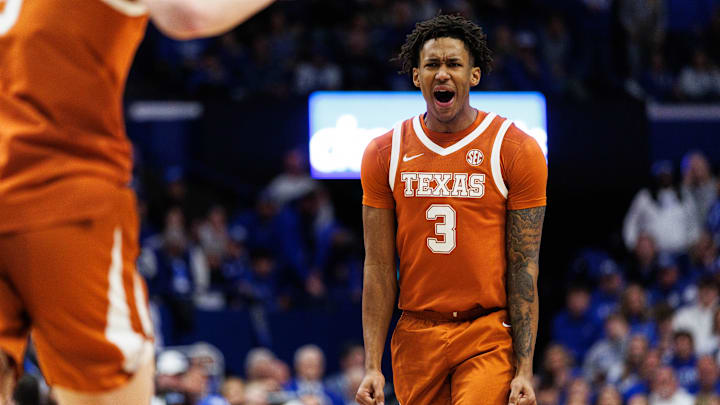
Dailyn Swain, Texas

Swain is a 6-foot-7, 200-pound slashing wing who's averaging 17.7 points, 7.3 rebounds, 3.4 assists, and 1.8 steals per game while shooting 70.5% at the rim (132 attempts), 52.1% on non-rim twos (48 attempts), 31.7% from three on 63 total attempts (a noticeable improvement from 25% from three on 28 total attempts last season), and 79.3% from the line. A career 80.6% free throw shooter, the potential as a shooter has been there and seeing even slight progression from beyond the arc this season is a very positive sign.
He's also recording a 5.9 offensive rebound percentage, 20.6 defensive rebound percentage, and a 4.4 stock percentage. Swain has been the offensive engine for Texas as well, showing an ability to create for both himself and his teammates -- he's been unassisted on 76.8% of his made field goals this season and is assisting an estimated 21.2% of his teammates' made field goals when on the floor. Similar to Tanner, Bidunga, and Johnson Jr, Swain is currently projected to be drafted in the 20-40 range.
Pryce Sandfort, Nebraska

Likely the most interesting player on this list due to him being the only one not currently projected to be drafted, Pryce Sandfort is the brother of Payton Sandfort and is a 6-foot-6, 205-pound sharpshooting wing. He's averaging 17.2 points, 4.6 rebounds, two assists, and 1.1 steals per game while shooting 73.3% at the rim (60 attempts), 36.7% on non-rim twos (30 attempts), 82.6% from the line (46 attempts), and 41% from beyond the arc (188 total attempts | 15.7 three point attempts per 100 possessions). He's also recording a healthy 12.3 assist percentage, which is positive baseline to see.
Something to note is that Pryce Sandfort has only had two dunks this season, so he would need two more to qualify for the Productive Sophomore Query at the end of the season. Sandfort is someone to watch and he could be in draft conversations by the end of the season, especially if Nebraska continues their impressive play.
Patrick Ngongba, Duke

Ngongba is a 6-foot-11 big who's averaging 11 points, 6.2 rebounds, two assists, 0.7 steals, and 1.3 blocks in 22.9 minutes per game. He's shooting 70.6% at the rim (102 attempts), 55.6% on non-rim twos (only nine attempts), 29.2% from three (only 24 attempts), and is a career 69.5% free throw shooter. Additionally, he's recording a 12.9 offensive rebound percentage, 15.6 assist percentage, and a 8.8 stock percentage. Ngongba is a projected mid-late first round pick at the moment.
Labaron Philon, Alabama

Similar to Toppin, Philon was a projected late first round/early second round pick in the 2025 NBA Draft and ultimately decided to return to college. He's a 6-foot-4, 180-pound guard who's averaging 21.4 points, 4.9 assists, 3.5 rebounds, and 1.3 steals per game while shooting 67.6% at the rim on 105 attempts (significant improvement from his 58.1% last season on 136 attempts), 48.8% on non-rim twos (82 attempts), 38.5% from three (10.3 three point attempts per 100 possessions), and 75.4% fromt he line (114 attempts). His three point percentage is a significant improvement from last season as well, when he shot 31.5% on 7.1 three point attempts per 100 possessions.
Additionally, last season Philon was unassisted on 65.5% of his made field goals and assisted on an estimated 24.9% of his teammates' made field goals when on the floor. While impressive, this season he's been unassisted on 70.9% of his made field goals while assisting on an estimated 32.2% of his teammates' made field goals when on the floor this season.
Philon is now projected to be drafted in the late lottery in the 2026 NBA Draft due to his strong play this season.
Christian Anderson, Texas Tech

Christian Anderon was impressive as a freshman last year, and someone I highlighted in an article before the season started as a potential breakout candidate alongside Cameron Carr. Below is a quote from that article illustrating how Anderson had popped on film last season:
Anderson, a rising sophomore for the Red Raiders, is a 6-foot-2, 175-pound guard. He's a highly skilled player with legitimate craft to his game. Anderson is not concerningly undersized height-wise (6-foot-2 is not historically detrimental to the probability of sticking in the NBA), but he has a lean frame he needs to continue to build out. The potential 2026 draft pick can hit catch-and-shoot threes (39.7% on 126 catch-and-shoot attempts), is quick downhill out of the pick-and-roll, and is a solid pick-and-roll playmaker (84th percentile in Points Per Possession in Pick-and-Roll Plus Passes possessions on a sample size of 210 possessions).Jordan Monaco, SI.com
Additionally, Anderson's ability to shoot off the dribble was noticeable last season and will be sure to serve him well against drop in the pick-and-roll or when self-creating. The rising sophomore converted 54.3% of his off the dribble twos (35 attempts) and 33.9% of his off the dribble threes (62 attempts). His general live-dribble passing and on-ball defense looked like it had room to grow, however.
This season, Anderson has taken his game to another level. He's playing 38.6 minutes per game and is averaging 19.6 points, 7.5 assists, 3.4 rebounds, and 1.4 steals in those minutes. Additionally, he's shooting 69.8% at the rim (53 attempts), 42.6% on non-rim twos (61 attempts), 43.6% from three (165 attempts), and 78.7% from the line (89 attempts).
Similar to Philon, Anderson has been an offensive engine for his team, as he's been unassisted on 72.6% of his made field goals while assisting an estimated 34.2% of his teammates' made field goals when on the floor this season.
Note: 6-foot guard Trey Green on Saint Louis has met the Box Plus-Minus and Minutes Percentage thresholds but, with zero dunks so far this season, he is not on pace to meet the Productive Sophomore Query and is not projected to meet the criteria this season. His standout season should undoubtedly be noted otherwise, however.
Another Note: Box Plus-Minus is a main component of this query and is a comprehensive statistic that fluctuates for a player from game to game. Players who currently meet the criteria could fail to meet the threshold in a game or two and players, such as Cameron Carr and Aiden Sherrell who are close to meeting the BPM threshold, could meet the necessary criteria after a game or two.
Conclusion: Why is this Useful?
The Productive Sophomore Query is best used when attempting to identify talent or when weighing the potential risks of drafting a player.
If a player meets the four criteria during the season like these prospects on this list do right now, then they should be looked into.
Similarly, if you're considering a player with an early second round pick who's met the Productive Sophomore Query, it may be a sense of comfort that 68% of players to hit the same criteria play five-plus seasons in the NBA.
This is especially important to take into account, as only 36% of players drafted from picks 31-40 from the 1990-2020 NBA Drafts ended up playing at least five NBA seasons with a career 10-24 minutes per game or over 4000 career NBA minutes. Regardless, the PSQ query should be used in conjunction with film, other key statistics, intangibles, intel, and medical information when evaluating a prospect.
 Add us as a preferred source on Google
Jordan is a senior at Cornell University where he is an analytics consultant for the men’s basketball team and Co-President of the Cornell ILR Sports Business Society. He has also interned for Sports Aptitude, where he helped interview former front office members and current professional basketball players with the goal of improving the pre-draft process.
Follow JMonacoScouting