
A Sleeper From Every National League Team in 2026 Fantasy Baseball Drafts
Finding sleepers is one of the most important strategies in fantasy baseball, and uncovering breakout candidates across the National League can give managers a huge draft-day advantage. From high-upside prospects like Jordan Lawlar and Dylan Crews to emerging arms such as Bubba Chandler, these under-the-radar players could dramatically outperform their 2026 fantasy baseball ADP.
Jordan Lawlar, Arizona Diamondbacks
Lawlar has 375 at-bats of experience at AAA (.328/76/18/81/42), suggesting a high ceiling player in the majors. His walk rate (11.9%) and strikeout rate (22.6%) graded well. Unfortunately, he has been lost in the majors (34.3% strikeout rate with a .165 batting average over 97 at-bats), with a failed trip to the Dominican Republic.
The Diamondbacks have cleared the way for him to start in the outfield this year, but Ryan Waldschmidt could jump him on their depth chart. Lawlar is a must-follow this spring, with a lot to prove at the major league level. Down the road, he should develop into a 20/40 player.
Over eight spring training games, Lawlar is 8-for-23 with three runs, three home runs, and four RBIs while taking six walks and whiffing eight times. He went pick 227 in a recent NFBC Main event draft (3/9).
JR Ritchie, Atlanta Braves
In my first two high-stakes drafts, I snatched up Ritchie in the 40th and 41st rounds due to following his progress last summer and working for his dad. Injuries to some of the Braves’ starting pitchers and a good start to spring training (a solo home run over four innings with six strikeouts) have put more shine on him in the fantasy market. Earlier last week, a drafter added him inside of pick 360 in a 12-team draft with 30 roster slots, showcasing his flier potential in 2026. Ritchie currently sits at pick 436 in the NFBC main event draft season.
After missing most of 2024 with TJ surgery, Ritchie climbed through three levels of the minors last year (8-6 with a 2.64 ERA, 1.007 WHIP, and 140 strikeouts over 140.0 innings). He already has 11 games of experience at AAA (3.02 ERA, 1.089 WHIP, and 61 strikeouts over 59.2 innings), putting him in a great position to pitch for Atlanta early in 2026.
Cade Horton, Chicago Cubs

Horton flashed a higher ceiling in strikeouts in college and the minors. His two elite secondary pitches set the floor for an exciting rise in 2026. He had TJ surgery in college. His lat strain/shoulder issue in 2024 can’t be dismissed as a sign of another future problem. Horton threw 112.2 innings more than last season.
Trending toward 30 starts with a 3.00 ERA, 1.100 WHIP, and 150 strikeouts. In my thoughts in this area of drafts, but he isn’t a slam dunk.
In his only spring appearance, Horton tossed two shutout innings with no hits, one walk, and two strikeouts. His ADP moved to 154 in an NFBC main event draft (3/9).
Sal Stewart, Cincinnati Reds
The Reds' rising first base option looks poised to get a starting opportunity for the Reds this year. They signed Euguino Suarez in late January, with the goal of giving him a rotational role between first base and DH. Stewart is young, with an advanced approach at the plate, and his power is coming faster than initially expected. His scouting report painted him as a below-average runner.
With 500 at-bats, I expect help in batting average with an 80/20/80/10 skill set. With success at the plate, Stewart would have a higher ceiling, thanks to a move to third in Cincinnati’s batting order. He falls into the breakout category at first base.
Over his first 22 at-bats in spring training, Stewart is hitting .318 with five runs, two home runs, five RBIs, and two steals with four walks and four strikeouts.
Mickey Moniak, Colorado Rockies
His average hit rate (1.923) gives him a higher ceiling power, but Moniak must secure more playing time against lefties (.190/18/3/15 over 174 at-bats with 64 strikeouts in his career). His approach isn’t ideal to hit in the top two spots in the batting order.
Moniak is getting better while just reaching the prime of his career. Playing in Colorado should be a boost to his ceiling, suggesting a more balanced five-category outlook in 2026. With 500 at-bats, I see a .260 player with 70+ runs, 25+ home runs, 70+ RBIs, and double-digit steals.
His swing has been productive so far in March (5-for-15 with three runs, two home runs, three RBIs, and one steal).
Hyeseong Kim, Los Angeles Dodgers

With Tommy Edman opening the season on the injured list, Kim should have the inside track to starting at-bat at second base for the Dodgers. He’s played this spring (6-for-13 with three runs, one home run, five RBIs, and two steals) while backing up some in the WBC (2-for-10 with two runs, one home run, three RBIs, and one stolen base).
Over his final four seasons in Korea, Kim hit over .300 each year while peaking in 2024 (.326 over 509 at-bats with 90 runs, 11 home runs, 75 RBIs, and 30 steals). He brings plus speed (211 stolen bases over 3,433 at-bats) with a developing approach.
Kim was somewhat overmatched at the plate in his first year with the Dodgers (.280/19/3/17/13 over 161 at-bats), showcased by his seven walks and 52 strikeouts. He doesn’t have a clear path to everyday at-bats, but his ceiling and fantasy value are higher than most would believe when getting starting at-bats.
Jakob Marsee, Miami Marlins
Marsee brings an explosive floor in stolen bases (46, 51, and 61 over the past three seasons). Miami should hit him second in the batting order this year, behind the speedy Xavier Edwards. His average hit rate (1.631) suggests 15 home runs with the Marlins is within reach with over 500 at-bats. Unfortunately, his batting average will be a liability early in his career. Marsee is on a path to hit under .250 with a run at 90 runs, 15 home runs, 60 RBIs, and 50+ steals.
Over four games in spring training, Marsee has four hits over nine at-bats with four runs, a solo home run, and one stolen base while taking four walks and striking out once. His ADP (140) has moved inside the top 10 rounds of 15 teams in March.
Kyle Harrison, Milwaukee Brewers
As a Boston Red Sox fan, I was pissed when they gave away, and I mean gave away, Harrison to Milwaukee for nothing. Caleb Durbin isn’t a future building block, while not being much better than David Hamilton.
Left-handed pitchers tend to have nine lives, and Harrison has a chance to develop into a front-line starter with better command and a third winning off-speed pitch. In his first appearance this spring, he faced Great Britain, leading to three shut innings with three baserunners and two strikeouts. Harrison has been working on a changeup, which could be the missing link to unlocking his arm.
Over 42 starts in the majors at age 23, Harrison went 9-9 with a 4.39 ERA, 1.315 WHIP, and 191 strikeouts over 194.2 innings. His AAA resume (6-5 with a 4.12 ERA, 1.507 WHIP, and 193 strikeouts over 142.0 innings) is clouded by poor command (5.3 walks per nine) but an elite strikeout rate (12.2).
The Brewers’ pitching coach can fix arms, suggesting Harrison will be much better in 2026. I expect him to make their starting rotation out of spring training, putting him in the deep sleeper watch category.
In his first official spring training start, Harrison allowed one run, two hits, a home run, and two walks over three innings while striking out eight batters. As a result, he went from a 35th round DC flier to the 19th round in a recent NFBC main event (15-team league).
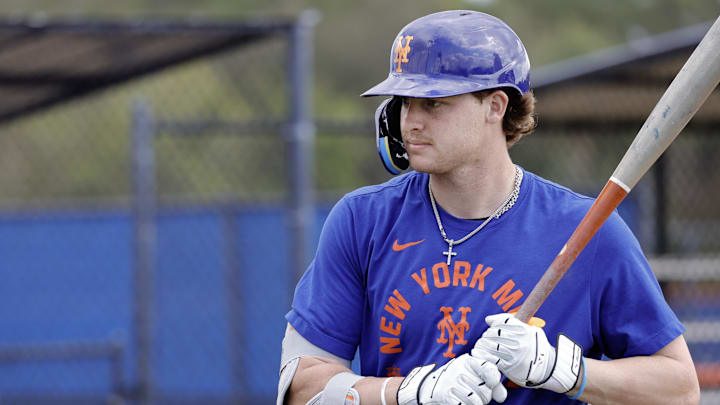
Carson Benge, New York Mets
Benge is another young bat close to the majors this year, with the approach and skill set to be in New York quickly. He projects as a five-tool asset who should bat first in the Mets' starting lineup once he shows that he is major league-ready.
New York may start him at AAA, making him a bench stash in deep formats. I like what he brings to the table, and Benge is a must-follow this spring. Possible Grady Sizemore 2005 season with a better approach.
Benge is another rising rookie player this spring. He has nine hits over his first 23 at-bats with four runs, four RBIs, and one steal, putting him on pace to make the Mets’ opening day starting lineup. Despite his direction, his ADP (355) remains in the free look zone.
Justin Crawford, Philadelphia Phillies

After getting a mental picture of the Crawfords (father and son), it helped me get a better feel for Justin Crawford’s pedigree, ceiling, and foundation skill set. His swing path is weaker than his father's, and Carl didn’t hit stride in the majors until his third season. He also comes to the majors with a similar build to his father.
I expect a learning curve for Justin Crawford in his first major league season, but he could quickly move to the top of the Phillies’ lineup once he has success against major league arms. I don’t expect much improvement in power out of the gate, but his overall tools and potential should make him a more valuable fantasy asset than Steven Kwan in his rookie season.
There is something to be said for having a plus base stealer on a fantasy roster, especially at a fair price. I expect Crawford to outperform his price point by a wide margin, driven by his plus value in steals, batting average, and runs. With 500 at-bats, he has a chance to hit over .280 with 80 runs, eight home runs, 50 RBIs, and 50 steals. Think Esteury Ruiz in 2023 (.254/47/5/47/67 over 449 at-bats) with a better opportunity and harder contract.
Crawford only has six hits over his first 30 at-bats in spring training with three runs, one RBI, and one steal, putting a slight damper on my expectations for him in his rookie season. His ADP (263) has remained about the same over the past month. With an 80-game suspension looming for Johan Rojas, Crawford has a better chance of making the Phillies’ opening day roster.
Bubba Chandler, Pittsburgh Pirates
Chandler’s ceiling is extremely high, and he did throw 131.1 innings last season, putting his step at about 170 innings. He must throw more strikes to be a winning fantasy asset in 2026. His elite fastball and plus changeup give him an excellent chance at success early in his major league career. With each tick lower in his walk rate, his pitches will be that much tougher to hit.
Chandler brings an ace upside arm, but he could be a year away from being a difference-maker. His athletic ability is extremely high, suggesting the pieces to his game come together quickly in the majors. A drafter can count on plenty of strikeouts, with his command dictating the length of his starts. His WHIP should trail his ERA earlier in his career.
There has been no excitement in the pitching line of Chandler this spring (seven runs, four hits, one home run, and nine strikeouts over six innings) as finding home plate (10 walks) has been a problem. Despite his direction, some game managers are still fighting for him in drafts (ADP – 158).
Jeremiah Estrada, San Diego Padres
The Padres don’t have many players I would consider sleeper options, so I went with Estrada. He brings a plus late-inning arm who is one injury away from a prominent closing opportunity. Over the past two years, he whiffed 202 batters over 134.0 innings with a 3.22 ERA and 1.119 WHIP.
Bryce Eldridge, San Francisco Giants
The Giants’ DH role appears to be in the hands of Bryce Eldridge. He has two years of experience in the minors (.276 with 122 runs, 48 home runs, 175 RBIs, and seven steals over 831 at-bats). He’ll take some walks, but needs to control the strike zone better to help fantasy teams in 2026.
JJ Wetherholt, St. Louis Cardinals

When reviewing the Cardinals’ potential starting lineup, their team lacks star players while only hitting 148 home runs (29th) in 2025. Incoming rookie JJ Wetherholt brings an upside bat that should help the top of the lineup for St. Louis. Unfortunately, I only see a 70/20/80/5 player who should be an asset in batting average.
Possible steady option, but for the fantasy teams looking for a higher ceiling, I can’t expect Burleson to reach explosive heights in any area. On the positive side, he is challenging to strike out (14.5%) while falling below the league average in walks (7.1%). St. Louis may sit him down against some left-handed pitching.
There’s been a lot to like about Wetherholt’s bat this spring (5-for-18 with six runs, two home runs, six RBIs, and one steal), highlighted by a winning approach (seven walks and four strikeouts). He climbed to pick 226 in recent high-stakes drafts.
Dylan Crews, Washington Nationals
Despite his struggles last year, Crews was on pace to score 81 runs, with 19 home runs, 51 RBIs, and 32 stolen bases that should lay the groundwork for his potential value in 2026. The Nationals hit him below fourth in the batting order for 92.8% of his at-bats.
With better play, Crews should bump to second in the batting order. Trending toward a neutral batting average with 80+ runs, 20+ home runs, 70+ RBIs, and 30+ stolen bases, making him a value for me this draft season.
Crews is off to a slow start in spring training (2-for-14 with three runs, one RBI, and one steal). He continues to go in the 11th round (ADP – 162) in the high-stakes market.
Every fantasy baseball season features a handful of surprise breakouts, and many of them come from players who were barely on draft boards in March. Whether you’re targeting rising prospects like Carson Benge or high-upside pitchers like Cade Horton, these National League sleepers could become league-winning picks in 2026.
More Fantasy Sports On SI News:
 Add us as a preferred source on Google
With 20+ years of experience in the high-stakes fantasy market, I aim to research and compete at the highest level in baseball and football each season. I've contributed as a writer/analyst for Sports Draft Daily, ScoutPro, Scout Fantasy, Fulltime Fantasy, FFToolbox, and Sports Illustrated Fantasy. I'm honored to be in the National Fantasy Baseball Championship Hall of Fame. My drafting philosophy is risk-averse yet open to betting on potential game-changers. I approach player selection with a neutral perspective, acknowledging that fantasy sports are inherently unpredictable due to injuries, performance dips, and managerial decisions. My work focuses on these main areas: - Season-long fantasy baseball and football - BestBall Baseball and Football Events - Daily Fantasy Sports (DFS): DraftKings, FanDuel, and Underdog - Long Shot Player Prop Parlays for NFL I participate in various leagues and contests, including NFBC, NFFC, RTSports, FFPC, DraftKings, Underdog Fantasy, FanDuel, and FFWC, with the goal of leveraging my extensive experience and research for success in each game format. A fantasy follower can expect in-depth profiles of NFL and MLB players, along with season-long and weekly projections for each fantasy football season. In addition, I have many strategy articles to help develop fantasy players' learning curves.
Follow Shawn__Childs