
Are auction houses allowed to shill bid their own items?
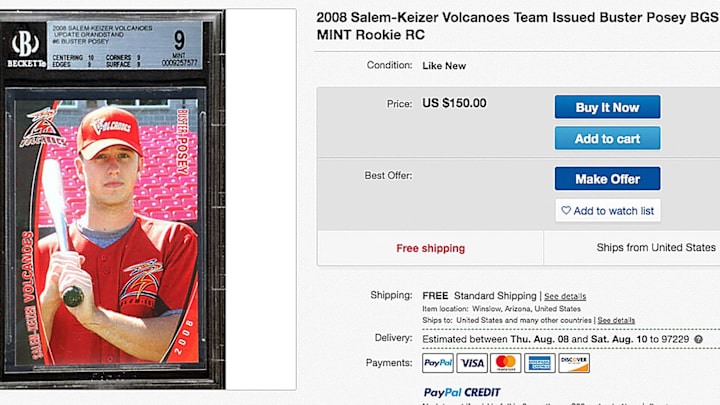
Shill bidding has been a hot topic recently, after a prominent collector admitted to mistakenly bidding on their own card (and later said it might not have been a mistake). Shill bidding is universally frowned upon; it's the practice of bidding on an item yourself (or a friend) to inflate its price.
RELATED: Hobby U: What is 'Shill Bidding' ?
ALSO: Things to Know: Using Comps to Accurately Value Your Cards
It's not commonly known, but auction houses can legally bid on their own items. Some states allow auction houses to shill bid items on their platform as long as bidding terms are disclosed. Why would an auction house shill bid on its own item? The answer is straightforward: to sell more items.
A Scenario
If a consigner has a card at auction but is adamant about getting no less than a certain price, then they will set a reserve price. A reserve price is the lowest price at which a consignor agrees to sell an item. However, reserve prices are often not revealed until near the auction's end, leaving bidders short of a card they might've been willing to pay more to secure.
Imagine a scenario where the consigner sets a reserve price of $20,000 for a card. However, as the auction heads into its final days, it has only received a high bid of $12,000. The high bidder might be willing to pay $20,000 or more for the card, but as it stands, their $12,000 bid will not be enough to buy the item. In this instance, auction houses - depending on state laws - are able to bid up the items either to the reserve price or just below it.
Shill Bids, Fake Prices — Are Comps Even Real Anymore?https://t.co/5EwHWEBzY7
— NEO Cards & Comics (@NEOCards_Comics) November 14, 2025
What's happening is a potential buyer is bidding against the auction house, where the auction house is telling the bidder they have to bid higher - or pay more - in order to win and buy the card.
One argument for this practice is that it is a meeting of the minds. The auction house is making the seller happy by getting them their desired sale price. The buyer is also happy because they won the card at a price they were willing to pay. The auction house is happy because it gets its commission.
Ethical Questions
However, the scenario above raises several questions. Would a buyer continue bidding if they knew the auction house was the one placing bids? Can auction houses place bids above the reserve price? Are auction houses psychologically manipulating buyers by making them believe they are competing with other bidders?
Also, while many auction houses prohibit consigners and their friends from bidding on their own items, how different is it for the auction house to bid on its own items? Essentially, consigners are paying auction houses to do the shill bidding for them.
Comps
One of the biggest questions this leaves is the validity of comps, an abbreviation for comparables widely used in real estate. For cards, just like in real estate, comps are recent sales that give buyers and sellers a guideline for how much a card is worth. Auction-house results, aside from eBay, are a major source for comps.
If auction house items are being bid up by the people selling them, can we believe any of the prices we are told the cards are selling for?
A free market dictates that prices be determined naturally, without intervention or manipulation. If a card has outside bidders who do not meet the reserve price, it should be taken as the card's value at that time on that marketplace. If a reserve price is not met, the consigner should consider lowering it for the next auction until price discovery is made.
How do I know if an auction house can bid on its own items?
The best way to find out whether an auction house bids on its own items is to contact it. Auction houses are mandated by state law to disclose their bidding policies. In many instances, it's not illegal for auction houses to bid on their own items, but it is illegal not to disclose this practice.
TOP TRENDING COLLECTIBLES ARTICLES:
 Add us as a preferred source on Google
Horacio is an avid sports card collector and writes about trending card auctions and news across several major hobby sites, including Sports Collectors Daily and Collectibles on SI.
Follow murphreeman